Topics
Search
Enter at least 3 characters
Plain-language guidance on loans, leases, and car payment options.
Updated daily · 48 stories
By Auto Financing Editorial Team · 6 min read
The rate a lender first quotes isn't always final. Understand what's negotiable, what isn't, and how to frame the conver…
From amortisation to LTV ratio, this plain-language reference covers the auto loan terms you'll encounter at the dealers…
Understand the mechanics behind auto loans — principal, interest, terms, and what the fine print really means before you…
Run through these steps before committing to any car loan — from checking your credit report to comparing multiple loan …
From assuming the dealer's rate is fixed to conflating low payments with a good deal — these widespread beliefs can lead…
Financing through a dealership is convenient, but it isn't always equivalent to going direct to a lender. Here's what to…
Credit score is just one input. Income, loan-to-value ratio, vehicle age, and more all shape what a lender will offer yo…
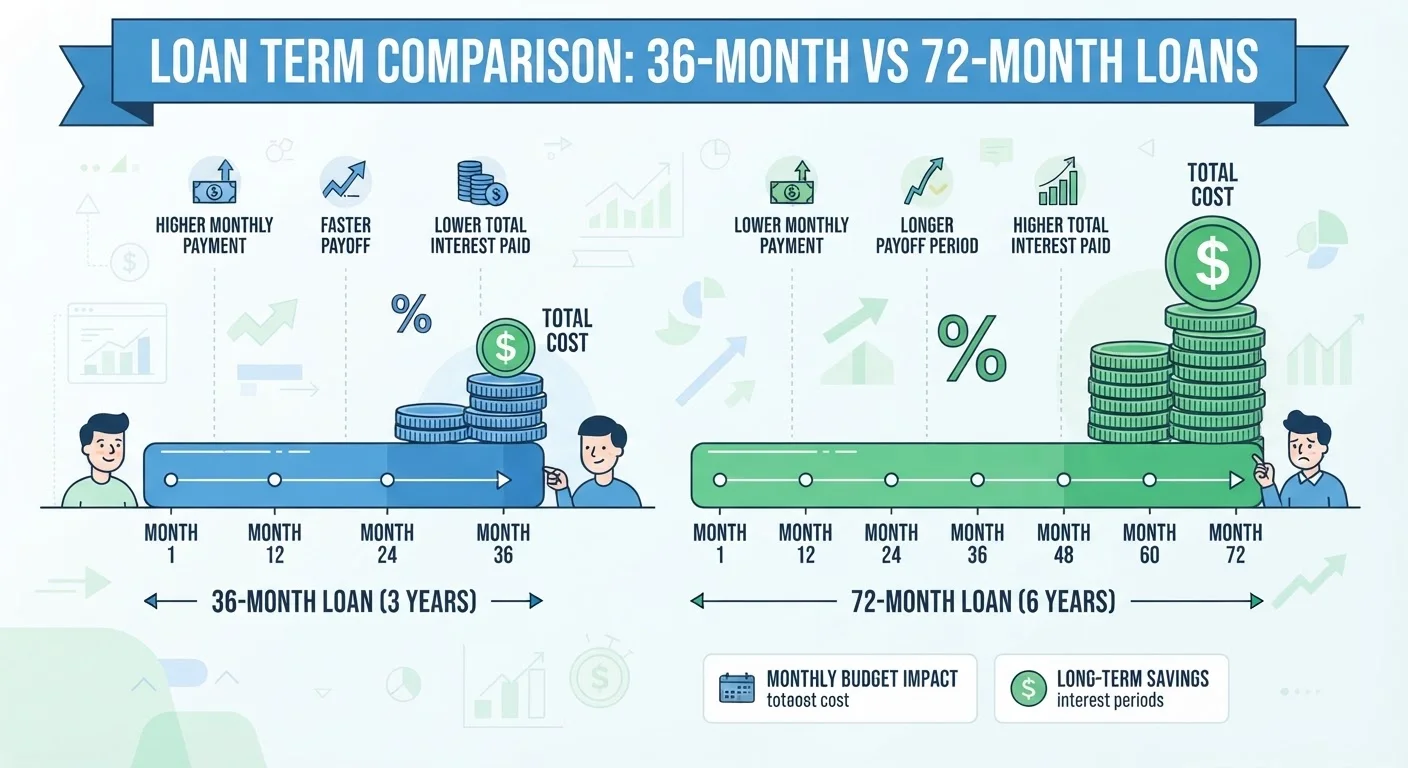
A longer loan term lowers monthly payments but raises total interest paid. Here's how to weigh that trade-off for your s…
Pre-approval strengthens your position at the dealership, but it has limits. Understand what lenders are actually commit…
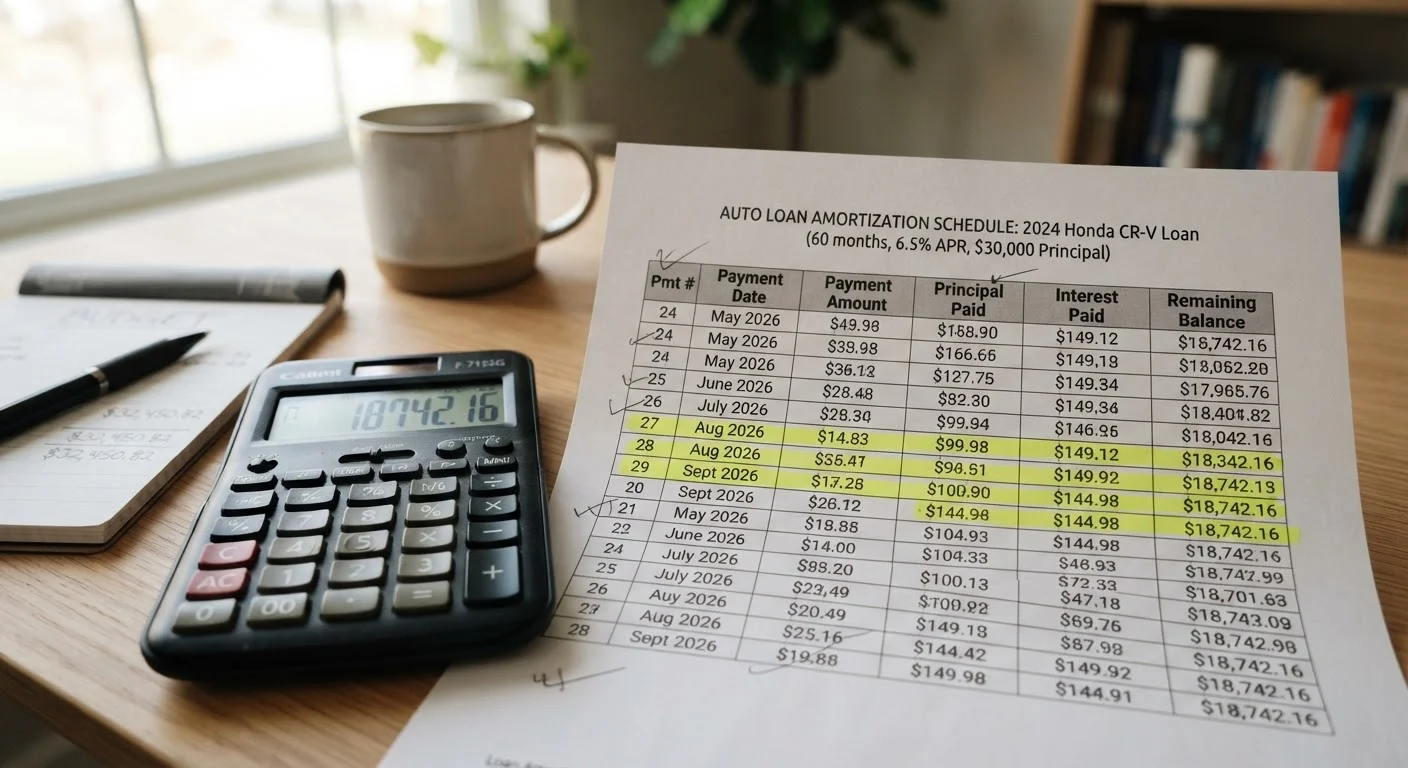
An amortisation schedule shows exactly where each payment goes. Learn to read one so you can spot when extra payments ma…
Refinancing can lower your rate or adjust your term, but it isn't always the right move. Here's how to evaluate whether …
Most car loans are secured by the vehicle itself. Find out what that means for your rights, your rate, and what happens …
Fees, add-ons, and rolled-in insurance can push your loan balance well above the car's price. Learn what to watch for be…
Your credit score is one of the biggest levers lenders use to set your rate. Learn how the tiers work and what differenc…
Extra payments reduce your principal faster, cutting the interest that accrues over time. Here's how the maths works in …
Demystify car lease structures, from capitalized cost to residual value, so you can read any lease offer with confidence…
Most consumer car leases are closed-end, but open-end leases exist too. Learn what each structure means and who they sui…
From 'leasing always costs more' to 'you can't negotiate', common lease beliefs often don't hold up to scrutiny. Here's …
Understand every charge that makes up a monthly lease payment, from depreciation fees to taxes and acquisition costs.…
If your leased car is totalled, gap coverage bridges the difference between the insurance payout and what you owe. Here'…
A concise reference for lease terminology — from acquisition fee and cap cost to wear-and-tear standards and disposition…
A practical checklist of figures, terms, and disclosures to review in any lease agreement before you put pen to paper.…
Compare the real costs of leasing and financing a car, from monthly payments to long-term ownership value and flexibilit…
Lease mileage caps aren't just fine print. Learn how overage charges work and how to choose the right limit upfront.…
Money factor is how interest is expressed in a car lease. Here's what it is, how to convert it to an APR, and why it mat…
Capitalized cost and money factor are often negotiable — but residual value usually isn't. Learn what levers you can rea…
Residual value quietly determines your monthly lease payment. Learn what it means, how it's set, and why it matters.…
Leasing offers flexibility; ownership builds equity. Weigh the practical trade-offs to understand which fits your situat…
Lessors distinguish normal wear from excessive damage at return. Know what's typically accepted and what may trigger a c…
Low monthly payments can mask fees, unfavourable money factors, and down payments. Learn where extra costs tend to hide …
Return, buy, or roll into a new lease — each path at lease-end has real financial trade-offs worth weighing before the t…
New to financing a car? This guide walks through every stage — from setting a budget and checking credit to signing and …
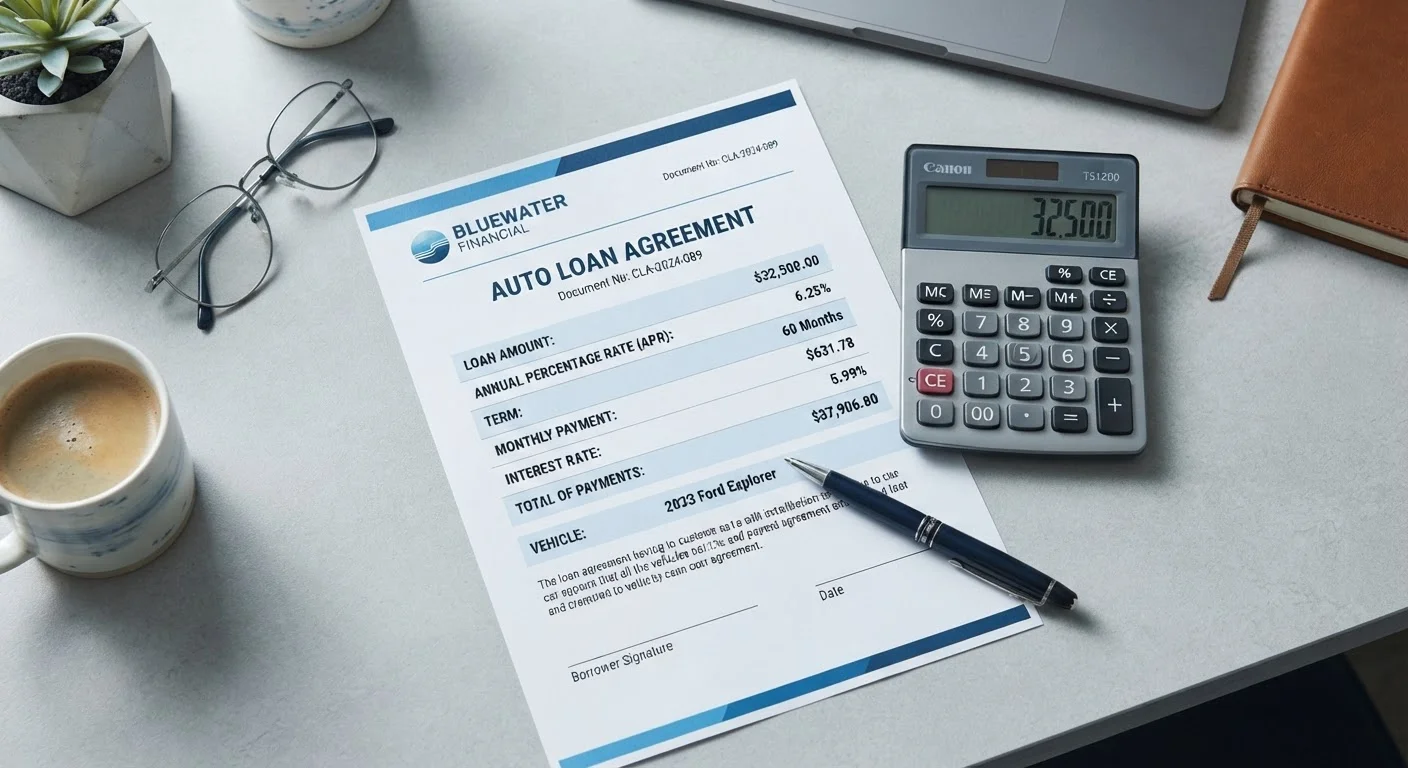
Walk through the key figures and terms in an auto loan agreement before committing — APR, total cost, prepayment clauses…
From '20% is always required' to 'zero down is always a deal' — separate fact from fiction on one of auto financing's mo…
Understand what a car down payment is, how it affects your loan terms, and why putting more down can save you money over…
A 72-month loan lowers your monthly payment but raises total interest paid. Explore how term length reshapes what a car …
Extra principal payments can cut interest and shorten your loan — but only if applied correctly. Learn how to do it and …
Explore the financial trade-offs between buying a car outright and taking out an auto loan, including liquidity, opportu…
Getting pre-approved before visiting a dealership changes your negotiating position. Learn how the two financing routes …
Refinancing can lower your rate or monthly payment — but timing and loan balance matter. Explore the scenarios where it …
Compare 36-, 48-, 60-, and 72-month auto loans across monthly cost, total interest, and financial flexibility to find yo…
Learn how to work backwards from your income and expenses to find a realistic monthly car payment before you ever step i…
The 20/4/10 guideline offers a quick affordability check, but it isn't universal. Understand what it measures, where it …
Negative equity — owing more than your car is worth — can trap you financially. Learn what causes it and how to avoid it…
Add-ons, rolled-in fees, and extended terms can add thousands to what you pay. Here's what to watch for when reviewing a…
A trade-in can reduce what you finance — or work against you if equity is negative. Learn how to use your current vehicl…
Negotiating around the monthly payment figure rather than the total price is a common financing trap. Here's how that th…