How Trade-In Equity Fits Into a Down Payment
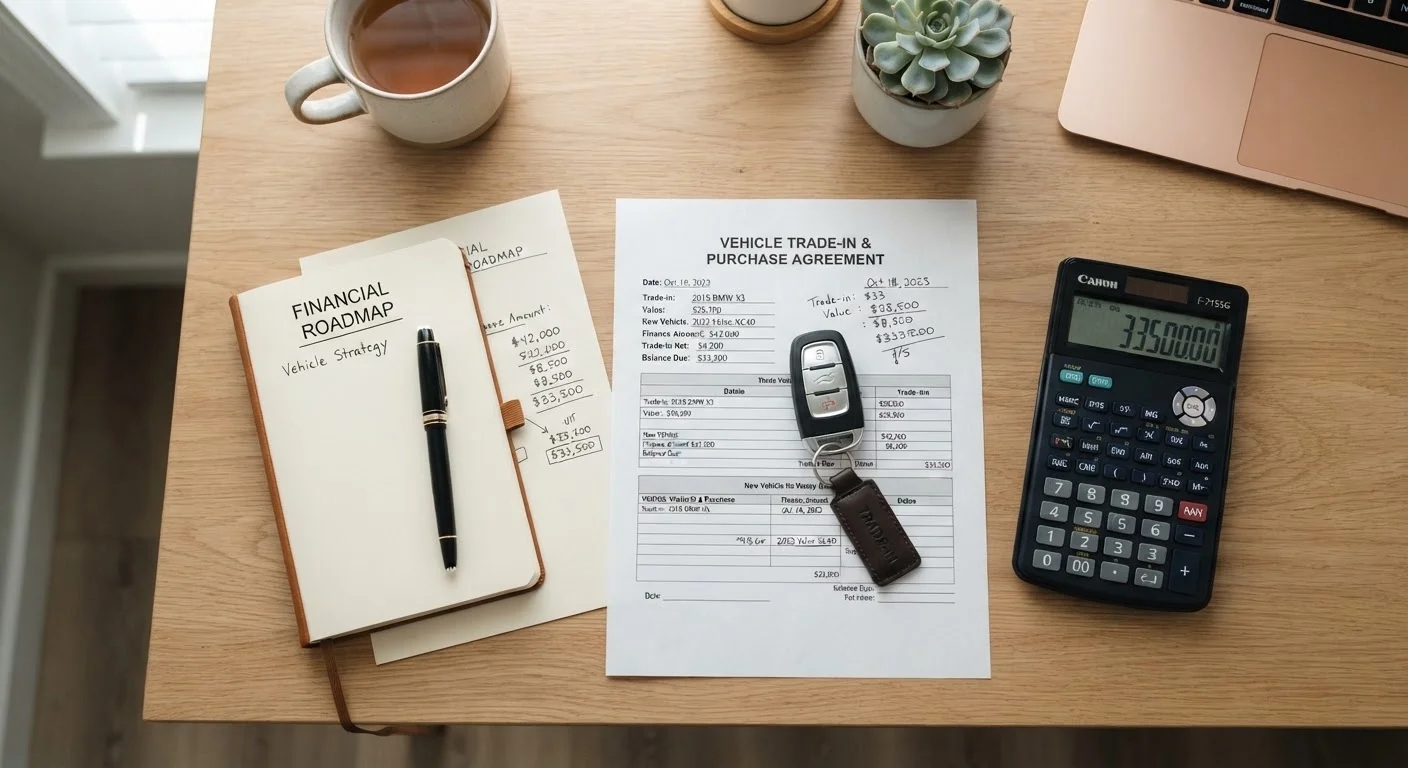
When you trade in a vehicle, the dealer applies its appraised value against the cost of your next car. If you own the trade-in outright - or owe less on it than it is worth - that difference is positive equity, and it functions exactly like cash in your down payment. For example, if your car is appraised at $12,000 and your remaining loan balance is $4,000, you have $8,000 in equity to apply toward the new purchase.
Understanding this mechanic is foundational. As explained in Down Payments Decoded, a larger effective down payment lowers your financed amount, which in turn reduces both monthly payments and total interest paid over the life of the loan. Trade-in equity is simply one path to that same outcome - and it requires no additional cash out of pocket.
Keep in mind that trade-in value is influenced by several variables, including mileage, condition, service history, and local market demand. Before any dealer conversation, consult what affects trade-in value so you arrive with a realistic baseline and are less likely to accept a low offer.
What you will need
What Negative Equity Does to Your New Loan
Negative equity - sometimes called being "upside down" - occurs when you owe more on your current vehicle than a dealer is willing to credit for it. If your loan balance is $15,000 and the trade-in offer is $11,000, you have $4,000 in negative equity. Dealers frequently offer to "roll" this shortfall into the new loan, which means you start your next financing agreement already owing money on a car you no longer own.
This practice significantly raises the risk of repeating the same cycle on your next vehicle. The real risks of being upside down on a car loan explains in detail how rolled-in negative equity compounds over time and what it means for your financial flexibility if the vehicle is totaled or you need to sell early.
If you find yourself in a negative equity position, consider paying down the difference before trading in, or waiting until you have built more equity through additional payments before making a vehicle change.
Rolling Negative Equity Into a New Loan
Accepting a dealer's offer to roll negative equity into your new financing may resolve an immediate problem but creates a longer-term one. You will owe more than the new vehicle is worth from day one, pay interest on debt tied to a car you no longer own, and face the same upside-down risk again. If rolling in negative equity seems unavoidable, consult a financial professional to model the full cost before agreeing.
Steps to Use Your Trade-In Strategically
Following a structured approach helps you capture maximum value from your trade-in and apply it effectively to your financing plan. Complete the prerequisites below before engaging with any dealership.
Get independent trade-in valuations
Before visiting a dealership, obtain estimates from at least two or three independent sources - such as online valuation tools provided by vehicle pricing guides or local independent appraisers. Document each estimate and the date it was generated, since values can shift with market conditions.
Having a range of valuations gives you a defensible starting point and prevents you from accepting a dealer's initial offer without context.
Calculate your current equity position
Request a payoff quote from your current lender - this is the exact amount needed to settle your loan as of a specific date. Subtract this figure from the lowest independent valuation you received. A positive result is your minimum usable equity; a negative result signals an upside-down position requiring a plan before you proceed.
Determine how much down payment the new loan requires
Review the lender's stated minimum down payment requirement for the loan you are considering, typically expressed as a percentage of the vehicle's sale price or financed amount. Compare this to your available equity. If the equity covers or exceeds the requirement, your trade-in can fully replace a cash down payment. If it falls short, calculate the cash gap you need to bridge.
Negotiate the trade-in value separately from the vehicle price
At the dealership, present your independent valuations and negotiate the trade-in offer as a standalone transaction before discussing the new vehicle's price. Ask for the offer in writing. Only after you have an agreed trade-in credit should you move to negotiating the purchase price of the new car.
Confirm how trade-in equity is applied on the final paperwork
Before signing, review the purchase contract to verify the agreed trade-in credit appears as a deduction from the vehicle's sale price (or is applied directly to the down payment line). Confirm any outstanding loan payoff is listed accurately, and verify that no negative equity has been rolled into the new loan without your explicit, informed consent.
Keeping the Numbers Clear at the Dealership
One of the most common mistakes buyers make is allowing dealers to blend the trade-in value, new vehicle price, and financing terms into a single monthly payment conversation. This approach can mask whether you are receiving fair value on any individual element of the deal.
Negotiating a trade-in at the same time as a new car covers specific tactics for keeping these numbers separate so you can evaluate each piece clearly. Agree on the trade-in value first, then negotiate the vehicle price, and address financing last.
Also confirm with your lender what counts toward their down payment requirement. Some lenders accept trade-in equity in full; others require a portion to be cash. This distinction matters if you are purchasing with minimal savings and relying entirely on the trade-in to satisfy the down payment threshold.
This article provides general financial education and is not personalized financial or legal advice. Consult a qualified financial professional for guidance specific to your situation.