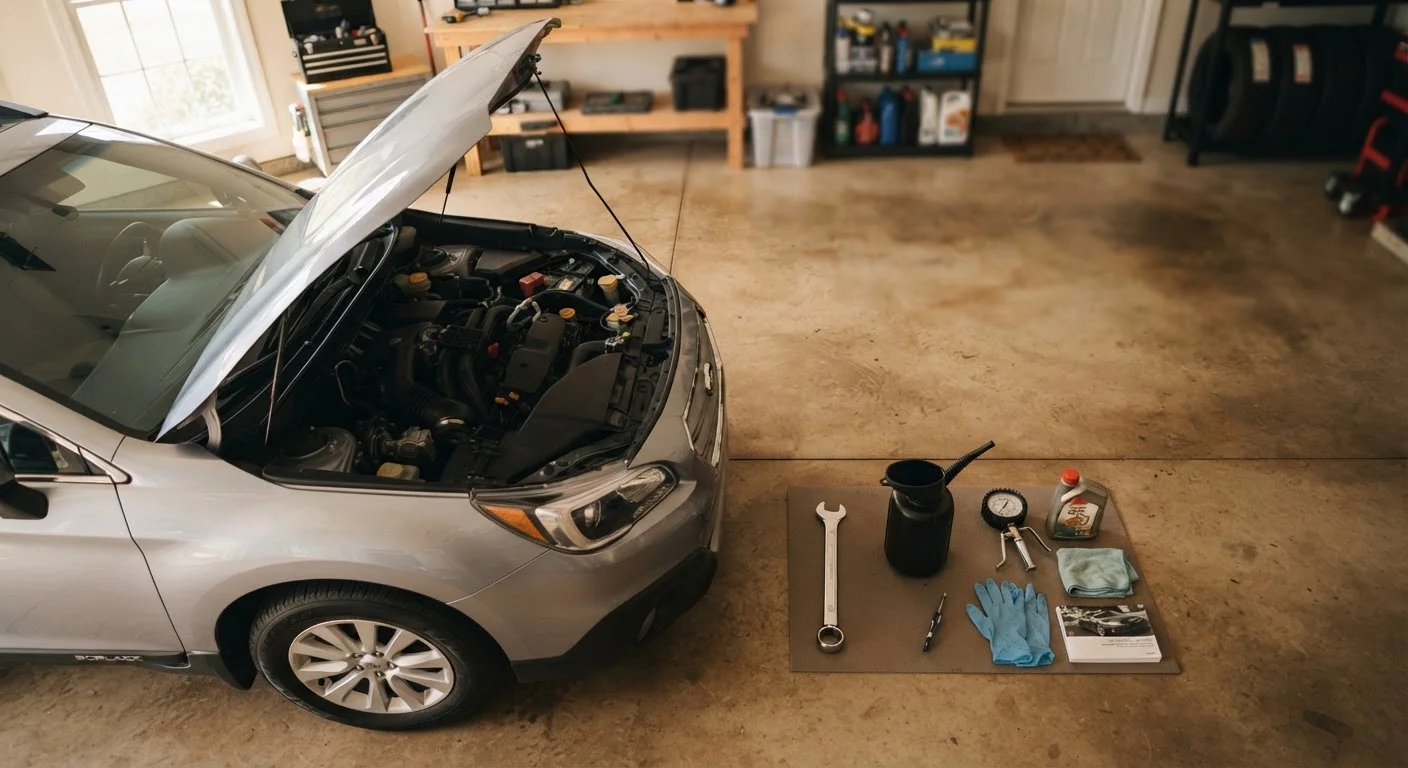
What Car Maintenance Actually Covers
Car maintenance falls into two broad categories: scheduled preventive care — tasks done at regular intervals to keep your vehicle running well — and reactive repairs, which address problems as they arise. As a new owner, your focus should be on prevention first.
Scheduled maintenance includes things like engine oil changes, tire rotations, filter replacements, and fluid top-offs. These tasks follow a timeline set by your vehicle's manufacturer and are designed to catch wear before it becomes damage. Reactive repairs, by contrast, happen when a component fails or a warning sign appears.
The car maintenance hub is a useful place to explore how these categories connect in practice. For now, think of preventive care as your foundation — it's the routine that makes everything else less stressful.
Service interval
A manufacturer-set point in time or mileage at which a specific maintenance task should be performed to keep the vehicle running properly.
Preventive maintenance
Routine upkeep done on a schedule to prevent problems before they occur, rather than fixing them after a failure.
Owner's manual
The printed or digital booklet specific to your vehicle that contains manufacturer-recommended service intervals, fluid specifications, and safety information.
Dipstick
A long, thin metal rod inserted into the engine that lets you check the oil level by reading the markings on its tip after pulling it out.
Coolant flush
A service in which the old engine coolant (the liquid that regulates engine temperature) is drained and replaced with fresh fluid to prevent corrosion and overheating.
Cabin air filter
A replaceable filter that cleans the air entering your car's interior through the heating and air conditioning vents.
Understanding Service Intervals
A service interval is a recommended point — expressed in miles, months, or both — at which a specific maintenance task should be performed. Your owner's manual is the authoritative source for these intervals on your specific vehicle. Ignore general advice that doesn't account for your car's make, model, and engine type.
Common intervals you'll encounter include:
- Every 3,000–10,000 miles: Engine oil and filter change (varies widely by oil type and vehicle)
- Every 5,000–7,500 miles: Tire rotation
- Every 15,000–30,000 miles: Air filter replacement
- Every 2 years or 30,000 miles: Coolant flush (check your manual)
- Every 30,000–60,000 miles: Transmission fluid and brake fluid checks
For a detailed walkthrough of how to read and apply these timelines, see your car's maintenance schedule explained. Mileage-based intervals assume average driving — if you frequently drive in extreme heat, cold, or stop-and-go traffic, your vehicle may need service more often.
Simple Checks You Can Do Yourself
Several routine checks are well within reach for a careful, first-time owner — no prior mechanical experience required. Here's what most drivers can reasonably handle:
- Tire pressure: Use an inexpensive gauge to check all four tires (including the spare) monthly. The correct pressure is printed on a sticker inside your driver's door jamb — not on the tire itself.
- Engine oil level: With the engine cold and parked on level ground, pull out the dipstick, wipe it clean, reinsert it fully, then pull it out again to read the level.
- Windshield washer fluid: A clearly labeled reservoir under the hood; safe to top off with commercially available fluid.
- Wiper blades: If they smear or streak, most wiper blades clip off and on without tools. Check your owner's manual for the correct size.
- Cabin air filter: Usually located behind the glove box; replacement typically requires no tools and takes under ten minutes on most vehicles.
These tasks build your confidence and keep you aware of your vehicle's condition. For a fuller picture of which jobs stay DIY-friendly and which don't, the guide on beginner-friendly DIY car repairs is a practical next step.
Keep a Simple Maintenance Log
After each service — whether you did it yourself or visited a shop — jot down the date, mileage, and what was done. A small notebook in the glove box works fine. This record helps you stay on schedule, supports warranty claims, and adds transparency when selling the vehicle.
When to Call a Qualified Mechanic
Knowing your limits is as important as knowing what you can do. Certain systems on your vehicle carry real safety implications if worked on incorrectly, and some tasks require specialized equipment that most owners simply don't have access to.
Always leave the following to a qualified mechanic:
- Brake pad and rotor replacement, and any brake fluid work
- Suspension and steering components
- Timing belt or timing chain service
- Transmission service beyond a fluid check
- Anything involving the fuel system
- Electrical diagnosis and repair
- Wheel alignment
If your dashboard warning lights come on — especially the check engine light, oil pressure indicator, or brake system warning — don't delay. Driving with an active safety warning can turn a minor fault into a significant repair. When you do visit a shop, it helps to be prepared: getting the most out of a mechanic visit walks through exactly what to ask and how to evaluate recommendations. And if you receive a written estimate you don't fully understand, reading a repair estimate will help you decode the line items before you agree to anything.
The goal isn't to do everything yourself — it's to be informed enough to make confident decisions about your vehicle's care.