What Each Figure Actually Measures
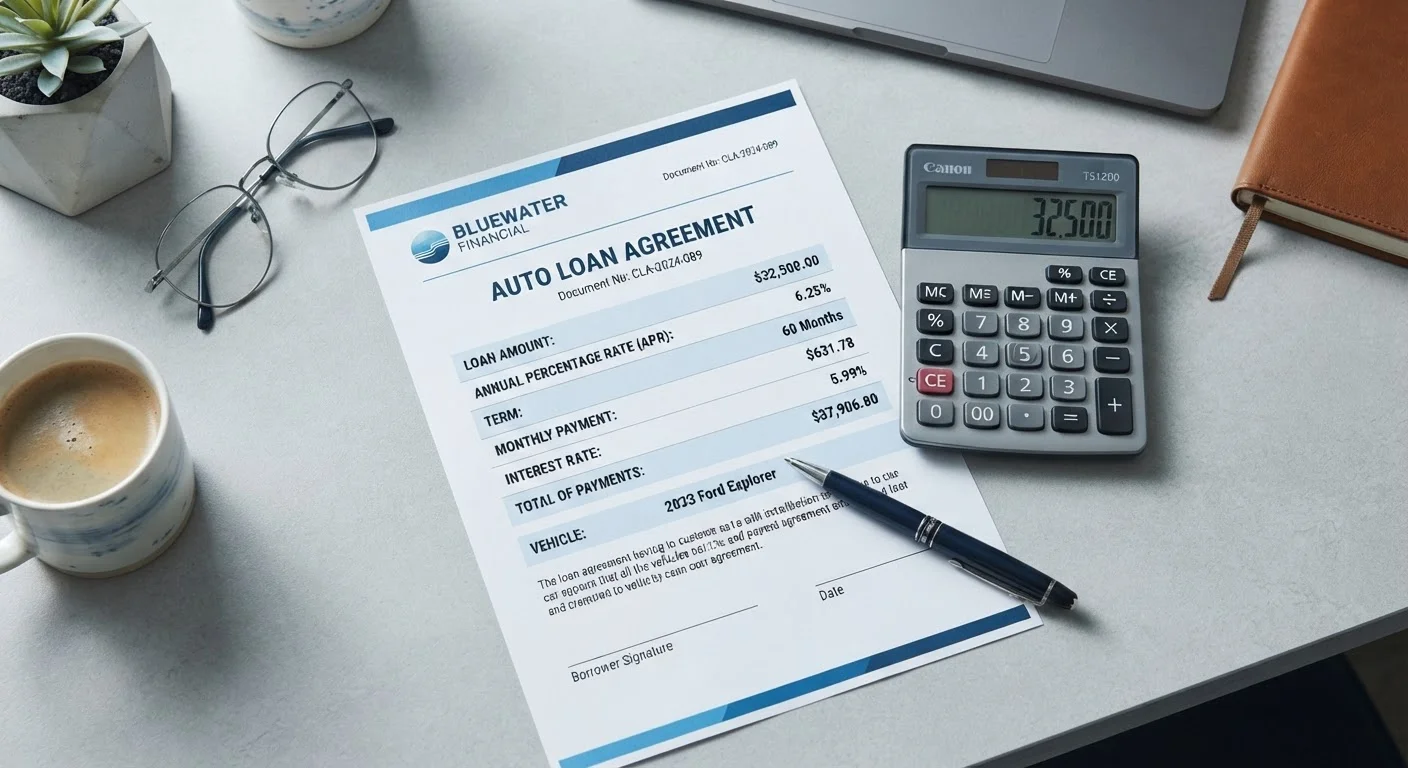
When a lender quotes you a rate on an auto loan, two numbers often appear: the interest rate and the Annual Percentage Rate (APR). They look similar and are related, but they measure different things.
The interest rate - sometimes called the nominal rate - is the annual percentage charged on the amount you borrow (the principal). It drives the math behind your monthly payment and tells you how quickly interest accrues on your balance. It does not include any fees the lender may charge to originate or process the loan.
The APR is a broader measure. It takes the base interest rate and folds in certain lender-imposed fees - such as origination fees, underwriting fees, or administrative charges - then expresses the combined cost as a single annualized percentage. Regulators require lenders to disclose APR under the federal Truth in Lending Act (TILA) so that borrowers have a standardized figure for comparison.
For a deeper look at how loan mechanics work overall, see Auto Loans Explained before reviewing your next offer.
How the Two Numbers Are Calculated
Consider a simplified example. Suppose you borrow $25,000 at a stated interest rate of 6.5% over 60 months. Your monthly payment is calculated using that 6.5% applied to the declining principal balance - straightforward amortization.
Now suppose the lender also charges a $400 origination fee. That fee is not part of the stated rate, but it adds to your total cost of borrowing. When that fee is rolled into the APR calculation, your APR comes out slightly higher - perhaps 6.8% or 6.9%, depending on the loan term and how the fee is structured. The shorter the loan term, the larger the impact a fixed fee has on APR, because the fee is spread over fewer payment periods.
On direct auto loans from banks or credit unions, lender fees are often minimal, so the spread between interest rate and APR tends to be narrow. Dealer-arranged financing can sometimes carry more embedded costs, making it more important to scrutinize the APR disclosure carefully.
| Criterion | Interest Rate | APR |
|---|---|---|
| What it includes | Principal borrowing cost only | Borrowing cost plus lender fees |
| Primary use | Calculating monthly payments | Comparing total loan cost across offers |
| Mandated disclosure | Yes, but not standardized for comparison | Yes, required under federal TILA |
| Affected by lender fees | No | Yes - fees raise APR above interest rate |
| Useful for budgeting payments | Yes - drives amortization math | No - not used to calculate payments |
| Varies by loan term | No - rate is set independently | Yes - same fee has larger APR impact on shorter terms |
Because your credit score shapes the rate a lender offers, both your interest rate and your APR are directly tied to your credit profile. A stronger score generally produces a lower rate - and a lower APR.
Which Number Should Drive Your Decision?
For comparing loan offers, APR is the more reliable figure. Because it standardizes total borrowing cost, it lets you place two offers side by side without being misled by one lender's lower headline rate paired with higher fees. A loan advertised at 5.9% with a significant origination fee may cost more overall than a loan at 6.1% with no fees - the APR comparison will surface that difference.
For understanding your monthly payment, the interest rate is what matters. Your payment is amortized using the stated rate, not the APR. If you are stress-testing affordability at different rates or loan lengths, use the interest rate in your calculations. See how term length reshapes total cost in How Loan Term Length Changes the True Cost of Your Car.
One important nuance: if you are ever comparing an auto loan to a lease, be aware that leases express their cost differently - through a money factor rather than a conventional APR. Money Factor Demystified explains how to convert that figure for a fair comparison.
When Interest Rate and APR Are Identical
If a lender charges no origination fees, processing fees, or other upfront costs, the interest rate and APR will be the same number. This is common with certain credit unions and direct lenders who advertise no-fee loans. In that scenario, either figure tells you the full story - but it is still worth asking your lender to confirm that no fees are embedded elsewhere in the loan structure.
This article provides general financial education and is not personalized financial or legal advice. Consult a qualified financial professional for guidance specific to your situation.