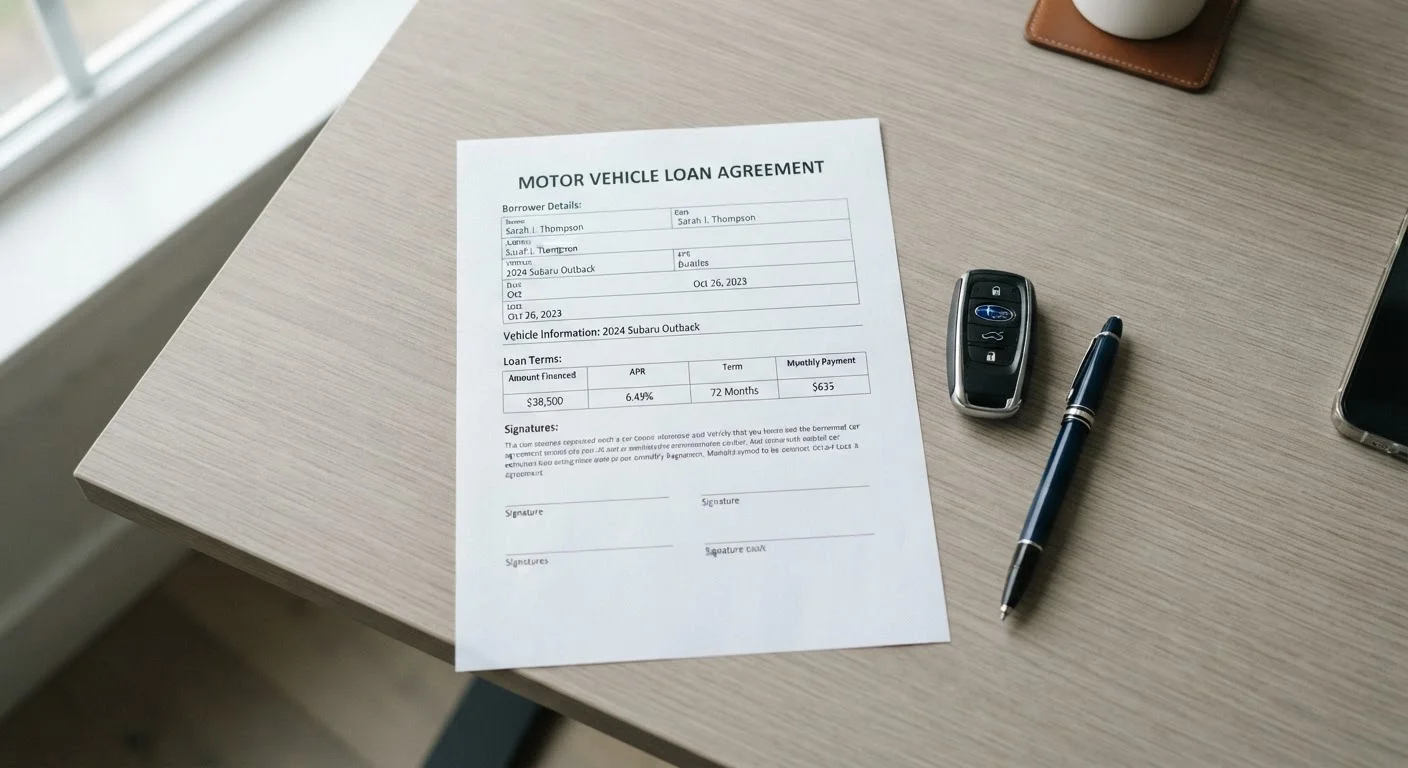
What an Auto Loan Actually Is
When you finance a car, you're entering a legally binding installment contract with a lender - typically a bank, credit union, or finance company arranged through the dealership. The lender pays the seller on your behalf, and you repay the lender in fixed monthly installments over an agreed period, with interest.
Because the vehicle secures the debt, this is a secured loan. The lender holds a lien on the vehicle's title until every dollar is repaid. If payments stop, the lender can repossess the car to recover their losses - no court order required in most U.S. states.
This structure is fundamentally different from renting or leasing. With a loan, you own the vehicle from day one (subject to the lien), and each payment builds toward full, unencumbered ownership. For a side-by-side comparison of financing versus leasing, see our overview of leasing basics.
This article provides general financial education and is not personalized financial or legal advice. Consult a qualified professional for guidance specific to your situation.
The Core Components of Every Loan
Every auto loan agreement is built from the same foundational elements. Understanding each one helps you interpret any offer you receive.
Principal
The original amount of money you borrow, before any interest is added. Reducing the principal faster saves you money on interest.
APR (Annual Percentage Rate)
The yearly cost of the loan expressed as a percentage, including interest and most fees. It's a more complete cost measure than the interest rate alone.
Loan Term
The length of time you have to repay the loan, usually expressed in months. A longer term lowers your monthly payment but increases total interest paid.
Amortization
The process by which loan payments are structured so that early payments cover mostly interest, with more going toward principal as the loan matures.
Loan-to-Value (LTV) Ratio
The loan amount divided by the vehicle's value, expressed as a percentage. A high LTV means you're borrowing a large share of the car's worth, which lenders view as higher risk.
GAP Coverage
An optional product that covers the gap between your remaining loan balance and what your insurance pays if the vehicle is totaled or stolen.
Secured Loan
A loan backed by an asset - in this case the vehicle - that the lender can repossess if you stop making payments.
Prepayment Penalty
A fee some lenders charge if you pay off your loan ahead of schedule. Not all auto loans include this clause, but it's important to check before signing.
- Principal: The amount you borrow - roughly the vehicle price minus your down payment and any trade-in equity.
- Interest rate vs. APR: The stated interest rate is the base cost of borrowing. The APR folds in lender fees and gives a more accurate annual cost. Always compare APRs across offers.
- Loan term: The repayment window, commonly 36, 48, 60, or 72 months. Longer terms shrink monthly payments but increase total interest paid.
- Monthly payment: Determined by principal, rate, and term - not negotiated independently. Focusing only on the monthly payment can obscure a high-cost loan.
For a comprehensive glossary of loan terminology, see auto loan terms every borrower should know.
How Interest Accumulates Over Time
Auto loans use amortization - a method that front-loads interest in early payments and gradually shifts more of each payment toward principal as the balance falls.
In the first months of a 60-month loan, a substantial portion of your payment covers interest, with relatively little reducing what you owe. By the final months, that ratio reverses. This matters for two reasons:
- If you sell or trade in the car early, you may owe more than the car is worth - a condition known as being upside down or underwater.
- Making extra principal payments early in the loan has the greatest impact on reducing total interest paid, because interest is calculated on the remaining balance.
A basic loan amortization calculator can illustrate this effect clearly - enter your loan amount, rate, and term to see a month-by-month breakdown of where each payment goes.
What the Fine Print Often Contains
The loan agreement includes terms beyond the headline rate and payment. These clauses can materially affect your total cost:
- Prepayment penalty: Some contracts charge a fee if you pay off the loan ahead of schedule. This can offset savings from early payoff - confirm whether one exists before signing.
- GAP coverage: Guaranteed Asset Protection pays the difference between your loan balance and insurance payout if the vehicle is totaled. It's often offered as an add-on, sometimes with a significant markup at the dealership.
- Deferred interest or promotional rates: Some dealer-arranged financing involves deferred interest that can retroactively apply if conditions aren't met. Read any promotional financing terms carefully.
- Fees rolled into the loan: Documentation fees, extended warranties, and other products can be added to your financed amount, increasing the principal you pay interest on.
Hidden add-ons are a common source of loan inflation - our article on costs that inflate your auto loan covers what to watch for line by line.
Request the Full Payment Schedule
Ask the lender or finance office for a complete amortization schedule before signing. This document shows exactly how each payment is split between principal and interest across the life of the loan. It takes seconds to request and makes the true cost of the loan immediately visible.
How Lenders Decide What to Offer You
Your credit score is a significant factor in the rate you're offered, but lenders evaluate several additional inputs before approving a loan and setting terms:
- Debt-to-income ratio: Lenders want to see that your monthly obligations - including the new payment - remain a manageable percentage of your gross income.
- Loan-to-value (LTV) ratio: The loan amount divided by the vehicle's value. A higher LTV signals more risk to the lender and may result in a higher rate or denial.
- Vehicle age and mileage: Older vehicles with higher mileage are considered higher-risk collateral and may qualify for shorter maximum terms or higher rates.
- Loan term requested: Longer terms carry more repayment risk, which can influence the offered rate.
For a fuller breakdown of what goes into a lender's decision, see factors lenders weigh when setting loan terms.
Before You Sign: What to Confirm
Before finalizing any auto loan, take time to verify these figures directly from the written agreement - not from verbal summaries at the dealership:
- Total amount financed: Does it match the vehicle price plus agreed fees, minus your down payment?
- APR and total interest paid: The contract must disclose the total cost of the loan over its full term. Compare this number across any offers you've received.
- Loan term: Confirm the number of months matches what you discussed.
- Prepayment clause: Ask explicitly whether any penalty applies for early payoff.
- Add-on products: Identify any products bundled into the financed amount and confirm you agreed to each one.
A structured checklist for this review is available in our guide before you sign a finance agreement. If this is your first time financing, the broader roadmap in auto financing from start to finish covers every stage of the process.
Understanding what you've agreed to - before you agree to it - is the single most reliable way to avoid financing regret.