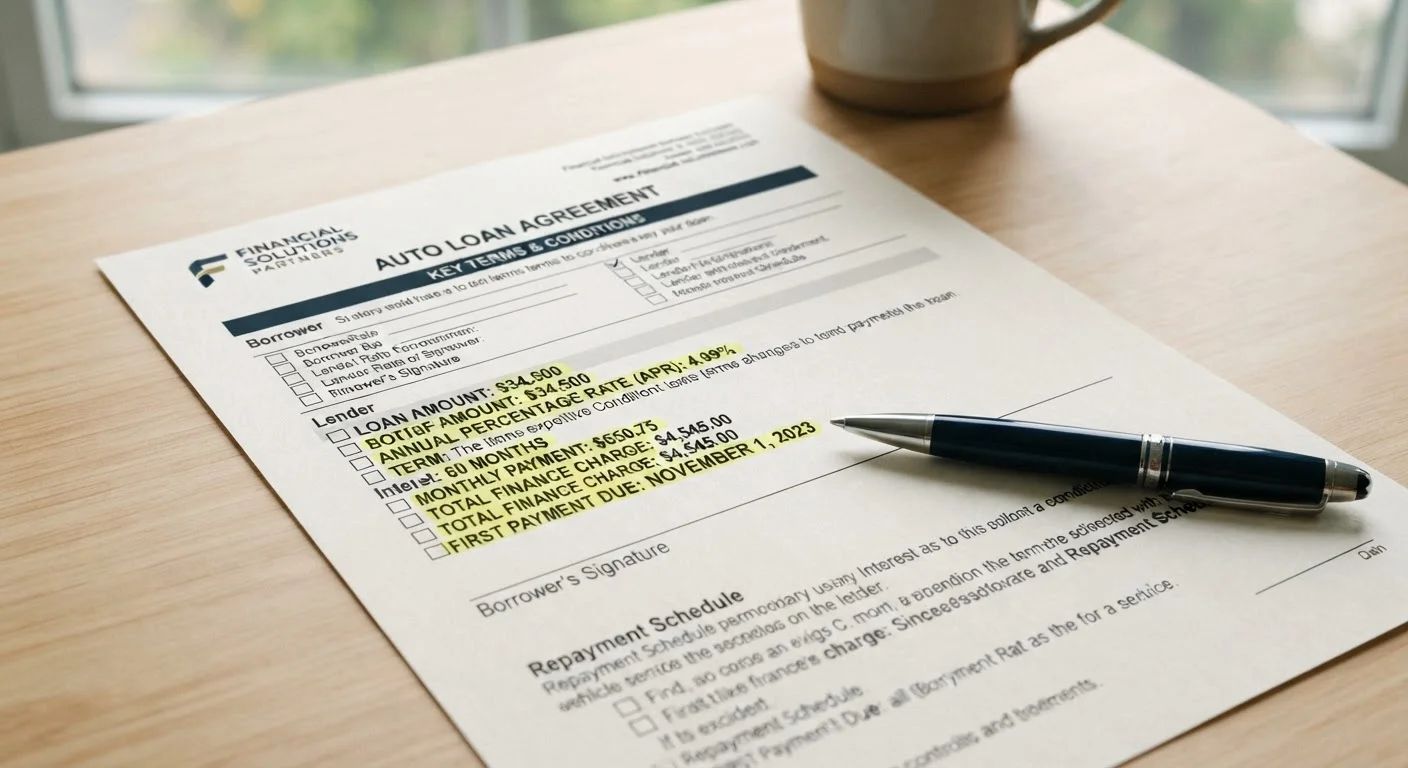
Why Loan Terminology Matters Before You Sign
Auto loan paperwork is dense, and dealers move quickly through the finance office. Borrowers who understand the terminology are better positioned to ask the right questions, compare competing offers accurately, and avoid costly surprises. This glossary covers the terms you're most likely to encounter - from the loan application through the final payment.
For a broader look at how these terms fit together mechanically, see Auto Loans Explained before visiting a lender or dealer.
This Content Is General Education Only
The definitions and explanations in this glossary are intended for informational purposes and do not constitute personalised financial or legal advice. Loan terms, lender policies, and applicable regulations vary. Consult a licensed financial professional before making borrowing decisions.
Core Loan Structure Terms
Every auto loan is built around a few foundational concepts. Understanding these first makes every other term easier to interpret.
The relationship between principal, APR, and loan term determines your monthly payment and the total amount you'll repay. Use these definitions as a cross-reference whenever you're reviewing a loan estimate or contract. For parallel terminology used when leasing instead of buying, see the Lease Glossary.
Loan Metrics and Risk Indicators
Lenders assess every loan application using a set of risk metrics. Knowing what these numbers mean - and how to influence them - can help you negotiate from a more informed position.
Your LTV ratio is particularly important for used vehicle purchases, where rapid depreciation can push balances above market value early in the loan. For additional pricing vocabulary used in used car transactions, see used car pricing terms.
Contract Terms Worth Reading Carefully
Some loan terms are buried in contracts and easy to overlook during a fast-paced dealership visit. These are worth asking about explicitly before you sign.
- Prepayment penalty: Confirm whether your loan includes one. If you plan to pay off early or refinance, a prepayment penalty can significantly alter the cost calculation.
- Dealer markup (rate participation): When dealers arrange financing, they may add a margin above the lender's base rate. You can request to see the buy rate - the rate the lender actually approved - though dealers are not always required to disclose it.
- Balloon payment: If your loan includes a balloon structure, clarify the exact amount due at term's end and your options for refinancing or paying it off.
- GAP coverage terms: If you're financing at high LTV, GAP coverage may be worth considering - but compare cost and terms before accepting the dealer's offering, as coverage is also available through auto insurers.
For a fuller breakdown of contract language, common dealership contract terms covers what to look for in the paperwork itself.
How Amortisation Affects Your Payoff Strategy
Because auto loans are typically structured as simple interest loans and amortised over time, interest charges are front-loaded. This means a larger share of your early payments goes toward interest rather than reducing principal. The practical implication: making extra payments in the first half of a loan term has a greater impact on total interest paid than the same extra payments made later.
If you want to visualise exactly how this works payment by payment, our guide to reading an auto loan amortisation schedule walks through how to interpret the numbers and spot the best windows for early payoff. For additional strategies around down payments and monthly budgeting, explore the Payment Strategies hub.
This article is for general informational purposes only and does not constitute personalised financial, legal, or tax advice. Loan terms vary by lender, state, and individual circumstances. Consult a licensed financial professional before making borrowing decisions.