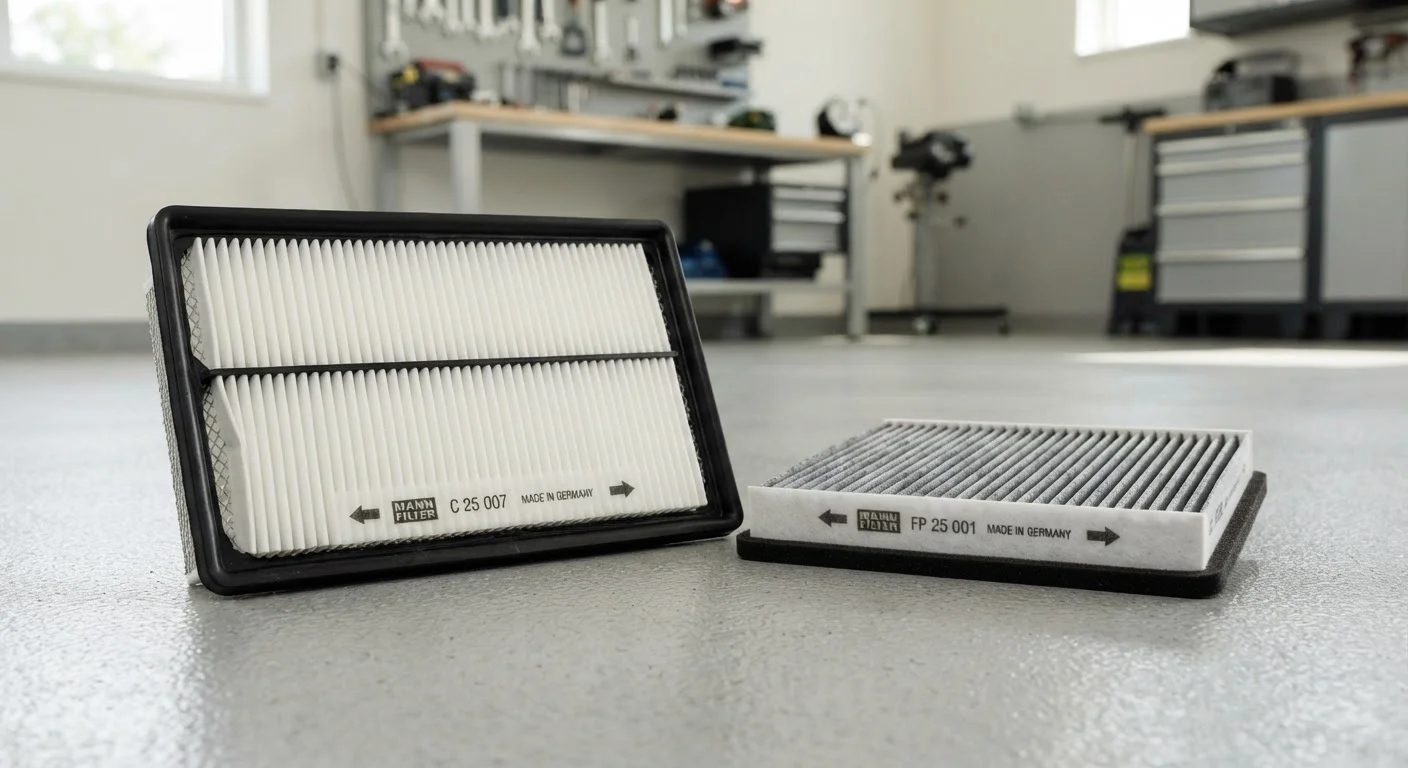
Two Filters, Two Completely Different Jobs
Despite sharing a name, cabin and engine air filters serve entirely separate functions in your vehicle. Confusing them — or assuming that servicing one covers the other — is one of the most common maintenance oversights drivers make. Understanding what each filter actually does is the first step toward keeping both in good working order.
The engine air filter sits in the engine bay, typically inside a plastic housing connected to the intake manifold. Its job is to clean the air that flows into the engine for combustion. Engines are precise machines: they require a carefully controlled air-to-fuel mixture to run efficiently, and even fine particles of dust or debris can damage cylinder walls, pistons, and other internal components over time. The engine air filter acts as a barrier, trapping contaminants before they can enter the combustion chamber. For a deeper look at how intake-related components interact, see our overview of emissions-related parts.
The cabin air filter, on the other hand, has nothing to do with the engine. It cleans the air that enters the passenger compartment through the heating, ventilation, and air conditioning (HVAC) system. Located behind the glove box, under the dashboard, or beneath the windshield cowl depending on the vehicle, it captures pollen, dust, mold spores, and fine particulates before they circulate through the interior. It protects the people inside — not the mechanical components.
How Each Filter Affects Your Vehicle When Neglected
Both filters follow the same principle: they accumulate what they catch, and eventually become too clogged to function properly. The consequences of neglect, however, are quite different for each one.
| Criterion | Cabin Air Filter | Engine Air Filter |
|---|---|---|
| Location | Behind glove box or dashboard | Engine bay intake housing |
| What it protects | Passengers and HVAC system | Engine internals and combustion |
| What it filters | Pollen, dust, mold spores | Dirt, debris, fine particles |
| Typical replacement interval | 12,000–15,000 miles | 15,000–30,000 miles |
| Signs of neglect | Weak HVAC airflow, musty odors | Reduced power, lower fuel economy |
| Risk if ignored | Poor cabin air quality | Engine wear and performance loss |
A restricted engine air filter forces the engine to work harder to draw in the air it needs. This imbalance in the air-to-fuel ratio can reduce throttle response, lower fuel economy, and in severe cases, cause the engine to run rich — meaning excess unburned fuel passes through the system. Over time, this can foul spark plugs and place unnecessary stress on internal components. Our dedicated article on why engine air filters matter goes into further detail on the performance implications.
A clogged cabin air filter produces more immediate but less mechanically serious symptoms: weaker airflow from vents, reduced effectiveness of the air conditioning or heating, and potentially musty or unpleasant odors inside the cabin. For passengers with respiratory conditions or allergies, a saturated cabin filter can also mean exposure to higher concentrations of the contaminants it can no longer trap.
Replacement Intervals and What to Watch For
Neither filter has a universal replacement schedule that fits every driver perfectly — intervals depend on your vehicle model, local environment, and driving conditions. That said, manufacturer guidelines provide a reliable starting point.
15,000–30,000 mi
Typical engine air filter replacement interval
Most vehicle manufacturer owner's manuals recommend inspecting the engine air filter within this mileage range under normal driving conditions.
12,000–15,000 mi
Typical cabin air filter replacement interval
Industry service guidelines suggest annual or mileage-based cabin filter replacement, with more frequent changes in high-pollen or dusty environments.
Up to 10%
Potential fuel economy impact from a severely clogged engine air filter
The U.S. Department of Energy has noted that a restricted air filter can affect fuel efficiency in older carbureted vehicles; effects on modern fuel-injected engines vary.
Engine air filter: Most manufacturers recommend inspection every 15,000 miles and replacement between 15,000 and 30,000 miles. Drivers who regularly travel on unpaved roads, in dusty agricultural areas, or in heavy construction zones should plan for shorter intervals. Signs that replacement is overdue include a visibly gray or dark filter element, decreased acceleration, and a drop in fuel economy.
Cabin air filter: Typical guidance calls for replacement every 12,000 to 15,000 miles, or roughly once a year for average drivers. If you notice reduced airflow from your vents regardless of fan speed, an unusual smell when the HVAC is running, or increased dust settling on interior surfaces, the cabin filter is worth inspecting sooner. High-pollen regions or areas with frequent wildfire smoke may also warrant more frequent changes.
Both filters are generally accessible enough for confident DIYers to replace, though the exact procedure varies by vehicle. If you're uncertain about the location or process for your specific model, consult your owner's manual or have a qualified technician handle the inspection. For a side-by-side reference on when each filter is due, the cabin vs. engine air filter service guide covers scheduling in further detail.