Why the Loan Amount Often Exceeds What You Expect
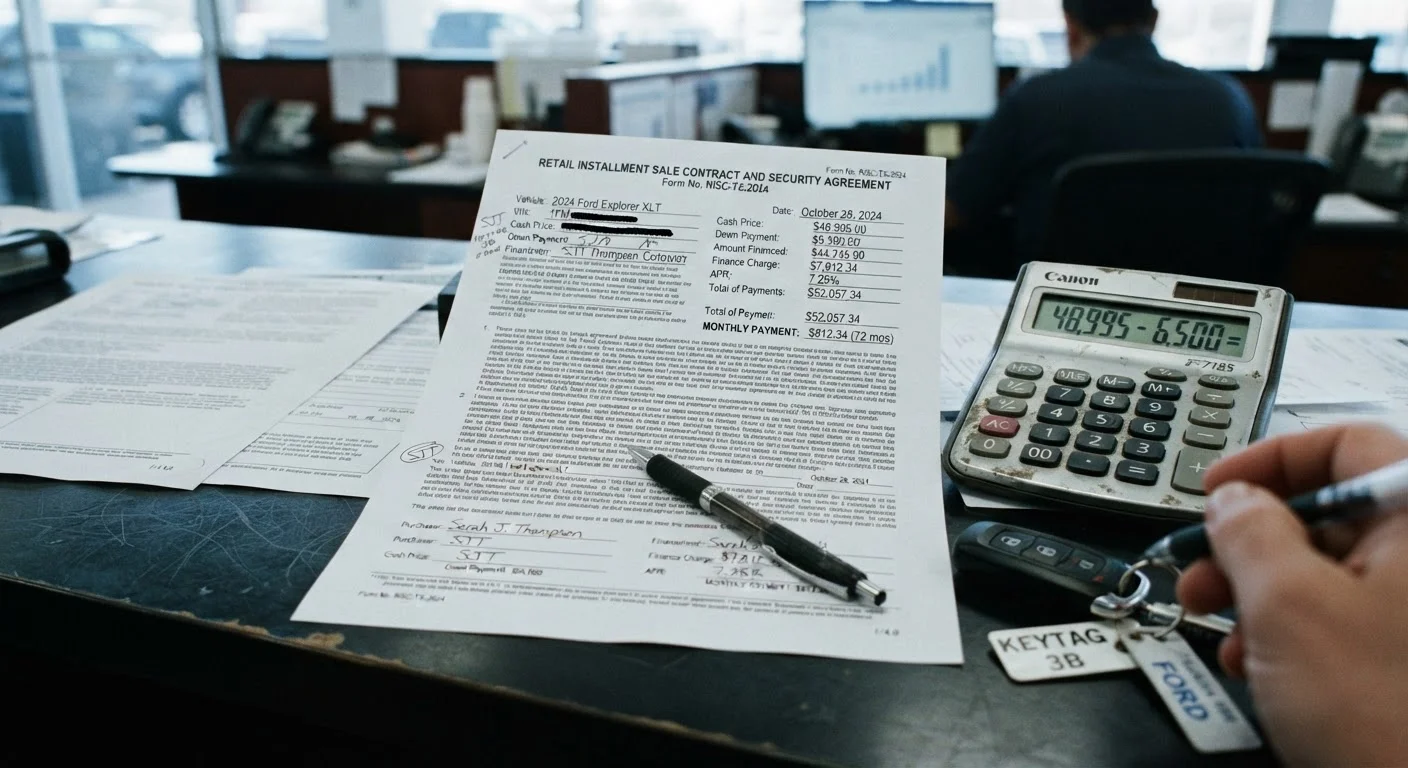
The sticker price is where most car buyers start their mental math - but it is rarely where a loan ends up. By the time taxes, registration fees, documentation charges, dealer add-ons, and optional financial products are factored in, the amount you actually borrow can be substantially higher. Understanding the gap between the advertised price and your financed total is the foundation of borrowing smarter.
The out-the-door price versus the sticker price is the first concept worth mastering. Taxes and government fees are unavoidable, but many other line items that appear on a purchase contract are either negotiable or entirely optional. The problem is that these costs are frequently bundled into a single loan figure, making them invisible unless you actively request an itemized breakdown.
For a deeper look at what you are legally agreeing to when you sign a financing contract, see our auto loans explained guide - it covers principal, interest calculation, and fine print that borrowers often overlook.
Your Loan Balance Is Not the Car's Price
Many borrowers assume the loan amount mirrors the vehicle price. In practice, documentation fees, dealer add-ons, rolled-in insurance products, and unpaid trade-in balances can add thousands before the first payment is due. Always ask for an itemized breakdown of every charge rolled into your loan principal - not just the monthly payment figure.
Common Mistakes That Drive Up Your Loan Balance
The errors below are not unusual - they reflect how dealership finance processes are structured. Recognizing each one before you sit at the finance desk is the most effective protection available to you.
Focusing only on the monthly payment instead of the total loan cost.
Why it happens: Monthly payment figures are easy to compare against a budget, so dealers often anchor negotiations there rather than on the full loan amount or APR.
Accepting every dealer-installed add-on without reviewing each item individually.
Why it happens: Add-ons like paint protection, fabric sealant, and nitrogen-filled tires are often presented as standard or pre-installed, making it feel awkward or impossible to decline.
Rolling GAP insurance or an extended warranty into the loan without comparing alternatives.
Why it happens: These products are offered at the finance desk when buyers are fatigued, and dealer-sourced versions are often priced significantly higher than third-party equivalents.
Ignoring documentation fees and other dealership charges as trivial line items.
Why it happens: Fees labeled 'doc fee,' 'processing fee,' or 'administrative fee' sound bureaucratic and fixed, so many buyers don't question them.
Extending the loan term to 72 or 84 months to offset inflated costs rather than addressing the root cause.
Why it happens: When a loan balance is high due to rolled-in extras, a longer term appears to solve the affordability problem by lowering the monthly payment.
Not accounting for a negative trade-in balance when calculating the new loan.
Why it happens: Dealers may offer to 'pay off your trade,' which sounds like a clean break, but any remaining balance owed on the old vehicle is typically added to the new loan.
Patterns like these also appear in lease agreements. If you are comparing financing to leasing, our piece on why a lease quote can look great but cost more than expected shows where similar traps emerge in a different contract structure.
What to Do Before You Sign
The finance office is not the place to read a document for the first time. Request a copy of the purchase agreement and loan paperwork in advance if possible, or ask for adequate time to review it at the dealership without pressure. Work through every line item and confirm that the total amount financed matches the sum of the vehicle price, approved fees, and any add-ons you have explicitly agreed to.
Pay particular attention to the total interest paid over the life of the loan - a figure that must appear on your loan disclosure under the federal Truth in Lending Act (TILA). This number tells you the real cost of financing, not just the monthly obligation. Our finance agreement review checklist walks through each critical figure you should verify before committing.
If you are weighing whether to make larger payments once the loan is active to offset a higher balance, our guide on making extra payments on an auto loan explains how principal prepayment works and what to confirm with your lender first.
This article is for general informational and educational purposes only. It does not constitute personalized financial, legal, or tax advice. Consult a qualified financial professional for guidance specific to your situation.