How Auto Loan Interest Actually Accrues
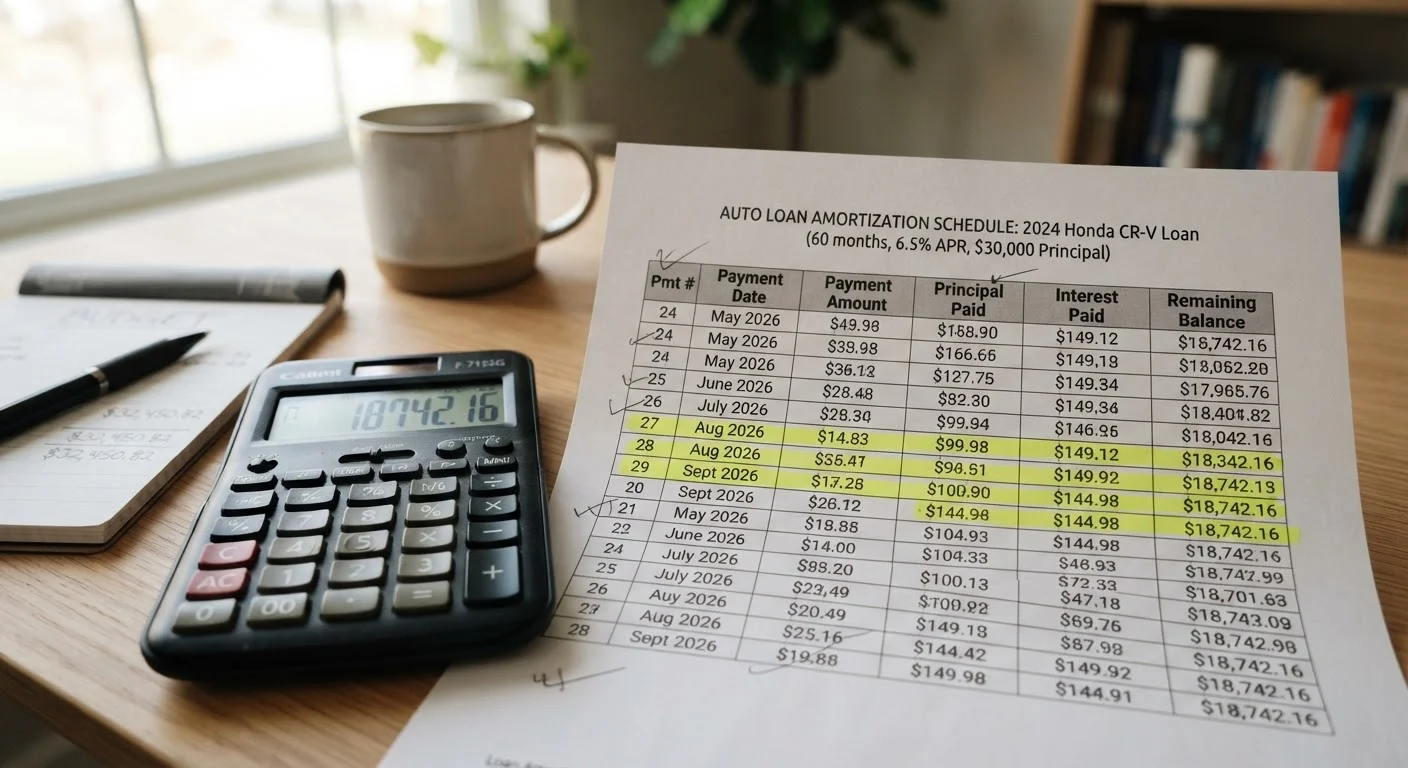
Most auto loans in the US use simple interest, meaning interest is calculated daily based on your current outstanding principal balance. Each time you make a payment, a portion retires interest that has accrued since your last payment, and the remainder reduces the principal. Because next month's interest charge is calculated on that lower principal, the two figures shift over the loan's life - a process known as amortization.
In the early months of a loan, a larger share of every payment goes toward interest and a smaller share toward principal. As the principal shrinks, the interest portion of each payment gradually falls. This is why longer loan terms raise total interest paid - stretching out the repayment period keeps the balance higher for longer, giving interest more time to accumulate.
Understanding this mechanic is the foundation for seeing why extra payments are so effective: every extra dollar that reaches your principal today reduces the base on which tomorrow's interest is calculated.
The Maths Behind Extra Payments
Consider a hypothetical $25,000 auto loan at a 7% annual percentage rate (APR) over 60 months. The scheduled monthly payment would be roughly $495. Over the full term, the borrower would pay approximately $4,700 in total interest.
Now suppose that same borrower adds just $75 to every monthly payment, bringing it to $570. That extra $75 - applied entirely to principal - accelerates the payoff schedule. The loan could be retired approximately seven months earlier, and total interest paid might drop by roughly $500 or more, depending on precise timing. The exact figures vary with each loan, but the directional relationship holds universally: less principal outstanding = less interest accruing each day.
This dynamic also interacts with the factors discussed in fees and add-ons that quietly inflate your total car payment. A higher starting balance means extra payments have more ground to cover before the benefit is felt, which reinforces the value of negotiating a lower purchase price and minimizing rolled-in costs upfront.
Down Payment as a Head Start
A larger down payment reduces the principal you finance from day one, which means less interest accrues over the entire loan term. If you're still in the planning stage, understanding how down payments affect your loan is a natural complement to an extra-payment strategy.
Step-by-Step: How to Make Extra Payments Count
Intention alone isn't enough - extra funds need to reach your principal correctly. Follow these steps to ensure your overpayments deliver the interest savings you expect.
Review your loan agreement for prepayment penalties
Before sending any extra money, read your loan contract for a prepayment penalty clause. Some lenders charge a fee if you pay off a loan early or make payments above a certain threshold. If a penalty exists, calculate whether the interest savings outweigh the fee. Many auto loans - particularly those originated after the late 2000s - do not carry prepayment penalties, but always verify your specific contract.
Contact your lender to confirm principal-only application
Call or write to your lender and ask how to designate extra funds as a principal-only payment. Some servicers automatically apply any overpayment toward your next scheduled payment rather than your current principal, which delays the benefit. Request the specific method - a separate check, an online payment field, or a written instruction - that ensures your extra amount reduces principal immediately. Get confirmation of this in writing if possible.
Decide on a consistent extra-payment amount
Determine how much additional principal you can realistically commit to each month. Even a modest, consistent amount - $25, $50, or $100 - compounds in effect over time. Irregular lump-sum payments also help, but a predictable monthly add-on is easier to budget and maintain. Review your monthly cash flow carefully; focusing narrowly on the payment figure can obscure how your total budget is being used.
Verify each extra payment was applied correctly
After your first few extra payments, log into your account or request a statement and confirm the principal balance has decreased by the expected amount. Cross-reference with your amortization schedule - most lenders are required to provide one. If the balance does not reflect your extra contribution to principal, contact your lender immediately to correct the application before the next billing cycle.
Recalculate your interest savings periodically
Every few months, use a loan amortization calculator to re-run your remaining balance, interest rate, and new monthly payment against the original payoff date. This shows you in real time how many months you have removed from the loan and how much interest you have already saved. Seeing concrete progress reinforces the habit and helps you decide whether to increase your extra payment as your financial situation evolves. For additional context on how the loan term interacts with this, see what actually happens when you make extra auto loan payments.
This article provides general financial information for educational purposes only and is not personalized financial, tax, or legal advice. Loan terms, interest calculations, and lender policies vary. Consult a qualified financial professional before making decisions about your specific situation.