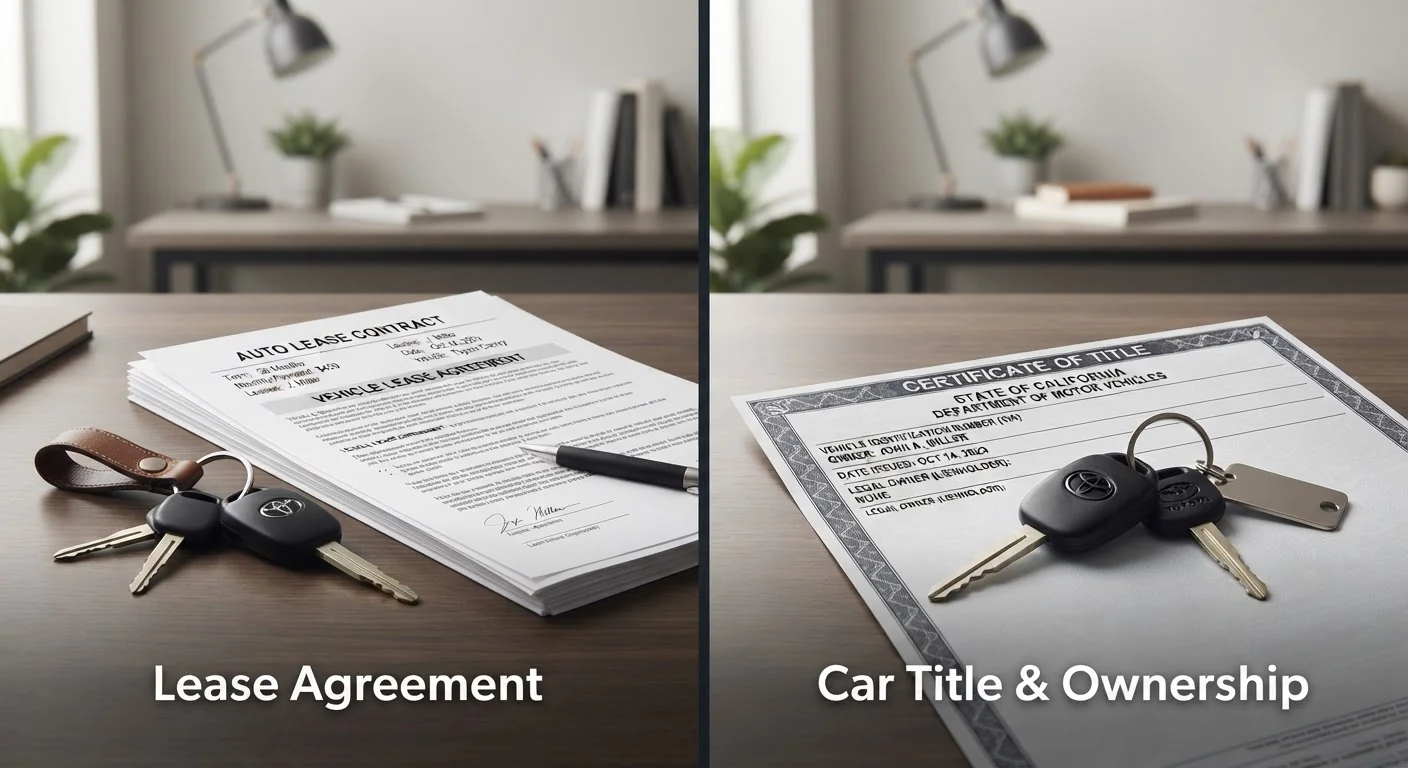
What You're Actually Comparing
When you lease a car, you're paying for the portion of its value you use during the agreement term - typically two to four years. When you finance or buy outright, you're paying for the entire vehicle and building equity as you go. These are structurally different financial arrangements, not just different payment plans.
To understand how lease numbers are constructed - from capitalized cost to residual value - see Car Leasing Explained: How the Numbers Actually Work. It's useful background before comparing the two paths side by side.
The core tension: leasing prioritizes access and flexibility, while ownership prioritizes control and long-term value. Neither is inherently smarter - context is everything.
The Case for Leasing
Short-term leases appeal to drivers who want predictability and newer technology without the full financial commitment of ownership.
Lower monthly payments for the same vehicle
Because you're only financing the depreciation during the lease term rather than the full purchase price, monthly payments are typically lower than a comparable auto loan - often by a meaningful margin.
Access to newer vehicles more frequently
Most leases run two to three years, making it straightforward to upgrade to a newer model with updated safety features and technology at each cycle.
Warranty coverage often aligns with the lease term
New-vehicle manufacturer warranties commonly cover the duration of a standard lease, meaning most mechanical repairs fall under warranty rather than out-of-pocket costs.
Reduced exposure to depreciation risk
With a closed-end lease, the leasing company bears the residual value risk. If the car is worth less than projected at lease end, that loss isn't yours to absorb.
Predictable near-term costs
Fixed monthly payments and warranty coverage make it easier to budget transportation costs accurately over the lease period.
One often-overlooked consideration is lease structure. Most consumer leases are closed-end, meaning the residual value risk falls on the leasing company, not you. Learn how closed-end and open-end leases differ before signing any agreement.
The Drawbacks of Leasing
Leasing's flexibility comes with real constraints. Understanding them upfront prevents costly surprises at the end of the term.
No equity built; payments don't accumulate ownership
Every monthly payment goes toward the vehicle's use, not ownership. At the end of the term, you walk away with no asset unless you opt to purchase the vehicle.
Mileage limits can be restrictive and costly
Standard leases typically cap annual mileage at 10,000 to 15,000 miles. Exceeding the limit triggers per-mile charges - commonly $0.15 to $0.30 per mile - that can add hundreds of dollars at lease end.
Wear-and-tear standards create end-of-lease risk
Lessees are responsible for returning the vehicle in acceptable condition. Damage beyond normal use - defined by the leasing company - can result in additional charges assessed at return.
Early termination is expensive and complicated
Exiting a lease before the term ends typically involves substantial penalties, and the process is more complex than selling a vehicle you own outright.
Continuous payments with no end date if you always lease
Perpetual leasing means perpetual payments. Unlike ownership, where financing eventually ends and the car is yours free and clear, the monthly obligation continues indefinitely if you roll from one lease into another.
Customization is restricted
Most lease agreements prohibit modifications to the vehicle, limiting your ability to personalize it - and any unauthorized changes may need to be reversed at your cost before return.
Excess Mileage and Wear Fees Add Up
Two of the most common sources of unexpected cost at lease end are excess mileage charges and wear-and-tear assessments. These fees are outlined in your lease contract but easy to underestimate at signing. Review the specific per-mile overage rate and the leasing company's definition of acceptable wear before you agree to any terms. If you anticipate driving more than the cap, negotiating a higher mileage allowance upfront - though it raises monthly payments - is usually cheaper than paying overages at the end.
For a full breakdown of the fees and terms embedded in lease contracts, the Lease Glossary: Key Terms Defined in Plain Language is a useful reference before you sign.
Long-Term Ownership: Stability and Its Costs
Buying a vehicle - whether through a loan or cash purchase - means you own an asset. Once the loan is paid off, your monthly transportation cost drops significantly. Owners also face no mileage penalties, no end-of-lease inspection fees, and can modify or sell the car freely.
That said, ownership brings its own financial exposure. Depreciation hits hardest in the first three years, and maintenance costs rise as vehicles age. Financing a vehicle over a longer loan term also means paying more in total interest. If you're comparing loan lengths, Short Loan vs. Long Loan: Which Financing Term Fits Your Situation explains the trade-offs across 36- to 72-month financing periods.
15,000
Typical annual mileage cap on consumer leases
Leases commonly allow 10,000-15,000 miles per year; charges for overages can accumulate quickly for higher-mileage drivers.
~50%
Average vehicle depreciation in first three years
New vehicles commonly lose roughly half their value within the first three years, a cost that affects both buyers and is priced into lease payments.
For a direct cost comparison between leasing and financing, Leasing vs. Financing: Which Path Actually Costs Less?.
How to Match the Decision to Your Situation
A few practical questions can help clarify which path fits your circumstances:
- How many miles do you drive annually? Drivers consistently exceeding 15,000 miles per year often find ownership cheaper, since excess mileage fees on leases add up quickly.
- How long do you plan to keep the vehicle? If you typically hold a car for five or more years, ownership almost always produces lower total cost. If you prefer switching every two to three years, leasing may be more practical.
- Do you need flexibility to exit early? Breaking a lease early is expensive and contractually complicated. Selling a financed vehicle - if you have equity - is simpler.
- What's your payment priority? Leasing typically offers lower monthly payments for the same vehicle. But those payments never end if you always lease. Payment strategies matter here - lower monthly costs aren't always lower lifetime costs.
At the end of a lease, you'll also face a decision: return the vehicle, buy it out, or roll into a new lease. Each path has financial implications worth understanding in advance. Your Three Choices When a Car Lease Ends walks through each option clearly.
This article provides general financial information for educational purposes only and is not personalized financial advice. Consult a qualified financial professional for guidance specific to your circumstances.