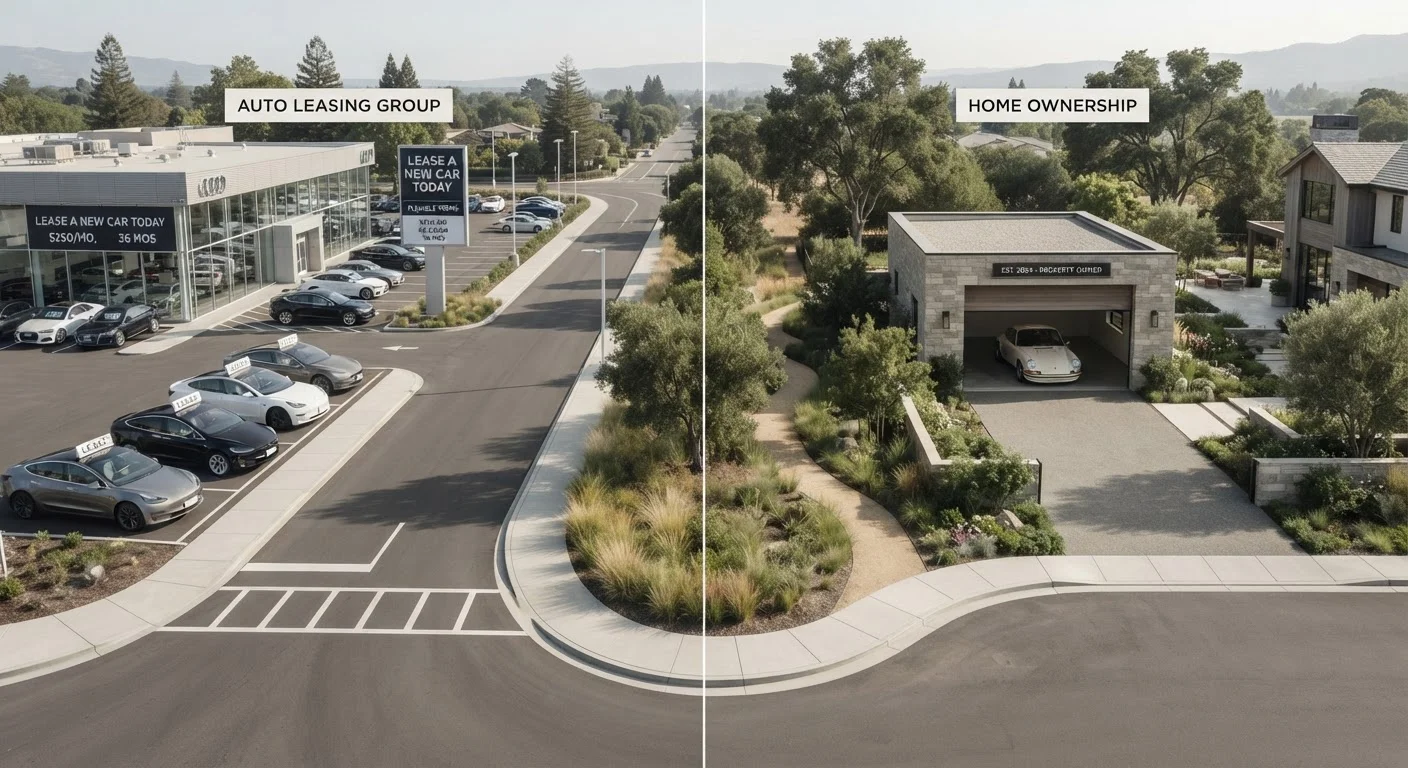
How the Core Cost Structures Differ
At the surface, leasing and financing look like a simple trade-off: lower payments now versus ownership later. The reality is more layered. Understanding where each dollar goes is essential before comparing quotes side by side.
When you lease, you pay for the portion of the vehicle's value you consume during the contract - typically two to four years. Your monthly payment covers depreciation (the gap between the car's current value and its projected residual value at lease-end) plus a finance charge based on a figure called the money factor (equivalent to an interest rate, expressed differently). You return the car at term-end unless you opt to purchase it.
When you finance, you borrow the vehicle's full purchase price minus any down payment, then repay principal plus interest over the loan term - commonly 48 to 72 months. Each payment reduces your balance and increases your equity stake. At payoff, you own the vehicle outright.
The key insight: lease payments are lower in part because you're not paying off the full vehicle price. But that lower payment comes with conditions - mileage caps, wear standards, and no ownership at term-end. See our guide to hidden lease costs for a closer look at where fees tend to accumulate.
| Criterion | Car Leasing | Auto Financing |
|---|---|---|
| Monthly Payment | Generally lower | Generally higher |
| Ownership at Term-End | None (unless purchased) | Full ownership |
| Mileage Restrictions | Yes - typically 10,000-15,000 miles/year | No restrictions |
| Equity Building | No equity accumulates | Equity grows with each payment |
| Wear-and-Tear Liability | Excess wear charged at return | No lease-end charges |
| Warranty Coverage | Usually covered for full term | Varies by vehicle age and term length |
| Early Exit Costs | Early termination fees apply | Prepayment penalties rare but possible |
| Long-Term Total Cost | Higher if leasing continuously | Lower once vehicle is paid off |
Long-Term Cost: The Full Picture
Monthly payment comparisons miss a critical dimension: what happens after the term ends. This is where leasing versus financing diverges most sharply for long-term value.
A driver who leases continuously - rolling from one two- or three-year lease to the next - will always have a car payment. Over a 10-year period, that means a decade of payments with no asset to show at the end. A buyer who finances a vehicle and keeps it for seven or eight years pays off the loan, then drives payment-free for several years, potentially saving thousands before eventually purchasing again.
2-3 yrs
Typical lease term length
Most consumer leases run 24 to 36 months, keeping drivers within the standard manufacturer warranty window.
$0.10-$0.25
Per-mile overage fee on leases
Excess mileage fees are disclosed in the lease contract and can add hundreds to thousands of dollars at term-end for high-mileage drivers.
~49%
Share of new vehicle transactions financed
According to Experian's State of the Automotive Finance Market reports, a substantial majority of new vehicle transactions involve an auto loan rather than a lease or cash purchase.
That said, leasing isn't automatically the more expensive choice for everyone. Common lease misconceptions - like the idea that leasing always costs more - don't hold up under scrutiny. A driver who leases a vehicle they would otherwise finance at a high interest rate, keeps it only two years, then sells or trades, may spend comparably or even more on the financed route after factoring in depreciation losses and interest paid early in the loan.
To make a real comparison, consider the total cost of ownership, not just sticker price or monthly payment. This means accounting for depreciation, interest or money factor, insurance (which can differ between leased and owned vehicles), maintenance obligations, and any end-of-term fees.
Flexibility, Commitment, and Life Circumstances
Beyond raw numbers, your personal situation shapes which path is financially smarter. Consider how long you realistically plan to keep a vehicle, how many miles you drive annually, and how stable your income and lifestyle are likely to be over the next several years.
Leasing offers a structured exit every two to four years - useful if your transportation needs are likely to change. However, exiting a lease early can be costly; early termination fees are common. For a deeper look at that trade-off, see our comparison of short-term lease flexibility versus long-term ownership stability.
Financing locks you into a longer commitment, but you gain the freedom to sell, modify, or keep driving the vehicle as long as it serves you - without penalty. If you're weighing an auto loan against other payment strategies, our overview of payment strategies covers down payments, loan term choices, and monthly budget planning.
Drivers considering a used vehicle instead of new have a distinct set of calculations. Interest rates and lender requirements shift significantly - a topic covered in detail in our look at financing new versus used cars.
This article is for general informational purposes only and does not constitute personalized financial or legal advice. Consult a qualified financial professional before making decisions based on your individual circumstances.