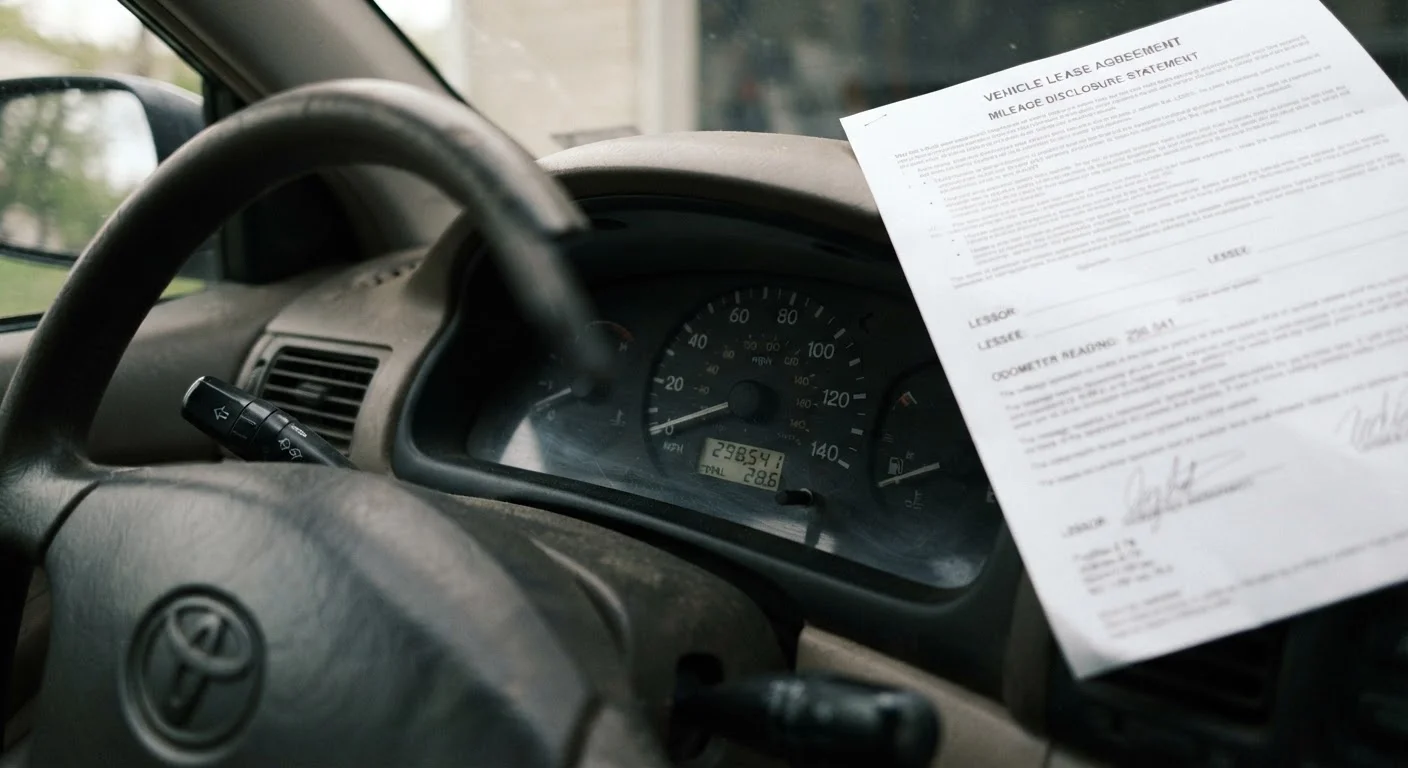
How Mileage Limits Are Built Into a Lease
When you sign a car lease, you're essentially paying for the vehicle's depreciation during the term you use it. Mileage is one of the biggest drivers of depreciation, so lessors cap how far you can drive to protect the vehicle's projected residual value - the estimated worth of the car at the end of the lease.
Most standard lease contracts offer annual allowances of 10,000, 12,000, or 15,000 miles. A three-year lease at 12,000 miles per year, for example, gives you a total cap of 36,000 miles over the contract's life. That total, not the annual figure, is what's enforced when you return the car.
Understanding how the mileage limit ties into the full lease structure is important. If you want a deeper look at how capitalized cost, residual value, and money factor interact, see our breakdown of how lease numbers actually work.
What Overage Charges Look Like in Practice
If you return a leased vehicle with more miles than your contract allows, the lessor charges a flat fee for every mile over the limit. This fee - called the per-mile overage rate - is spelled out in your contract and is non-negotiable after the fact.
$0.10-$0.30
Typical per-mile lease overage charge
Rates vary by vehicle class and lessor; luxury vehicles generally carry higher per-mile penalties than mainstream models.
12,000
Miles - most common annual lease allowance
Many standard lease agreements default to 12,000 miles per year, though 10,000 and 15,000-mile options are widely available.
15,000+
Average miles driven annually by US motorists
The Federal Highway Administration has reported average annual vehicle miles traveled per driver consistently above 14,000-15,000 miles, suggesting many drivers underestimate their mileage needs.
The math can add up quickly. At $0.20 per mile, returning a car with 5,000 extra miles generates a $1,000 bill due immediately at lease return - on top of any other lease-end costs. At $0.25 per mile, that same overage reaches $1,250.
These charges are separate from wear-and-tear fees. If you're also curious about what counts as excessive condition damage at return, our article on wear-and-tear standards at lease return covers that in detail.
Choosing the Right Mileage Allowance Upfront
The most cost-effective move you can make is selecting a mileage limit that realistically reflects how you drive - before you sign. Underestimating to get a lower monthly payment often backfires at lease-end.
To estimate your annual mileage accurately:
- Check your current vehicle's odometer and divide by the number of years you've owned it.
- Consider upcoming changes - a longer commute, a move, or planned road trips - that could increase driving.
- Add a 10-15% buffer for unexpected usage.
If your estimate lands near a tier boundary - say, 13,000 miles - it's usually worth requesting the next tier up. The monthly payment difference for an extra 2,000-3,000 miles per year is typically modest compared to per-mile overage rates charged at the end.
Negotiate Mileage Before Signing, Not After
Requesting a higher mileage tier at the time of lease negotiation is almost always cheaper than paying per-mile overage penalties at return. Even if the lessor won't adjust the tier, getting the overage rate in writing lets you calculate your worst-case exposure before committing to the contract.
Lease quotes can obscure these trade-offs with attractive low payments. Our article on why lease quotes can cost more than they appear explains what else to scrutinize before signing.
Managing Mileage During an Active Lease
Once a lease is in force, you have limited but real options for managing mileage exposure.
Track your pace regularly. Divide your total contracted miles by the number of months in your lease to find your monthly target. Check the odometer periodically to see if you're on track.
Ask about mid-lease mile purchases. Some leasing companies allow you to buy additional miles before the lease ends, sometimes at a lower rate than the overage penalty. This isn't available from every lessor, so call and ask early - not in the final month.
Consider your lease-end options. If you're significantly over mileage and nearing the end of your term, buying out the vehicle can sometimes make financial sense because the buyout price is fixed in your contract regardless of mileage. Review our guide on your three choices when a car lease ends for a full comparison of return, buy, and roll-over paths.
This article is for general informational purposes only and does not constitute personalized financial or legal advice. Consult a qualified financial professional before making decisions based on your specific circumstances.