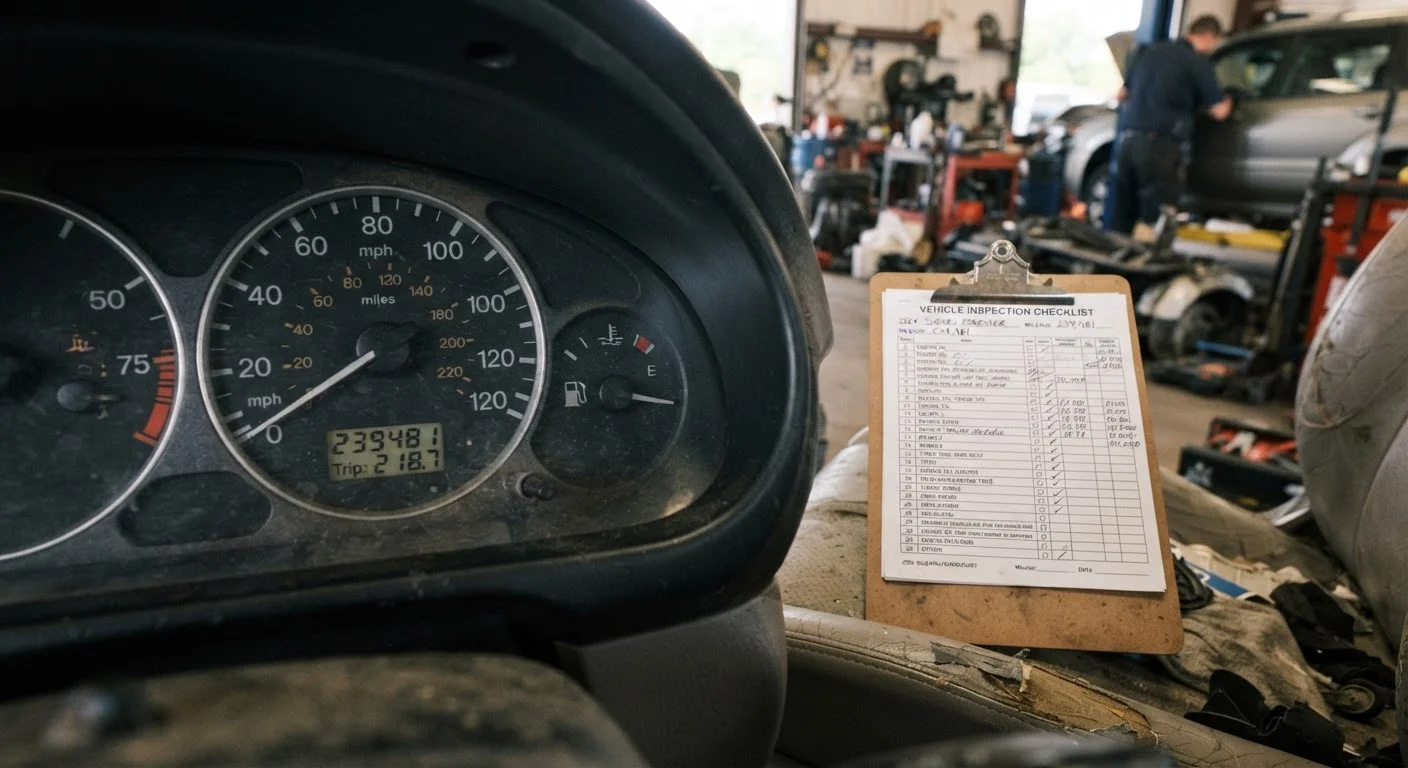
Why These Three Factors Must Be Read Together
When evaluating a used car, buyers instinctively reach for the odometer. It's a single, concrete number — easy to compare across listings. But relying on mileage alone consistently leads buyers toward bad decisions in both directions: overpaying for low-mileage cars that haven't been cared for, or dismissing high-mileage vehicles that have years of dependable life remaining.
Real value emerges from how mileage, age, and condition interact. A five-year-old car with 90,000 miles and a full documented service history may represent a sounder purchase than a ten-year-old car with 40,000 miles that sat in a garage, rarely driven and infrequently maintained. Neither number tells the whole story on its own. This is why the full picture beyond the odometer matters so much during evaluation.
What Mileage Actually Tells You
Mileage reflects mechanical wear from use — engine cycles, brake applications, transmission shifts. Broadly speaking, higher mileage corresponds to more wear on moving parts. The commonly cited U.S. benchmark is roughly 12,000 to 15,000 miles per year; a car clocking significantly above that figure annually warrants additional scrutiny of its maintenance record.
However, the type of mileage matters as much as the total. Highway miles are generally easier on a vehicle than stop-and-go city driving. A car used primarily for long commutes may show higher numbers but have experienced less engine and brake stress than an urban vehicle with half the miles.
12,000–15,000
Average annual miles driven in the U.S.
This benchmark, widely used by vehicle valuation guides, helps buyers assess whether a car's mileage is above or below typical usage for its age.
~$9,000
Average annual cost of vehicle ownership
According to AAA's annual Your Driving Costs study, total ownership costs — including maintenance and repairs — underscore why pre-purchase condition assessment matters financially.
The critical question to pair with any mileage figure: was the car serviced consistently? Oil changes, fluid replacements, and scheduled maintenance at or near manufacturer-recommended intervals are what determine whether miles have been accumulated safely or destructively.
How Age Works Independently of the Odometer
A car ages whether it's driven or not. Rubber components — belts, hoses, seals, weather stripping — degrade over time due to heat, UV exposure, and oxidation. Brake fluid absorbs moisture. Coolant loses its corrosion inhibitors. These processes happen on a calendar timeline, not a mileage timeline.
This is why a 12-year-old vehicle with 35,000 miles deserves the same scrutiny on time-sensitive components as one with 120,000 miles. The timing belt (on vehicles that use one rather than a chain) may need replacement based on age, regardless of mileage. Suspension bushings and brake hoses may be compromised well before they would be on a newer, higher-mileage vehicle.
For buyers comparing vehicles across different model years, reliability data by vehicle age can help calibrate expectations before committing to an inspection.
Condition: The Factor That Settles the Equation
Condition is where value is ultimately determined. Two vehicles of identical age and mileage can have dramatically different real-world worth based on how they've been maintained and what their current mechanical state is.
Condition assessment operates at several levels. The most accessible is visual: panel gaps, paint consistency, rust on the undercarriage, and tire wear patterns all communicate how the car has been used and stored. Uneven tire wear, for example, can indicate alignment problems or suspension wear that the seller may not have disclosed.
Beyond the visual, a documented service history is the most reliable proxy for condition. Receipts, dealer service records, or a maintenance log confirm that the vehicle received care at appropriate intervals. Gaps in service history should prompt questions, not assumptions.
The definitive condition check is a pre-purchase inspection by an independent, licensed mechanic. This step should be non-negotiable for any used vehicle purchase above a nominal value. A qualified technician can identify deferred maintenance, hidden accident damage, fluid leaks, and components approaching end of life — information that directly affects what a fair price looks like.
For a practical overview of what to evaluate before you even see the car in person, reading a used car listing critically is a useful starting point.
Putting the Three Factors Into Practice
When comparing vehicles, build a simple framework: establish what the mileage implies about mechanical wear, factor in what the age suggests about time-sensitive components, and then treat condition evidence — service records, inspection results, vehicle history reports — as the deciding input.
A vehicle that scores well on all three is likely priced closer to fair market value and carries lower near-term cost risk. One that scores poorly on condition despite favorable mileage and age numbers should be negotiated down to account for likely repair costs, or walked away from if the seller won't engage.
Many of the common assumptions about used cars — that low mileage equals low risk, or that older cars are inherently unreliable — don't hold up when buyers look at these three factors together. Disciplined evaluation replaces assumption with evidence, and that shift is where buyers gain a genuine advantage.
This article is for general informational purposes only. It does not constitute financial, legal, or mechanical advice. Consult a qualified mechanic for a pre-purchase inspection and a licensed financial professional for guidance on vehicle financing decisions specific to your situation.