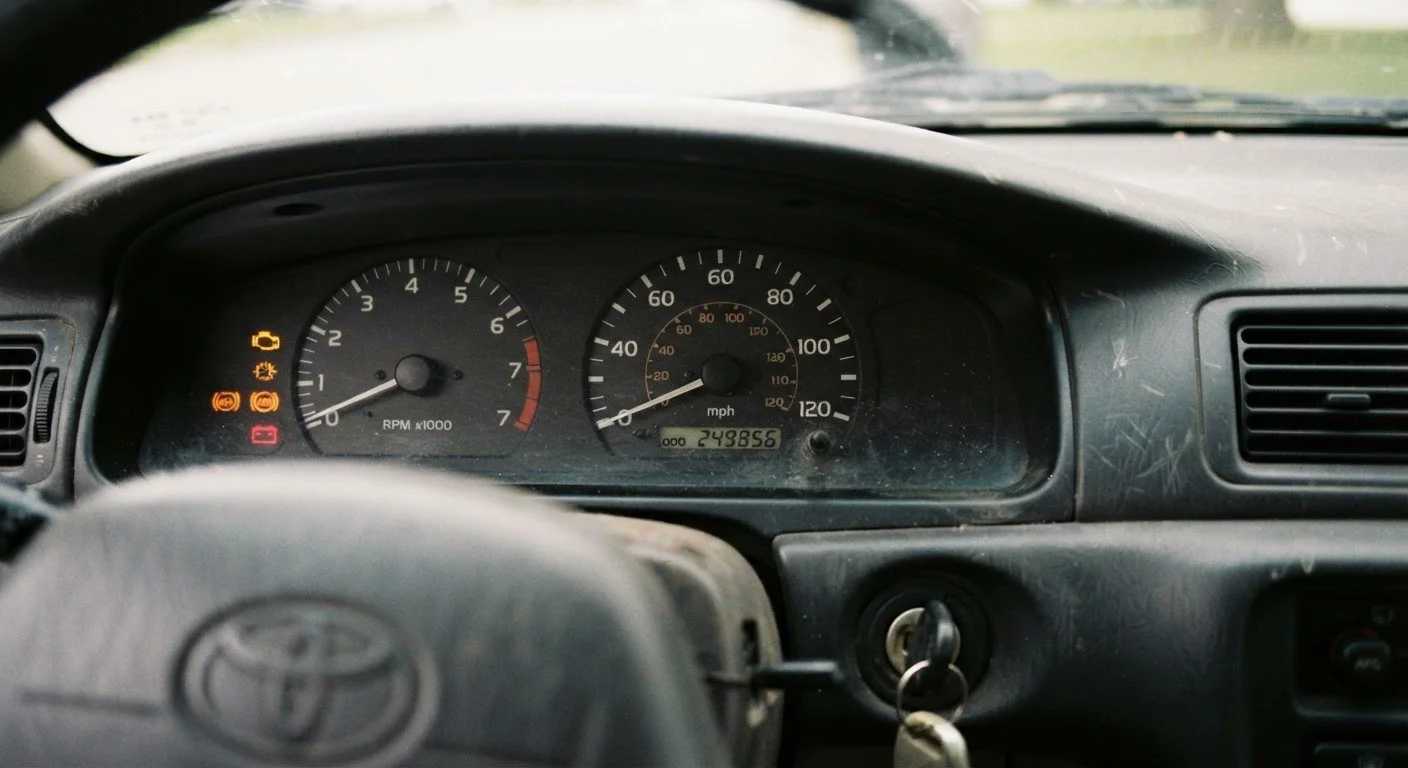
The Mileage Shortcut and Why It Falls Short
When buyers scan used car listings, the odometer reading is often the first filter they apply — discard anything over 100,000 miles, keep everything under 50,000. It feels logical. But treating mileage as a stand-alone quality signal leads buyers to overpay for low-mileage lemons and walk away from genuinely solid high-mileage vehicles.
The number on the clock records distance traveled, nothing more. It says nothing about how those miles were accumulated, whether the car was maintained on schedule, or what mechanical wear actually looks like today. A used car's real condition is a product of maintenance history, driving environment, storage, and build quality — not miles alone. For a broader look at how to read these factors together, see how to weigh mileage, age, and condition.
Myth
A car with fewer miles is automatically in better condition and worth more money.
Fact
Low mileage does not equal low wear — age, storage conditions, and maintenance history determine actual condition.
A vehicle that sat in a driveway for years accumulating few miles may have degraded rubber hoses, a compromised battery, corroded brake components, and stale fluids. Meanwhile, a higher-mileage vehicle serviced rigorously on schedule can be mechanically sound and far less likely to generate near-term repair costs. Condition, not the odometer, is what you're actually paying for.
Myth
High mileage means the car is near the end of its life.
Fact
Modern vehicles, properly maintained, commonly exceed 200,000 miles without major mechanical failure.
Engine and transmission engineering has improved substantially over the past two decades. Many mainstream vehicles from reputable manufacturers are designed to run reliably well past 150,000 miles when oil changes, coolant flushes, and other scheduled services are completed on time. The service record matters far more than the number on the dial.
Myth
All miles are equal — 80,000 miles is 80,000 miles, regardless of how they were driven.
Fact
The type of driving that produced those miles significantly affects how much mechanical wear has accumulated.
Highway driving at steady speeds puts less stress on brakes, transmission clutch packs, and engine cooling systems than repeated short urban trips. Short trips are particularly hard on engines because the motor may never fully reach operating temperature, allowing condensation and unburned fuel to accumulate in the oil. A vehicle's driving history — urban fleet use versus long-distance commuting — meaningfully changes its real-world wear profile.
Myth
You can trust the odometer reading as an accurate reflection of actual mileage.
Fact
Odometer fraud remains a documented problem; always verify mileage through a vehicle history report.
According to the National Highway Traffic Safety Administration (NHTSA), odometer fraud affects a meaningful portion of used vehicle transactions in the US each year, costing buyers billions of dollars in inflated prices and unexpected repairs. A vehicle history report cross-checks odometer disclosures at multiple recorded points — inspections, title transfers, and service visits — and can flag instances where the recorded mileage decreases or jumps inconsistently.
Myth
A low-mileage car needs fewer repairs and will cost less to own.
Fact
Age-related failures — belts, seals, gaskets, and fluids — occur on a time schedule, not just a mileage schedule.
Manufacturers publish maintenance intervals in both miles and time (e.g., "every 30,000 miles or 24 months, whichever comes first") precisely because components degrade with age independently of use. A five-year-old car with 25,000 miles may still require a timing belt service, brake fluid flush, or coolant replacement based on elapsed time alone. Skipping these on a low-mileage vehicle because the miles seem low is a common ownership mistake.
What to Actually Evaluate Alongside the Odometer
Once you move past raw mileage, a clearer picture of value emerges. These are the factors that reliably distinguish a well-preserved high-mileage vehicle from a problematic low-mileage one.
- Maintenance records: Oil change intervals, timing belt replacements, fluid services, and brake work documented by receipts or a dealer service history tell you how seriously the owner treated the car.
- Driving type: Highway miles place significantly less stress on brakes, transmission, and engine components than urban stop-and-go driving. A car with 120,000 mostly highway miles may be mechanically fresher than one with 60,000 city miles.
- Vehicle history report: Services like Carfax or AutoCheck cross-reference title records, reported accidents, odometer disclosures, and ownership history. Flag anything that doesn't align with the seller's account.
- Pre-purchase inspection (PPI): A qualified independent mechanic can assess actual wear on suspension, brakes, seals, and drivetrain components — things no listing or history report can reveal. Budget $100–$200 for this step; it routinely saves buyers far more.
- Age relative to mileage: A 10-year-old car with 40,000 miles likely spent long periods sitting unused. Rubber seals, belts, and fluids degrade with time regardless of mileage.
When comparing listings side by side, these factors are frequently where real value differences hide. See what buyers commonly overlook when comparing deals for a broader checklist.
1 in 5
Used vehicles with odometer discrepancies
NHTSA estimates suggest roughly one in five used vehicles in the US may have an inaccurate odometer reading at the point of sale.
200,000+
Miles modern engines can reliably reach
Consumer vehicle data consistently shows well-maintained modern engines from many mainstream manufacturers routinely surpassing 200,000 miles without major overhauls.
$100–$200
Typical pre-purchase inspection cost
Independent mechanics typically charge between $100 and $200 for a pre-purchase inspection — a cost that frequently uncovers issues worth thousands in negotiation leverage or avoided repairs.
Putting It Together Before You Visit
A disciplined pre-visit research process prevents you from wasting time on vehicles that look good on paper. Pull the VIN-based history report before scheduling a viewing. Review the listing details critically — reading a used car listing carefully can surface red flags before you drive across town.
If the listing checks out, schedule a PPI with an independent mechanic — not a shop affiliated with the seller. Bring any maintenance records the seller provides and verify key service milestones against the manufacturer's schedule. Only after that process should you begin negotiating price. At that stage, mileage becomes one input in a broader value calculation, not a substitute for it. For a wider look at beliefs that trip up used car shoppers, common used car assumptions worth questioning is worth reading before you commit.
This article provides general educational information for car buyers and is not a substitute for advice from a qualified mechanic or automotive professional regarding any specific vehicle.