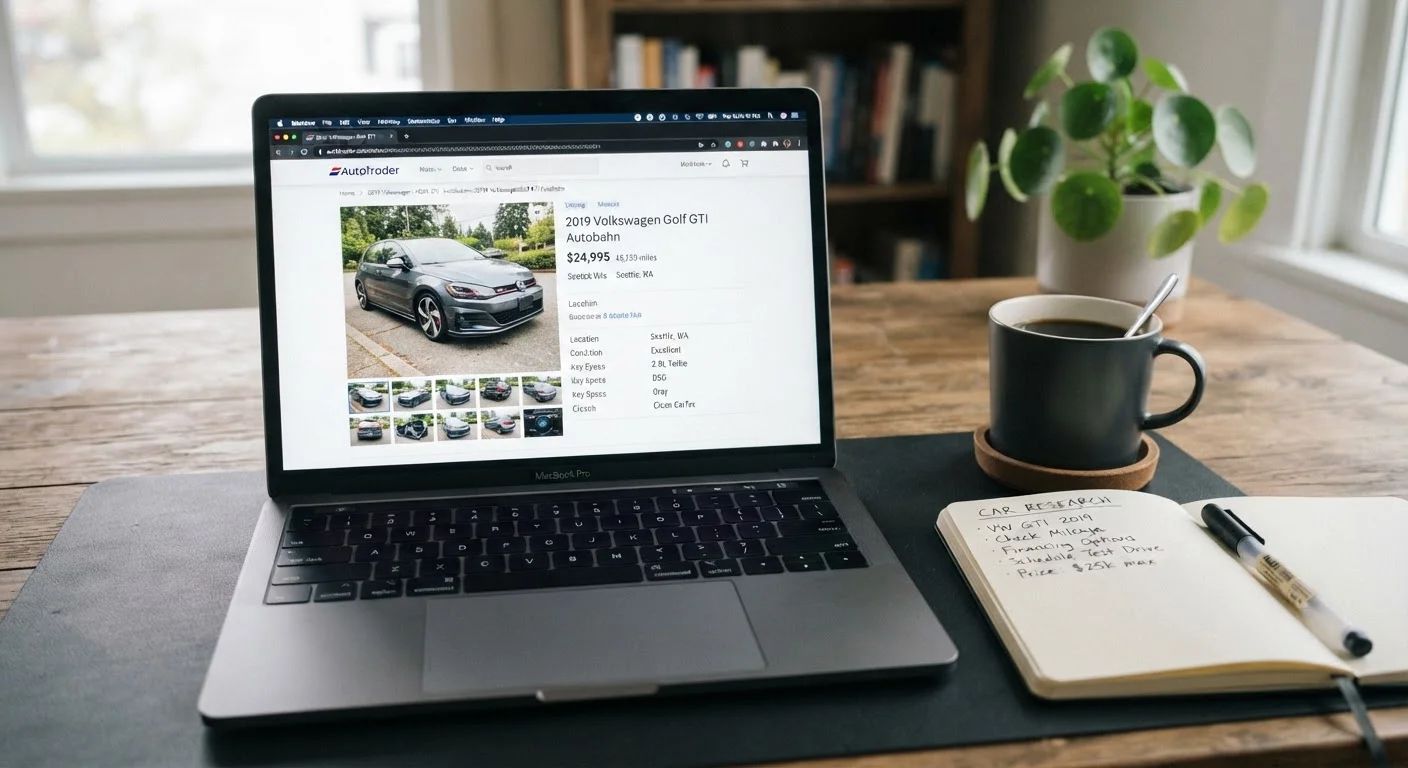
Why the Listing Is Your First Inspection
Most buyers treat an online listing as a scheduling tool — something to glance at before calling about a test drive. That's a missed opportunity. A well-read listing can tell you whether a vehicle is worth pursuing at all, and what questions to lead with if you do make contact.
The details sellers include — and just as importantly, what they leave out — reveal a lot about both the vehicle and the seller's transparency. Knowing how to decode those signals before you pick up the phone puts you in a stronger position throughout the buying process.
For a structured follow-up once you've shortlisted a vehicle, see our pre-visit inspection guide.
Best Practices for Evaluating a Used Car Listing
Work through these practices systematically when reviewing any listing. They're ordered to mirror how information typically appears — from the headline details down to the fine print.
Cross-reference the trim level against the manufacturer's original spec sheet.
Trim level determines which features came standard from the factory — safety tech, infotainment, drivetrain options, and interior materials all vary significantly between trims. A listing that names a trim without listing features could be masking a base model priced as a higher spec. Safety features in particular split across trims in ways that aren't always obvious.
Assess mileage in context, not in isolation.
Raw odometer readings mean little without knowing how those miles were accumulated. Highway miles are generally less taxing on drivetrain components than stop-and-go city driving. Age relative to mileage also matters — a five-year-old vehicle with 90,000 miles may be in better shape than a three-year-old one with 80,000 urban miles. Mileage alone is a poor measure of a vehicle's worth.
Count the photos and scrutinize what they show — and avoid.
Professional, well-lit photos covering all four exterior angles, the interior, engine bay, and undercarriage indicate a seller willing to show the vehicle's full condition. Listings with three or four blurry images, missing engine shots, or angles that conveniently crop out one corner of the car are a red flag. Sellers with nothing to hide generally show everything.
Check whether accident history is disclosed and how it's framed.
Some listings voluntarily mention prior accidents alongside repair documentation — this is a positive transparency signal. Others omit it entirely, which means you'll need to pull a vehicle history report to find out. A seller who proactively shares a clean report is in a different category from one who offers nothing. Either way, a disclosed accident is a starting point for questions, not a dealbreaker by itself.
Note how long the listing has been active and whether the price has changed.
A vehicle that has sat on the market for 60-plus days without a price drop may be overpriced, or may have condition issues that repeat viewers are detecting. A recent price reduction after a long listing period can signal motivated seller flexibility — or that something surfaced during prior inspections. Most platforms display listing age and some show price history.
Read the full description for maintenance disclosures and service history references.
Sellers who include specifics — recent brake service, timing belt replaced at 90k, new tires in the past year — are providing verifiable claims you can confirm with receipts during a visit. Vague language like 'well-maintained' or 'runs great' with no supporting detail offers nothing you can verify. For trucks especially, service history reveals far more than mileage alone.
Quick Actions You Can Take Right Now
If you have a shortlist of listings open right now, these steps take under 15 minutes and will immediately improve the quality of your comparison.
For a deeper dive into what two similarly priced listings actually offer, see what buyers commonly overlook comparing deals side by side.
From Listing to Decision
A listing review narrows your list — it doesn't close the deal. Once a listing passes your initial screen, the next step is confirming those details hold up in person and on paper. Use the pre-purchase inspection checklist to work through condition and paperwork before signing anything.
Before making an offer, run through the deal assessment checklist to verify pricing, documentation, and financing terms are in order. The goal is to arrive at a negotiation with facts, not assumptions.
This article provides general educational information about evaluating used car listings. It is not a substitute for professional mechanical inspection or personalized financial advice. Consult a qualified mechanic before purchasing any used vehicle.