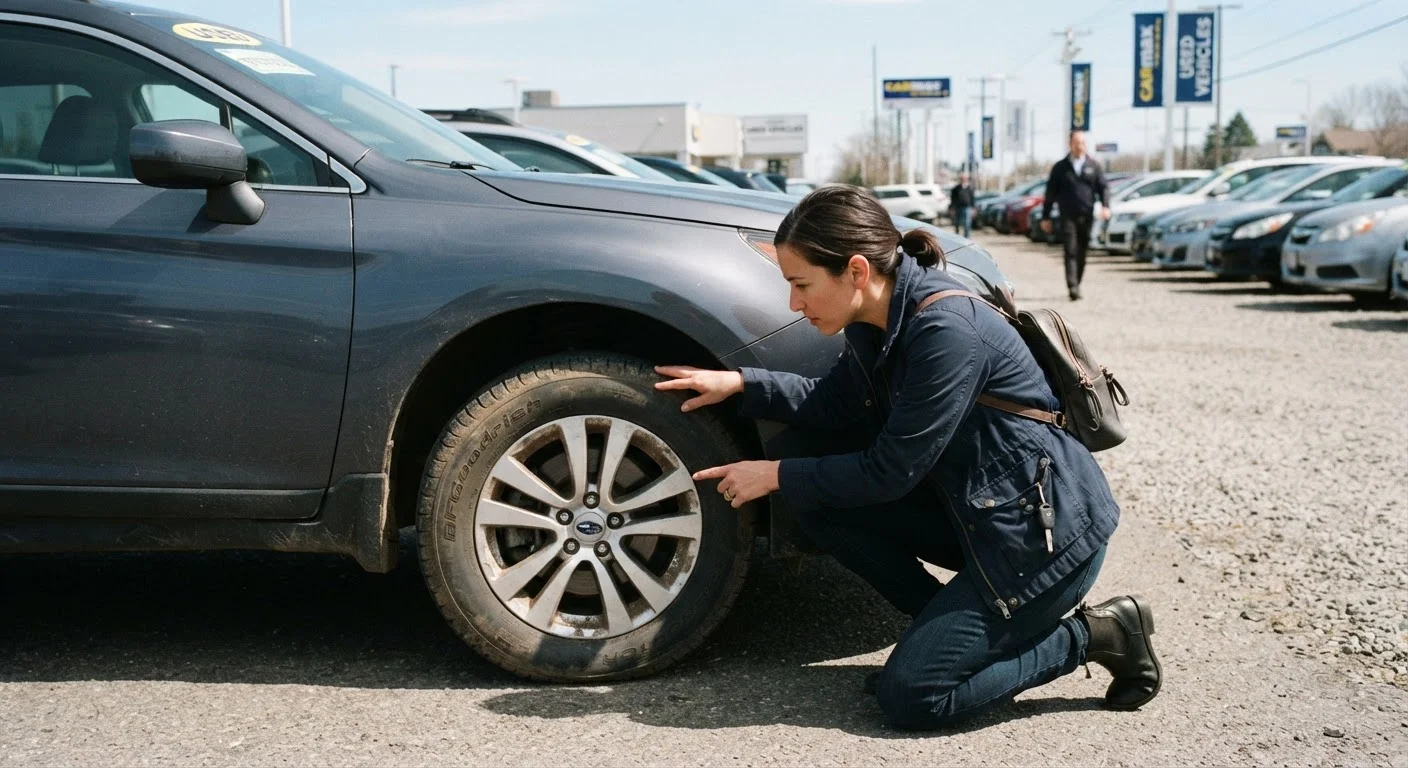
Why Assumptions Hurt Used Car Buyers
When shoppers enter the used car market, they often carry a set of beliefs shaped by secondhand stories, outdated advice, and general unease about buying someone else's problem. Those beliefs can lead to real mistakes - passing over solid vehicles, overpaying for unnecessary reassurance, or skipping the verification steps that actually matter.
The used car market has changed substantially. Vehicle build quality has improved across the industry, digital history tools have become widely accessible, and certified pre-owned programs now offer structured protections that didn't exist a generation ago. Many of the fears buyers hold onto aren't supported by current evidence. The six myth-and-fact pairs below address the misconceptions that most consistently lead buyers to poor decisions.
For a broader look at how reliability typically shifts as vehicles age, see what the data shows about reliability across a car's life.
Myth
High mileage means a used car is worn out and will soon need expensive repairs.
Fact
Mileage is one data point among many - maintenance history, driving conditions, and model-specific reliability records matter just as much.
A vehicle with 120,000 highway miles driven by one careful owner and serviced on schedule will typically be in better mechanical shape than a lower-mileage city-driven car that missed oil changes and saw frequent short trips. Modern engines are engineered to last well beyond 100,000 miles when properly maintained. Rather than filtering on mileage alone, buyers are better served by reviewing service records, checking for model-specific known issues, and arranging a pre-purchase inspection by an independent mechanic. See how to weigh mileage, age, and condition together for a fuller framework.
Myth
A clean vehicle history report means the car has no hidden problems.
Fact
History reports are a useful starting point, but they only reflect incidents that were officially reported - unreported damage and mechanical issues won't appear.
Vehicle history reports draw on insurance claims, title records, and reported accidents. Work done informally, damage repaired without an insurance claim, and mechanical wear simply don't show up. A clean report should raise your confidence slightly, not eliminate further scrutiny. A pre-purchase inspection from a licensed mechanic remains the most reliable tool for identifying undisclosed issues. For a detailed breakdown of what these reports cover and where they fall short, see what vehicle history reports do and don't tell you.
Myth
Used cars are always a financial risk compared to buying new.
Fact
New cars depreciate rapidly in the first few years; a lightly used vehicle captures that lost value without necessarily taking on proportional reliability risk.
New vehicles can lose a significant portion of their original value within the first one to three years of ownership - a cost absorbed entirely by the first buyer. Purchasing a vehicle in that window allows the second buyer to access a recent model with low wear at a materially lower price. The financial calculus depends on factors including the specific vehicle, its condition, and the financing terms available, so individual results vary. That said, depreciation is a well-documented pattern that buyers who ignore it consistently pay more than necessary. Common sources of buyer's remorse often trace back to skipping this kind of pre-purchase cost comparison.
Myth
Private sellers are more trustworthy than dealerships because they're not trying to make a profit.
Fact
Both channels carry their own risks and advantages; the seller type is less important than the verification steps you take regardless of source.
Private sellers may have lower prices and firsthand knowledge of the vehicle, but they typically offer no legal recourse if problems emerge after the sale. Dealerships - particularly those offering certified pre-owned programs - generally provide more formal protections, though pricing tends to reflect that. Neither channel is inherently safer. What matters is applying the same due diligence in both cases: independent inspection, history check, and a clear understanding of what warranties or return provisions, if any, are in place. Ex-fleet and lease-return vehicles, available through both channels, often come with documented service histories - fleet and lease returns are worth understanding as a distinct sourcing option.
Myth
Older used cars are always cheaper to own because purchase prices are lower.
Fact
Lower sticker prices on older vehicles can be offset by higher maintenance costs, lower fuel efficiency, and the absence of safety and technology features.
Total cost of ownership includes insurance, fuel, scheduled maintenance, and unplanned repairs - not just the purchase price. Older vehicles may require more frequent part replacements, lack modern driver-assistance safety systems, and consume more fuel than newer equivalents. Before assuming an older car is the more economical choice, it helps to research the ownership cost profile for that specific model and year. Evaluating and comparing car models before buying is a useful starting point for structuring that analysis.
Myth
You can tell a car's condition from photos and a test drive alone.
Fact
Many significant mechanical and structural issues are invisible to the naked eye and undetectable during a standard test drive.
Rust behind body panels, worn suspension components, early transmission problems, and prior flood or frame damage may not produce obvious symptoms during a short drive. A qualified mechanic performing a pre-purchase inspection on a hoist can identify issues that buyers - and sometimes sellers - are genuinely unaware of. The cost of an inspection is typically modest relative to the cost of discovering a major problem after purchase. For a look at how deals fall apart when buyers skip this step, understanding why used car deals collapse covers the most common scenarios.
Making Smarter Decisions From Here
Correcting these myths doesn't make every used car a good deal - it just removes the noise that prevents buyers from evaluating deals clearly. The goal is to replace gut-level assumptions with a structured approach: check the vehicle history report, arrange an independent pre-purchase inspection, research ownership costs for the specific model, and compare a range of listings rather than jumping at the first one that looks clean.
Don't Skip the Independent Inspection
No listing description, seller assurance, or history report replaces a pre-purchase inspection by a licensed mechanic of your choosing. Budget for this step before you budget for the car itself. If a seller declines to allow an inspection, treat that as a significant red flag and walk away from the transaction.
Buyers who do this work consistently find that used vehicles - particularly those one to three years old - can offer meaningful value relative to new cars, without accepting disproportionate risk. The key is knowing which questions to ask and which signals actually matter.
Once you've cleared up the myths, the next step is finding vehicles worth evaluating. Sourcing a used car you can trust walks through where to look and what to ask at each stage. And when you're comparing specific listings, the factors buyers commonly overlook when comparing deals side by side can help you avoid leaving important differences unexamined.
This article provides general information for educational purposes. Individual vehicle condition and market pricing vary. Consult qualified automotive and financial professionals before making purchase or financing decisions.