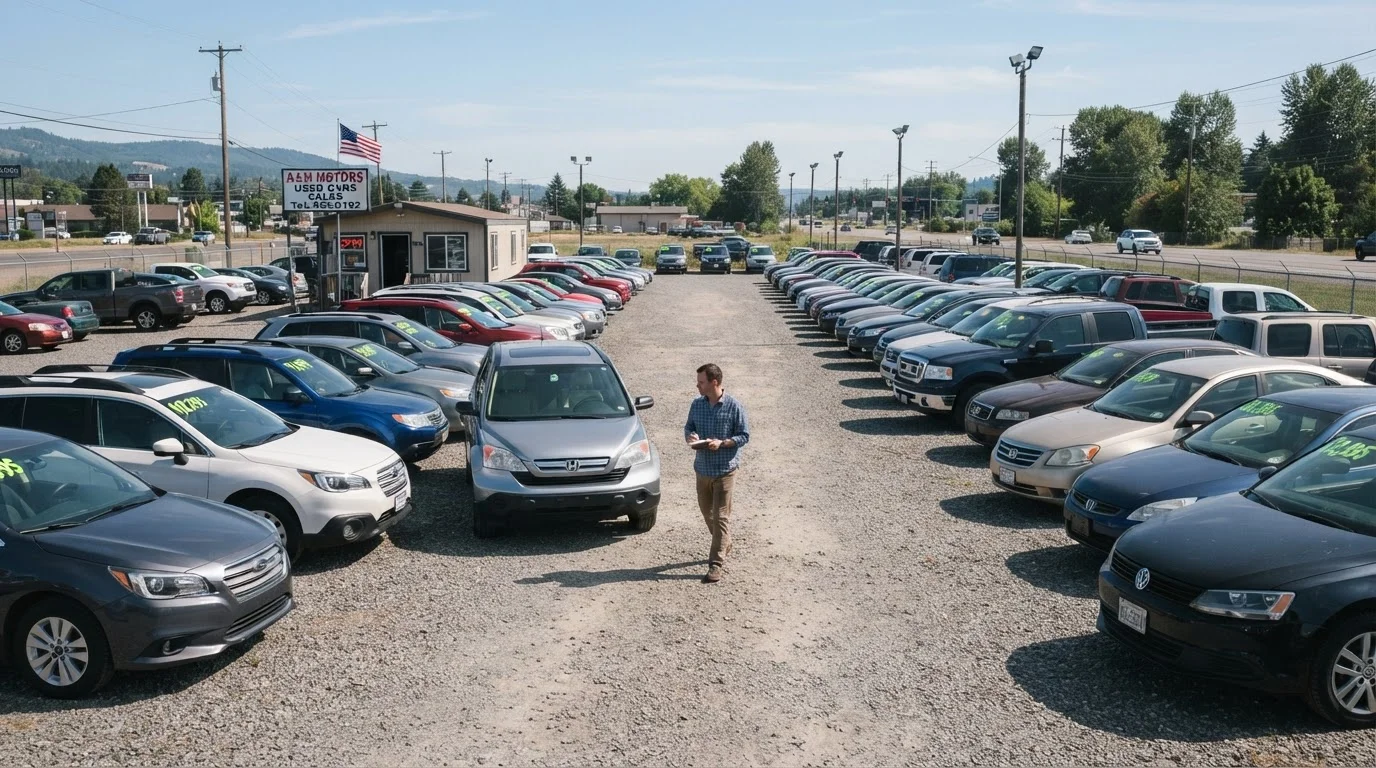
Why Sourcing Channel Matters More Than You Think
Most buyers focus on finding a specific make or model — but the channel you source from determines the protections you have, the documentation available, and how much leverage you carry if something goes wrong. A used car purchased from a franchised dealer comes with different legal obligations than one bought from a private individual, and an auction vehicle comes with almost no recourse at all.
Understanding these differences before you start searching prevents the most common beginner mistake: falling for a vehicle before verifying who you're buying it from. For a full end-to-end view of the process, see The Complete Roadmap to Finding and Buying a Used Car.
Vehicle Identification Number (VIN)
A unique 17-character code assigned to every vehicle that can be used to pull its history, confirm its specifications, and verify ownership records.
Certified Pre-Owned (CPO)
A used vehicle that has passed a manufacturer-defined inspection checklist and is backed by a limited warranty offered through franchised dealerships.
Clean title
A title with no branding (such as salvage, flood, or rebuilt) and no outstanding loans or legal claims attached to the vehicle.
Salvage title
A title issued when an insurer has declared a vehicle a total loss. It signals the car sustained significant damage and was not repaired to original standards.
Pre-purchase inspection (PPI)
An examination of a used vehicle by an independent, qualified mechanic before the sale is finalized, intended to identify mechanical issues the buyer may not spot themselves.
Lien
A legal claim on a vehicle held by a lender as collateral for an unpaid loan. A vehicle with an active lien cannot be legally transferred to a new owner until the debt is resolved.
The Main Places to Find Used Cars
Used vehicles flow through four primary channels, each with a distinct risk-reward profile:
- Franchised dealerships — Rooftops affiliated with a manufacturer brand. They must meet legal standards for disclosure, are more likely to provide inspection records, and often offer certified pre-owned (CPO) programs. CPO cars have passed a multi-point inspection and carry a limited manufacturer-backed warranty.
- Independent used car dealers — Not affiliated with any manufacturer. Regulation varies widely by state. Quality ranges from excellent to poor, so documentation and inspection matter more here.
- Private sellers — Individuals listing their own vehicles. Prices can be lower because there is no dealer overhead, but there is little legal recourse if problems emerge after the sale. Ask for full maintenance records and ownership history.
- Fleet and lease returns — Vehicles coming off corporate or government fleet contracts often have predictable maintenance records and known mileage patterns. Fleet and lease returns are worth understanding as an often-overlooked channel for documented, well-maintained vehicles.
Auctions exist as a fifth channel but are generally unsuitable for first-time buyers. Read about the specific trade-offs in Car Auctions as a Source for Used Vehicles before considering that route.
What to Check Before You Contact a Seller
Two checks should happen before you call, email, or visit any seller:
- Run a vehicle history report using the VIN. The Vehicle Identification Number appears on the dashboard near the windshield and on the title. A history report surfaces accident records, odometer discrepancies, title branding (salvage, flood, rebuilt), and lien status. No report eliminates all risk, but skipping this step is not defensible.
- Confirm the title is clean and matches the seller. Ask the seller directly whether the title is in their name and free of liens. A salvage or rebuilt title is not necessarily a deal-breaker, but it must be priced accordingly and disclosed. Walking in without this knowledge puts you at a disadvantage.
If the listing lacks a VIN or the seller is reluctant to provide one, that is sufficient reason to move to the next vehicle on your list.
Early Mistakes That Cost Buyers Later
First-time buyers lose money in predictable ways. These are the most common:
- Skipping an independent inspection. A pre-purchase inspection by a qualified mechanic — not the seller's own shop — costs roughly $100–$200 and is one of the highest-return investments in the entire buying process. If you want guidance on what to observe yourself before that appointment, Vetting a Used Car When You Know Nothing About Engines walks through practical checks any buyer can do.
- Ignoring body condition as a proxy for maintenance. Deferred cosmetic repairs often signal deferred mechanical repairs. Reading a used car's body condition teaches you to distinguish minor surface wear from structural concerns.
- Confusing list price with market value. A seller's asking price is a starting point. Before any conversation about price, look at comparable vehicles — same make, model, year, trim, and mileage — listed in your region. That data is your baseline.
Bring a Written Comparable List
Before any in-person visit or negotiation, print or screenshot three to five comparable listings from your region showing price, mileage, and condition. This gives you a concrete, neutral reference point when the conversation turns to price — and signals to the seller that you've done your homework.
Building a Shortlist You Can Actually Use
A shortlist of two to four vehicles keeps your search structured without letting any single option carry too much emotional weight. For each candidate, record the source channel, asking price, VIN, mileage, title status, and whether a history report has been run. This simple log prevents you from mixing up details across listings and keeps your comparison honest.
Rank candidates against your actual priorities — not just price. A vehicle $500 cheaper with no service records and a private seller offering no recourse may cost more in the end than a dealer unit with documented maintenance.
Once your shortlist is set, the next stage is understanding how to evaluate pricing and structure a deal. Understanding Used Car Deals from Start to Finish covers that in full. If you are still deciding whether used is the right path for you, New vs Used Cars lays out the trade-offs clearly.
This article provides general educational information about used car sourcing and is not a substitute for professional mechanical, legal, or financial advice specific to your situation.