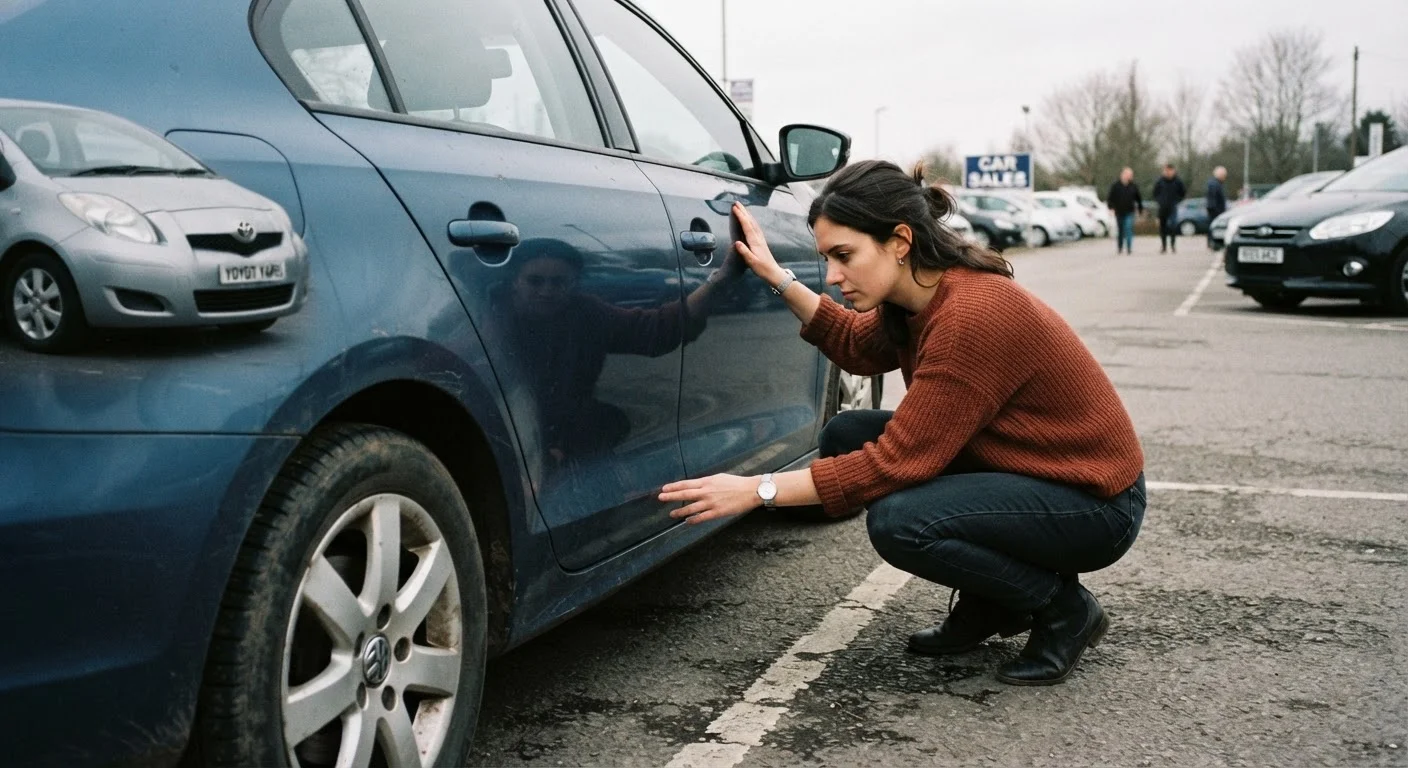
Why Non-Mechanics Can Still Vet a Car Effectively
The assumption that only someone with grease under their fingernails can properly evaluate a used car is one of the most persistent myths in the buying process. In practice, the checks that protect most buyers from the costliest mistakes are almost entirely visual and logistical — not mechanical.
Serious problems like flood damage, undisclosed accidents, rust-through, and odometer fraud show up in paper trails and surface-level inspections, not in engine diagnostic codes. The job of a non-expert buyer is to gather the right information, observe carefully, and know exactly when to hand off to someone qualified. That's a manageable, learnable process. See our first-time buyer decision guide if you're still weighing whether a used car is the right call for your situation.
VIN
A Vehicle Identification Number is a unique 17-character code assigned to every vehicle. It's used to trace a car's full history, including accidents, ownership changes, and title status.
Vehicle history report
A document generated from a car's VIN that compiles accident records, title status, odometer readings, and other key data from multiple databases.
Pre-purchase inspection (PPI)
An independent mechanical evaluation of a used car performed by a licensed mechanic before the sale is finalized. It uncovers issues a visual inspection cannot detect.
Salvage title
A designation given to a vehicle that an insurance company has declared a total loss — typically due to a major accident, flood, or theft. Salvage-titled cars carry higher risk and are harder to insure.
Check engine light
A dashboard warning indicator that signals a fault detected by the car's onboard diagnostic system. It can represent anything from a loose gas cap to a serious engine problem.
Do Your Research Before You See the Car
Every inspection starts before you set foot near the vehicle. Doing this groundwork filters out obvious problems and gives you a factual baseline to compare against what the seller tells you in person.
Pull the VIN and Run a History Report
The Vehicle Identification Number (VIN) is a 17-character code stamped on the dashboard, door jamb, and engine bay. Ask the seller for it before scheduling a visit. Use it to obtain a vehicle history report from a recognized data provider. Look specifically for: accident and damage records, title issues (salvage, flood, lemon law buyback), odometer discrepancies across reported readings, and number of previous owners.
Research Known Issues for That Model
Every car model has documented recurring problems. Search the model year plus common complaints on the NHTSA database and owner forums. Knowing what to look for in advance turns vague unease into specific questions you can ask and checks you can perform. Our research and comparison hub walks through how to evaluate models systematically before committing to a visit.
What to Check With Your Own Eyes
Arrive in daylight. Overcast light is ideal for spotting paint inconsistencies. Bring a flashlight for underneath the car and a notepad or your phone to document what you find.
Exterior
- Panel gaps: Stand at each corner of the car and look along the body. Uneven or inconsistent gaps between panels suggest past collision repair.
- Paint consistency: Color or texture differences between panels indicate repainting, which may mean accident damage.
- Rust: Check wheel arches, door sills, the underside of the trunk, and any visible frame rails. Surface rust on brake rotors after sitting is normal; structural rust is not.
Under the Hood — Without Touching a Thing
You don't need to understand what you're looking at to spot warning signs. Open the hood and look for: fluid residue or oily buildup around hoses and gaskets, coolant or oil leaks pooled on the engine block, and any wiring that looks patched, burned, or loose. A clean engine bay isn't suspicious — but a recently steam-cleaned one on an otherwise dirty car can mean someone is hiding a leak.
Interior and Dashboard
- Turn the ignition to the "on" position without starting. Every warning light should illuminate briefly, then go off. If a light stays on — especially check engine, airbag, or ABS — that's a documented fault requiring investigation.
- Check for water stains on carpets, a musty smell, or fog residue inside the windows — all potential indicators of flood exposure.
Test Drive
Listen for clunks over bumps, pulling to one side during braking, hesitation or rough idle during acceleration, and any grinding or squealing. You don't need to diagnose the cause — you just need to note that something doesn't feel or sound right and flag it. Use our pre-purchase inspection checklist to make sure nothing gets missed during your walk-around.
When to Call in a Professional
A pre-purchase inspection (PPI) is an independent mechanical assessment carried out by a licensed mechanic of your choosing — not the seller's. It typically covers the engine, transmission, brakes, suspension, exhaust, and any electrical faults. The mechanic puts the car on a lift, which reveals frame damage, rust, and leak sources that no ground-level inspection can confirm.
Choose Your Own Mechanic for the PPI
Always select an independent shop — not one recommended by the seller. Search for ASE-certified mechanics in the area and call ahead to confirm they perform pre-purchase inspections. Budget roughly $100–$200 for the service; it's one of the highest-return investments you can make in the buying process.
If a seller refuses to allow a pre-purchase inspection, treat that refusal as a disqualifying signal. A vehicle in good condition has nothing to lose from independent scrutiny. For a structured breakdown of every zone a professional will assess, see our bumper-to-bumper inspection guide.
Pulling It All Together Before You Decide
After your research, visual inspection, test drive, and professional assessment, you should have a clear picture: a history report with no serious flags, no visible structural rust or accident damage, no unexplained warning lights, and a mechanic's sign-off. Any one of those elements missing warrants either negotiating a lower price to reflect the risk, asking the seller to address the issue before sale, or walking away entirely.
The goal isn't a perfect car — used cars rarely are. The goal is an honest car at a fair price with no hidden catastrophes. You don't need to know what a camshaft does to achieve that. You need a methodical process and the willingness to walk away when the picture doesn't add up. For a complete checklist covering exterior, interior, mechanical, and paperwork checks, refer to our pre-purchase inspection guide before handing over any deposit.