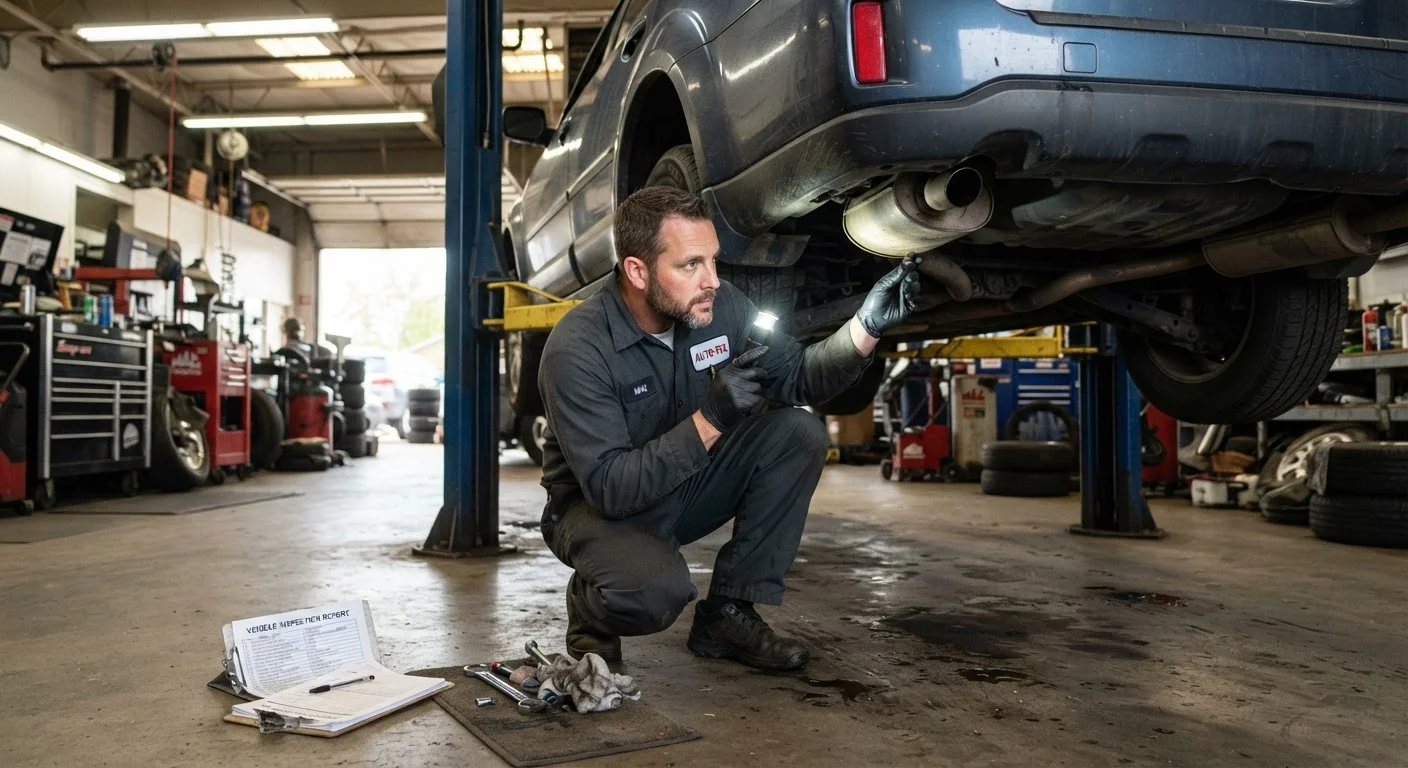
A pre-purchase inspection can reveal hidden damage, mechanical wear, or title issues before you commit any money.
You don't need mechanical expertise to complete most visual and documentation checks yourself.
A professional mechanic inspection costs $100–$200 on average and can save thousands in unexpected repairs.
Inspect the vehicle in daylight, on a level surface, and always request a test drive.
Never hand over a deposit before reviewing the vehicle history report and confirming the VIN matches all documents.
Use this checklist to systematically inspect a used car — or brief a mechanic — so nothing critical is missed before you commit.
Why This Checklist Exists
Used car listings don't come with guarantees. A well-presented exterior can mask serious mechanical problems, and a motivated seller isn't obligated to volunteer what they know. This checklist gives you a systematic framework for evaluating a vehicle before any money changes hands — whether you're doing the inspection yourself or briefing a qualified mechanic to do it for you.
Use the sections below in order. Work through documentation first — if the paperwork has problems, you may not need to inspect the vehicle at all.
Never Skip the Title and VIN Check
A VIN that doesn't match across the dashboard, door jamb, and title documents is a serious red flag for odometer fraud, salvage title concealment, or a stolen vehicle. If you're unsure how to read a title document, have it reviewed by a licensed title company or your state's DMV before handing over any money. Purchasing a vehicle with a clouded title can leave you without legal ownership even after paying in full.
What You'll Need
Gather these tools before you visit the vehicle. Missing even one can leave a critical gap in your assessment.
Required
Vehicle History Report Service
Reveals accident history, title status, odometer readings, and ownership count before you commit any money.
Required
NHTSA VIN Recall Lookup
Free government tool to check whether any open safety recalls are outstanding on the specific vehicle.
Optional
OBD-II Scanner
Reads stored engine and transmission error codes that may not be visible as dashboard warning lights.
Required
Flashlight or Phone Torch
Essential for inspecting the engine bay, undercarriage, door jambs, and interior corners in low-light conditions.
Required
Independent Licensed Mechanic
Conducts a professional pre-purchase inspection covering mechanical systems you cannot safely assess yourself.
Optional
Tread Depth Gauge
Measures remaining tire tread precisely to estimate replacement cost and identify uneven wear patterns.
The Full Inspection Checklist
Work through each group methodically. On any item flagged as must, a failed check is a reason to walk away or negotiate a price reduction before signing anything. Items marked should are strongly recommended; skipping them increases your risk. Nice-to-have items add confidence but aren't deal-breakers on their own.
Documentation & History
Run a vehicle history report using the VIN and verify the VIN matches the dashboard plate, door jamb sticker, and title.Must
Confirm the seller's name matches the name on the title and that the title is clear of liens.Must
Check for any open safety recalls using the National Highway Traffic Safety Administration (NHTSA) VIN lookup tool.Must
Review available service records and verify they align with the odometer reading.Should
Exterior Condition
Inspect all body panels in direct daylight for mismatched paint, rippling, or overspray — signs of prior collision repair.Must
Check all door, hood, and trunk gaps for uniformity; uneven gaps can indicate frame or structural damage.Must
Examine the windshield and all glass for chips, cracks, or delamination around the edges.Should
Inspect tires for even tread wear across the full width; uneven wear can signal suspension or alignment issues.Should
Interior & Electrics
Test every powered feature — windows, locks, mirrors, seats, climate controls, and infotainment — to confirm full function.Must
Check for water stains on carpeting, under seats, and in the trunk, which may indicate flood damage or leaks.Must
Verify that all warning lights extinguish after engine start; any persistent warning light warrants investigation before purchase.Must
Test headlights, brake lights, turn signals, and reverse lights to confirm all are operational.Should
Under the Hood
Inspect engine oil on the dipstick — it should be amber to dark brown, not milky (a sign of coolant contamination) or gritty.Must
Check coolant level and condition; a rusty or oily residue in the coolant reservoir is a red flag.Must
Look for visible fluid leaks on engine surfaces, hoses, or on the ground beneath the car.Must
Inspect belts and visible hoses for cracking, glazing, or fraying, which indicates they may be near end of service life.Should
Test Drive
Drive at highway speeds to check for vibration, pulling, or steering wheel shimmy that isn't present at low speeds.Must
Apply brakes firmly at safe speed to test for pulsation, pulling, or extended stopping distances.Must
Listen for clunks, grinding, or rattles over bumps, during turns, and when accelerating or braking.Should
Test the transmission through all gear ranges — automatics should shift smoothly with no slipping or hesitation.Should
Professional Mechanic Review
Arrange an independent pre-purchase inspection (PPI) with a licensed mechanic of your choosing, not one recommended by the seller.Must
Request a lift inspection so the mechanic can assess the undercarriage, exhaust, and suspension components directly.Should
Ask the mechanic to perform an OBD-II diagnostic scan to check for stored error codes that may not be triggering a dashboard warning.Nice to have
Request a written summary of findings from the mechanic so you have a clear record when negotiating price or deciding to walk away.Nice to have
Once you've completed the checklist and you're satisfied with the vehicle's condition, your next step is evaluating whether the deal itself stacks up. The used car deal assessment checklist covers pricing verification, financing terms, and documentation to review before making an offer.
The content provided on our blog site traverses numerous categories, offering readers valuable and practical information. Readers can use the editorial team’s research and data to gain more insights into their topics of interest. However, they are requested not to treat the articles as conclusive. The website team cannot be held responsible for differences in data or inaccuracies found across other platforms. Please also note that the site might also miss out on various schemes and offers available that the readers may find more beneficial than the ones we cover.