Why a Structured Inspection Matters
Buying a used car without a methodical inspection is one of the most common ways buyers absorb costs that should have been negotiated away — or triggered a walk-away. A random visual scan of the lot leaves entire systems unexamined. A zone-by-zone approach, done in the same order every time, ensures nothing gets skipped because it looked fine at a glance.
This guide covers the full inspection arc: exterior, tires, engine bay, interior, test drive, and documentation. It pairs with our point-by-point checklist for buyers who want a printable reference to carry on-site. If you're earlier in the process, the complete used car roadmap sets this inspection step in context.
Exterior: Bodywork, Paint, and Glass
Start at one corner and work around the car in a single direction. Crouch at each panel to view the surface at a low angle — this catches ripples, orange-peel texture, and paint overspray that are invisible from standing height.
- Panel gaps: Gaps between doors, fenders, and the hood should be even and consistent. Uneven gaps indicate either a collision repair or a rushed reassembly.
- Paint sheen: Inconsistent gloss or a slightly different color tone on one panel suggests a repaint. Overspray on rubber seals or trim is a reliable indicator.
- Rust: Check wheel arches, door sills, the underside of doors, and any area where water pools. Surface rust on brake rotors is normal; structural rust on frame rails or floor pans is not.
- Glass: Scan the windshield for chips or cracks in the driver's line of sight. Chips can spread under temperature change; factor replacement cost into your evaluation.
For buyers newer to spotting body repair evidence, this guide for non-mechanics explains what to look for without needing technical expertise.
Inspect in Daylight, on a Level Surface
Artificial lighting in a garage or showroom masks paint inconsistencies and body damage that are obvious in natural light. Arrange your inspection for a dry, sunny day on flat ground. If the seller insists on an indoor-only viewing, that's worth noting.
Tires, Wheels, and Brakes
Tires are a direct readout of how the car was maintained and driven. Check all four plus the spare if accessible.
- Tread depth: The legal minimum in most U.S. states is 2/32 of an inch. Insert a penny into the groove with Lincoln's head down — if you see the top of his head, the tire is near or below the limit.
- Wear pattern: Even center wear is normal. Wear on both outer edges suggests the tire was chronically underinflated. Wear on one edge only points to an alignment or suspension problem.
- Sidewall condition: Cracks, bulges, or cuts on the sidewall are failure risks, not cosmetic issues.
- Wheels: Curb rash is cosmetic. Deep cracks or bends near the rim edge can affect tire sealing and handling.
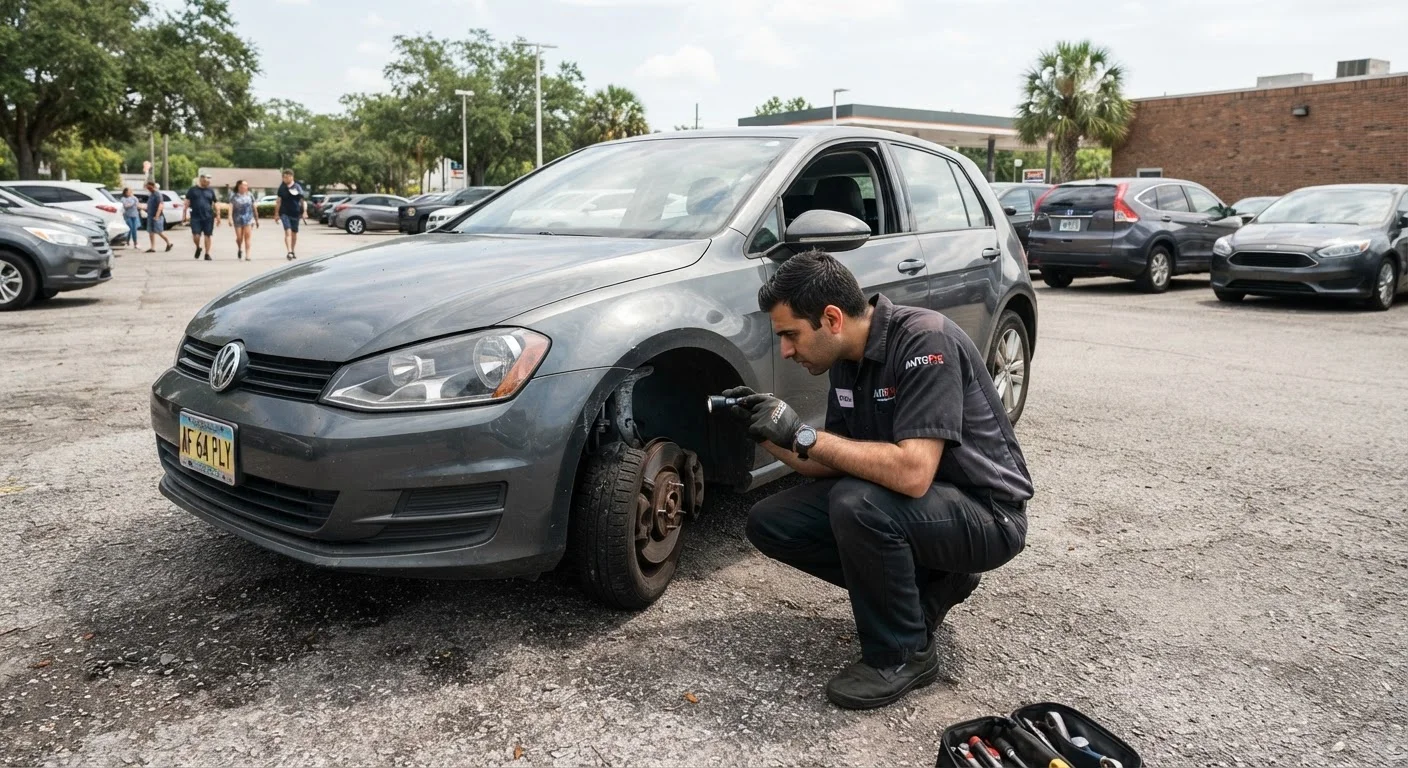
- Brakes: Through the wheel spokes, look at the rotor surface for deep grooves or heavy scoring. Thin rotors and worn pads are a near-term cost to price in.
Under the Hood
Check the engine bay with the engine cold before the seller starts the car — a warm engine hides cold-start smoke, and some sellers run the car first specifically to mask startup issues.
- Oil: Pull the dipstick, wipe it, reinsert, and pull again. The level should fall between the min/max marks. Dark brown oil is normal wear; black gritty oil signals neglected changes; milky or foamy oil suggests coolant contamination, which is serious.
- Coolant reservoir: Should be at or near the full line and appear green, orange, or pink depending on type — never brown or rusty.
- Brake and power steering fluid: Both have reservoir caps with min/max markings. Low levels may indicate a leak elsewhere in the system.
- Battery terminals: White or blue corrosion buildup on terminals is a maintenance flag.
- Belts and hoses: Look for cracking, fraying, or softness. A serpentine belt replacement is a routine service item; a cracked radiator hose is urgent.
If interpreting what you find feels uncertain, budget for a licensed mechanic's pre-purchase inspection before you commit.
Interior and Electronics
Interiors show how a car was lived in day-to-day, and electronics failures can be expensive to diagnose and repair.
- Seat and carpet condition: Excessive wear on the driver's seat relative to the stated mileage is a consistency flag. Water stains on carpet or a musty smell may indicate flood damage.
- Warning lights: Turn the ignition to the accessory position before starting the engine — all dashboard warning lights should illuminate briefly, then clear. Any that stay on after startup warrant investigation before purchase.
- HVAC: Run the climate control through heat, air conditioning, and fan speeds. AC should produce cold air within 60 seconds.
- Power features: Operate every window, lock, mirror adjustment, and seat control. Repair costs for these are disproportionate to their apparent simplicity.
- Infotainment and connectivity: Test the display, audio, and any connectivity features (Bluetooth pairing, backup camera). Replacement infotainment units for certain models can cost several hundred dollars.
The Test Drive
A test drive is not optional. Drive for at least 20 minutes across a mix of surface types — city streets, highway, and ideally a bumpy road.
- Cold start: Note any smoke from the exhaust on startup. Blue smoke signals oil burning; white smoke (beyond brief condensation) may indicate coolant burning.
- Steering: The car should track straight with no drift. Pulling to one side suggests alignment or brake issues.
- Braking: Apply firm pressure. The car should stop in a straight line with no pulsing through the pedal.
- Transmission: Automatics should shift smoothly without hesitation or clunking. Manuals should have a clean engagement on each gear with no slipping or grinding.
- Suspension: On rough surfaces, listen for clunking, rattling, or squeaking — all point to worn components.
- Highway: At speed, confirm there's no vibration through the steering wheel, which often indicates wheel balance or tire issues.
On the test drive, find a quiet stretch of road and briefly release the steering wheel on a straight. If the car drifts significantly, budget for an alignment and have the suspension checked — it's rarely a one-item fix.
Drift can indicate several compounding issues: alignment, uneven tire pressure, or worn suspension components. Catching it on the drive gives you concrete negotiating information.
Bring a small flashlight to every inspection. Shine it along panel surfaces at a shallow angle and into the engine bay corners — it reveals weld marks, filler, and fluid residue that you'll miss under ambient light.
Professional detailers and body shops clean surfaces well, but can't eliminate the shadow patterns that a raking flashlight beam exposes on repaired panels or leaking gaskets.
Vehicle History and Professional Inspection
A vehicle history report (available through services that use the VIN) surfaces title issues, reported accidents, odometer rollback flags, and service records. It is a starting point, not a comprehensive guarantee — unreported incidents won't appear.
The single most reliable layer of protection is a pre-purchase inspection (PPI) by an independent licensed mechanic. A PPI typically costs $100–$200 and involves putting the car on a lift to examine the frame, suspension, exhaust, and undercarriage in full. Any seller who refuses to allow an independent inspection is a red flag worth taking seriously.
After inspection, your findings translate directly into negotiating leverage. See how used car deals work from start to finish for guidance on using inspection results in price discussions. For the broader tradeoffs between pre-owned and new vehicles, the new vs. used cars guide provides useful context.
This article provides general educational information about used car inspection. It is not a substitute for professional mechanical advice. Always consult a qualified, licensed mechanic before making a purchase decision based on vehicle condition.