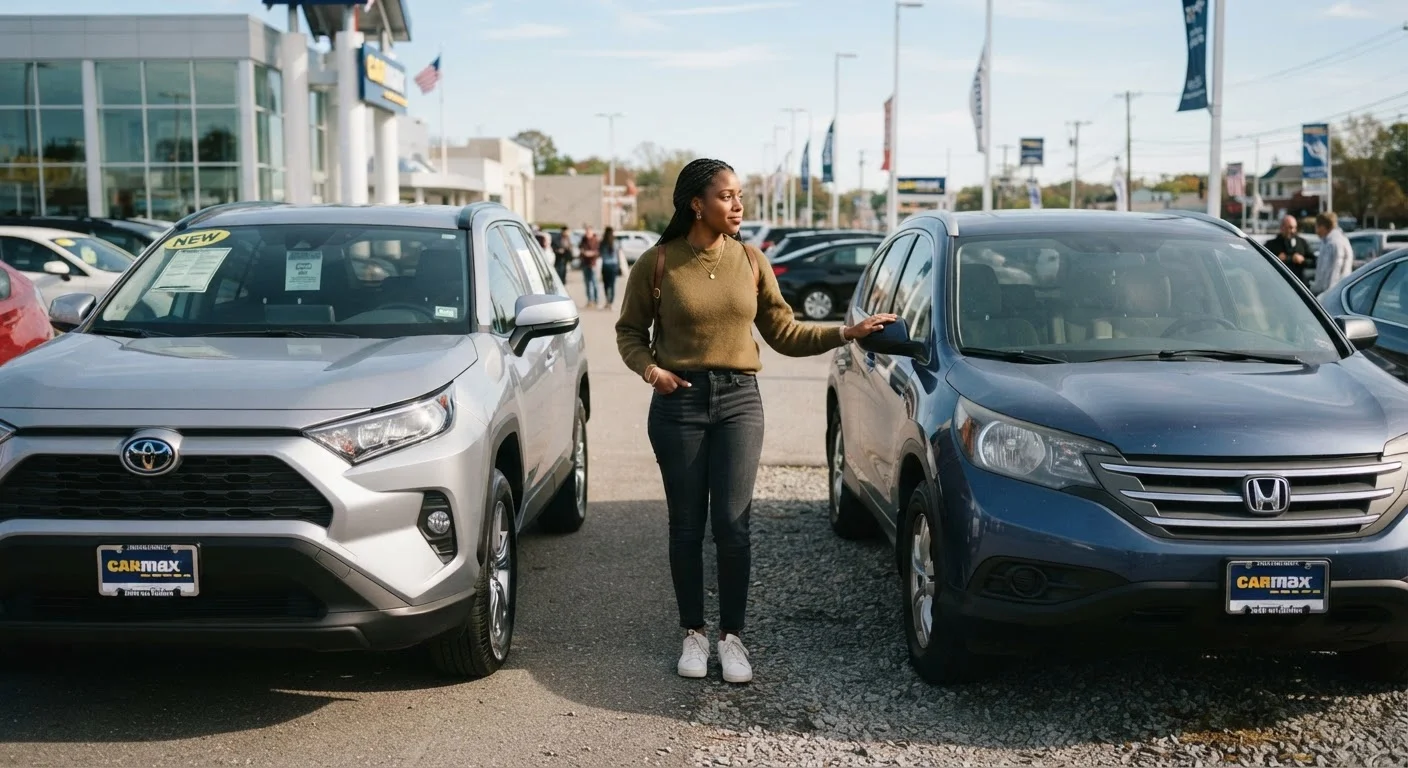
Why This Decision Matters More for First-Time Buyers
For experienced buyers, the new vs. used question is a familiar calculus. For first-timers, it carries more weight: your budget is likely tighter, your credit history shorter, and the consequences of a poor choice - an unaffordable payment, an unreliable vehicle - are harder to absorb.
The good news is that neither path is inherently wrong. Both new and used vehicles can serve a first-time buyer well, but only if the decision is grounded in your actual financial situation rather than emotion or salesroom pressure. Before you set foot in a dealership, understand what each option truly involves. For a broader look at how the two options compare across more variables, see our decision framework for new vs. used cars.
Depreciation
The reduction in a vehicle's market value over time. New cars depreciate fastest in their first few years of ownership.
Certified Pre-Owned (CPO)
A used vehicle that has been inspected and reconditioned to meet a manufacturer's standards, typically backed by a limited warranty.
APR (Annual Percentage Rate)
The yearly cost of borrowing money, expressed as a percentage. A lower APR means you pay less interest over the life of your loan.
Loan-to-Value Ratio
The ratio of your loan amount to the vehicle's market value. A high ratio means you owe close to or more than the car is worth, which increases financial risk.
Vehicle History Report
A document summarizing a used car's past, including accidents, prior owners, title status, and recorded mileage - used to identify hidden problems before purchase.
Pre-Purchase Inspection
An independent mechanical evaluation of a used vehicle performed by a licensed mechanic before you agree to buy, helping uncover issues not visible to an untrained eye.
Understanding the True Cost Difference
Purchase price is only the opening number. To compare new and used honestly, you need to account for all costs over the time you plan to own the vehicle.
- Depreciation: New vehicles typically lose a meaningful share of their value within the first two years. Buying used means someone else absorbed that drop. However, the rate of depreciation slows as a car ages, so an older used vehicle may depreciate less during your ownership period.
- Insurance: New vehicles usually cost more to insure because their replacement value is higher. Comprehensive and collision coverage on a newer or higher-value vehicle carries a larger premium.
- Maintenance and repairs: Used vehicles - particularly those outside any remaining factory warranty - are more likely to need unplanned repairs. Budget a contingency fund for this, especially if you are buying a vehicle with high mileage or unknown service history.
- Registration and taxes: In many states, registration fees and sales tax are calculated on the vehicle's value. A less expensive used car will typically generate lower fees at registration time.
Running a realistic monthly cost estimate - payment, insurance, fuel, and a maintenance reserve - gives you a clearer picture than sticker price alone. Our Research & Compare hub has tools and frameworks to help with this calculation.
Reliability, Warranties, and Risk
One of the clearest advantages of buying new is the manufacturer's warranty - typically covering the vehicle for several years or a set number of miles against defects. If something fails under warranty, the cost falls on the manufacturer, not you. For a buyer with limited savings for unexpected repairs, this protection has real financial value.
Used vehicles carry more uncertainty. A well-maintained, lower-mileage used vehicle from a reliable model line can be highly dependable; a poorly maintained vehicle from the same line can become a financial liability. The key risk-management tools for used-car buyers are:
- Vehicle history reports: Services that compile accident history, ownership records, and title status help surface red flags before purchase.
- Pre-purchase inspections: Having an independent, licensed mechanic inspect the vehicle before you buy is one of the most effective ways to assess its actual condition.
- Certified pre-owned (CPO) programs: Manufacturer-certified used vehicles have passed inspections and come with limited warranty coverage, offering a middle ground between new and standard used.
If you decide to pursue the used route, sourcing a used car you can trust is the logical next step.
Financing: How New vs. Used Changes the Numbers
Most first-time buyers will finance their purchase, and the loan terms available to you will differ depending on whether you choose new or used.
Lenders generally view new-car loans as lower risk because the collateral (the car) has a known, documented value. As a result, interest rates on new-car loans are frequently lower than those on used-car loans. However, because new cars cost more, your total loan amount is higher - and if your credit history is thin, the rate advantage may be smaller than average.
Get Pre-Approved Before You Shop
Securing a loan pre-approval from a bank or credit union before visiting dealers gives you a concrete interest rate and monthly payment ceiling to budget around. It also reduces pressure to accept financing offered at the dealership without comparison. Pre-approval does not obligate you to borrow - it simply gives you a benchmark.
Used-car loans often carry higher rates, and rates climb further for older vehicles or those with high mileage, since lenders see them as higher-risk collateral. This is an important counterintuitive point: a lower purchase price does not always mean a lower monthly payment if the interest rate is meaningfully higher.
Before deciding, get pre-approved from at least one lender - a bank or credit union where you already have an account is a reasonable starting point. Pre-approval gives you a concrete interest rate to build a budget around and strengthens your position when discussing terms. For a complete walkthrough of the financing process, see our auto financing roadmap for first-time buyers.
This article provides general financial information for educational purposes only and is not personalized financial or lending advice. Consult a qualified financial professional for guidance specific to your situation.
Making the Call: A Simple Decision Framework
With the key variables in view, use this framework to guide your decision:
| Factor | Leans New | Leans Used |
|---|---|---|
| Budget | Can absorb higher payment | Need lower monthly outlay |
| Credit history | Limited - may benefit from new-car rate programs | Established - can manage higher rate |
| Repair tolerance | Want predictable costs | Have emergency savings buffer |
| Technology priorities | Want latest safety/connectivity features | Comfortable with older systems |
| Planned ownership length | Keeping it 5+ years | Shorter-term or uncertain |
No single factor should make the decision alone. A new car you cannot comfortably afford is a worse outcome than a reliable used car bought within your means. Conversely, a cheap used vehicle with hidden mechanical problems is not a bargain.
If your analysis is pointing toward used, the complete roadmap to finding and buying a used car walks through every stage of that process. And if your circumstances might actually favor new, explore scenarios where buying new makes more financial sense before finalizing your direction.