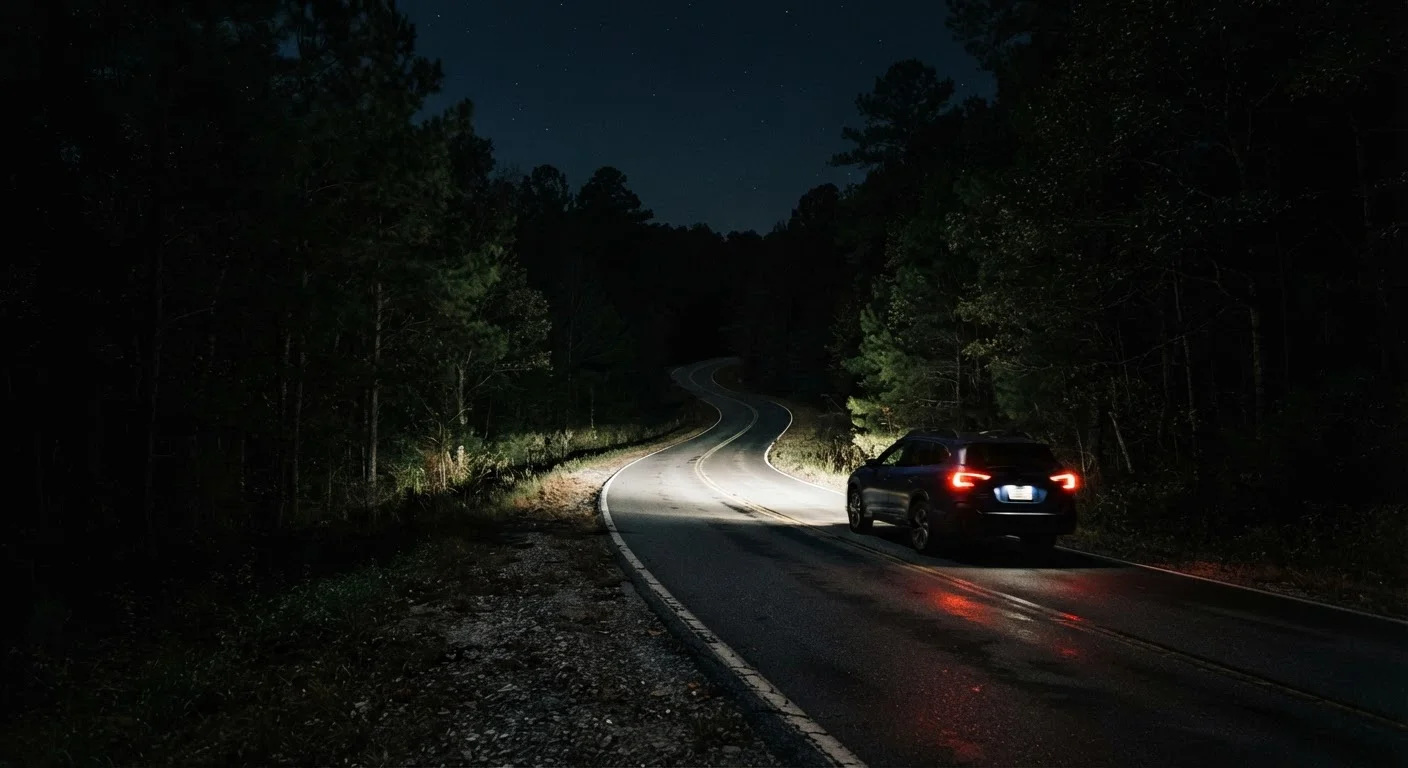
Why Night Driving Is a Different Skill
Darkness does more than reduce what you can see — it fundamentally changes your margin for error. Human vision shifts to lower-resolution peripheral processing after dark, depth perception weakens, and the ability to judge oncoming speed drops. At 55 mph, standard low-beam headlights illuminate roughly 160 feet ahead, yet your stopping distance at that speed can exceed 190 feet. That gap — between what you can see and what you need to stop — is where night-driving crashes happen.
The risk is not hypothetical. Crash data consistently shows that fatal accidents are disproportionately concentrated in nighttime hours relative to the volume of traffic. Understanding why night driving is harder is the first step toward adjusting your approach deliberately rather than just gripping the wheel tighter.
Best Practices for Safer Night Driving
The following practices address the most common failure points drivers experience after dark. Each one is actionable on every trip — no special equipment required.
Clean your headlight lenses and confirm they are correctly aimed
Oxidized or cloudy headlight covers can reduce light output by up to 80 percent — a figure that accumulates so gradually most drivers never notice. Misaimed beams either illuminate the treetops or blind oncoming drivers instead of lighting the road ahead.
Use high beams proactively on unlit roads and dim them for approaching traffic
Many drivers treat high beams as an emergency tool rather than a standard night-driving aid. On dark rural or suburban roads with no oncoming traffic, high beams can double the illuminated distance ahead. Failing to dim them for approaching drivers, however, creates the very hazard you are trying to avoid.
Reduce your speed to stay within your headlight range
Traveling faster than you can stop within your visible distance is called overdriving your headlights, and it is a leading contributor to night-time collisions. Lowering speed is the single most reliable way to close the gap between seeing a hazard and stopping before reaching it.
Increase your following distance behind other vehicles
Brake lights provide some warning of a slowdown, but darkness reduces your ability to read traffic conditions ahead of the car in front of you. A larger gap gives you additional reaction time when the unexpected happens.
Keep your windshield and mirrors clean inside and out
Interior windshield film — an oily haze that builds up from outgassing plastics — scatters oncoming headlights into blinding glare. Dirty mirrors produce the same effect from behind. Both reduce your usable vision without feeling dramatic until a bright light hits the surface.
Manage your interior lighting and screen brightness
A bright dashboard, infotainment screen, or dome light causes your pupils to constrict, reducing their ability to gather available light from the road ahead. This is a simple and overlooked cause of degraded night vision.
Quick Actions You Can Take Before Your Next Night Trip
Night visibility is also affected by how well your vehicle's systems are functioning. Driver assistance features such as lane-keep assist and automatic emergency braking may perform differently in low-light conditions — see our guide on how weather and road conditions affect driver assistance systems for a fuller picture of their nighttime limits.
Managing Fatigue and Speed After Dark
Two compounding factors deserve particular attention at night: tiredness and speed. Fatigue is far more likely after dark — your circadian rhythm is working against alertness even when you feel fine. Impaired reaction time from fatigue can erase any safety margin your reduced speed was providing. Learn to identify the early warning signs of driving fatigue before your reactions slow.
Speed choice is equally critical. The concept of "overdriving your headlights" — traveling faster than you could stop within your illuminated range — is one of the most common and underappreciated night-driving errors. Understanding how stopping distance scales with speed makes clear why even modest speed reductions after dark create meaningful safety margins. On rural or unlit roads, this issue intensifies — a topic covered in depth in our guide to urban versus rural driving approaches.
If conditions combine darkness with rain, fog, or ice, the required adjustments multiply. Matching your speed to adverse road conditions becomes an essential skill, not an optional one.