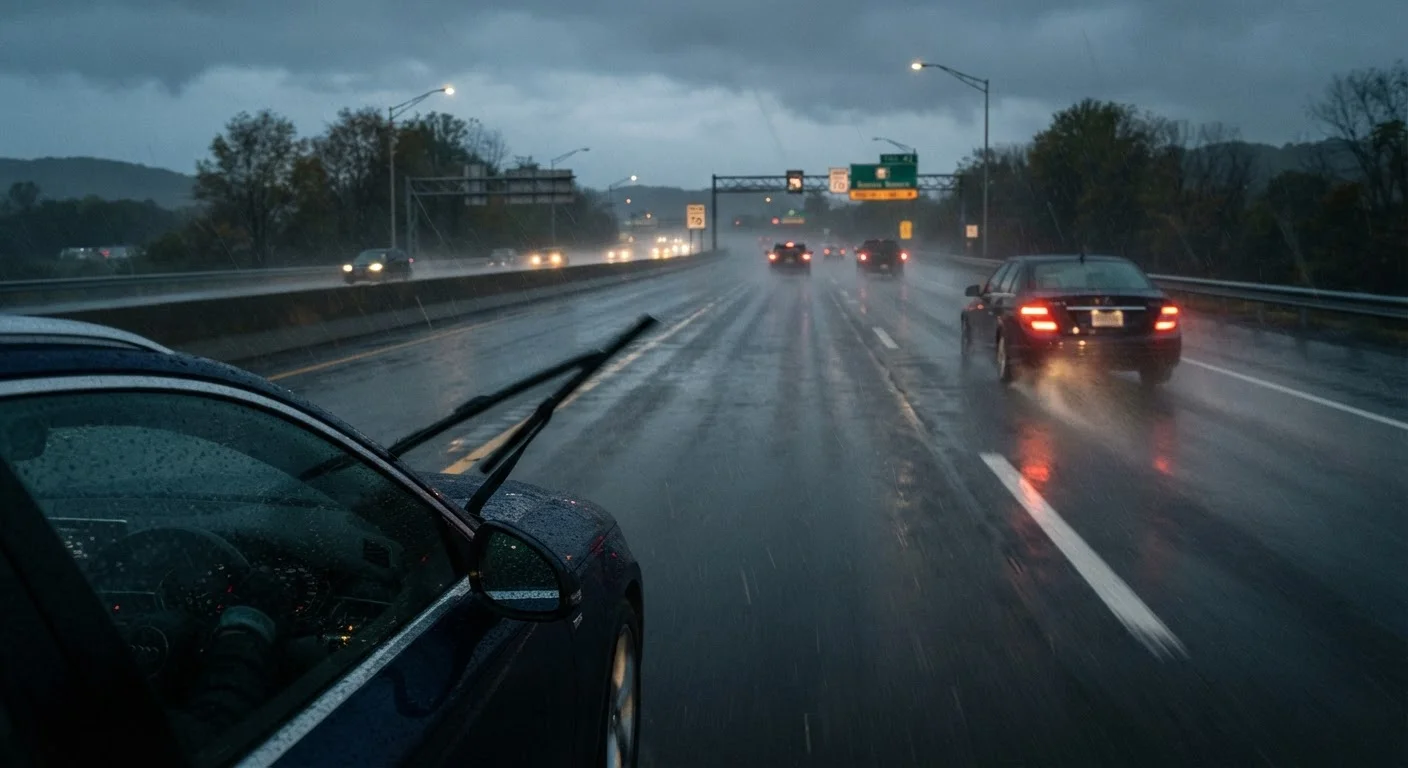
Why ADAS Systems Struggle in Bad Weather
Advanced driver assistance systems — collectively called ADAS — rely on a combination of cameras, radar, lidar, and ultrasonic sensors to perceive the road. Each of those sensor types has different strengths and weaknesses, and adverse weather tends to expose those weaknesses simultaneously.
Cameras, which power lane detection and traffic sign recognition, depend on visual contrast. Rain on a windshield, glare off wet pavement, or snowflakes in front of a lens can all reduce that contrast dramatically. Radar is more weather-tolerant but can still be confused by heavy precipitation or accumulated ice on a sensor housing. Ultrasonic sensors — used in parking assist and low-speed systems — have a shorter range and are prone to false readings in standing water.
For a broader overview of what each of these systems does under normal conditions, see our plain-language field guide to modern car safety tech. Understanding normal operation is essential context before evaluating how conditions degrade performance.
Best Practices for Using ADAS in Challenging Conditions
The following practices help drivers get the most out of safety systems while staying safe when those systems are operating at a reduced capacity.
Keep all sensor surfaces and camera lenses clean before every drive in poor conditions.
Mud, ice, and road film directly obstruct the sensors ADAS relies on. A blocked radar housing or camera lens can silently disable a feature without a dashboard warning, leaving the driver unaware the system is offline.
Reduce speed beyond what the system recommends when conditions are visibly poor.
ADAS systems are calibrated for typical operating conditions. Reaction distances in wet or icy conditions exceed those the system's stopping algorithms assume, meaning you need more buffer than the system builds in.
Take note of dashboard alerts indicating a system has become temporarily unavailable.
Many vehicles will display a warning when a camera or radar signal is degraded. These alerts are meaningful — they indicate the feature has reduced capacity or is offline, and the driver must compensate manually.
Understand which features on your vehicle use cameras versus radar, and adjust expectations accordingly.
Camera-based features degrade faster in low visibility, while radar-based features handle rain better but have their own limitations. Knowing which is which helps you predict what will and won't work as conditions change.
Never rely on parking or low-speed assistance systems in standing water or deep snow.
Ultrasonic sensors used in parking assist can generate false readings in water and may fail to detect obstacles accurately, creating a false sense of clearance.
Quick Actions You Can Take Right Now
Some of the most effective steps for protecting ADAS performance don't require a service appointment — they're part of everyday vehicle care.
For additional guidance on adapting your driving behavior when conditions deteriorate, the rain, ice, and fog driving guide covers speed management and road-reading techniques that complement what your vehicle's systems can do.
Specific Features and Their Environmental Weak Points
Lane departure warning and lane centering are the most environment-sensitive features on most vehicles. They depend almost entirely on camera detection of painted lane markings — markings that fade, disappear under snow, or blur in heavy rain. Lane assist technologies vary significantly in how gracefully they fail: some alert the driver when they lose lane confidence, while others simply go quiet.
Adaptive cruise control uses radar primarily, making it more reliable in rain than camera-based systems — but it still has limits. In dense fog or a sudden whiteout, radar can struggle to detect slow-moving or stationary objects at useful distances. Our adaptive cruise control explainer walks through how detection and braking work together, which helps clarify where weather-related gaps appear.
Automatic emergency braking (AEB) relies on both radar and cameras in most implementations. When either is compromised, the system's detection range and reaction threshold can change — meaning it may not respond as early or as decisively as it would in clear conditions. Drivers should treat AEB as a backup, not a primary defense, in any weather below ideal.
For a quick reference to the acronyms used across these features, the ADAS glossary explains common window-sticker terminology in plain language.
The Right Mindset: Systems as Supplements, Not Substitutes
No current production vehicle has a safety system designed to fully replace driver judgment in adverse conditions. Automakers and regulators consistently frame ADAS as driver assistance — the emphasis on assistance is intentional. A system that works flawlessly in a dry, well-marked highway environment may provide little or no functional support on an icy rural road at night.
This doesn't mean these features aren't valuable — they genuinely reduce collision risk in the conditions they're designed for. But knowing their environmental limits is what allows a driver to use them appropriately. If a system disengages or issues a warning that it's unavailable, that message should prompt increased personal vigilance, not frustration. See the warning signs hub for guidance on how to interpret alerts your vehicle displays.
This article provides general educational information about driver assistance systems and is not a substitute for your vehicle's owner's manual or guidance from a qualified automotive professional. Always refer to manufacturer documentation for system-specific limitations and operating instructions.