What 'Safety Tech' Actually Means
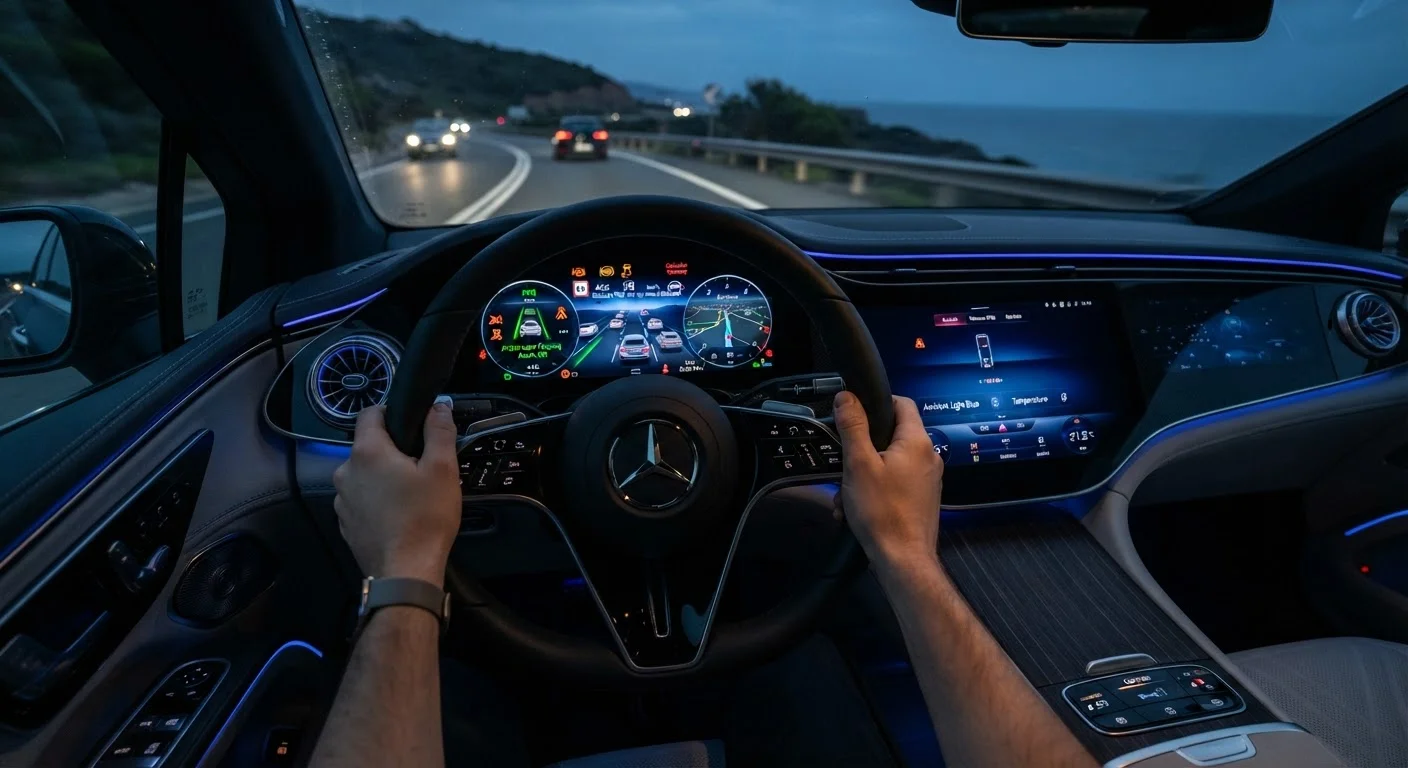
The phrase safety technology covers two distinct layers of vehicle protection. The first is passive safety — crumple zones, airbags, and seatbelt pretensioners that reduce injury once a crash is already happening. The second, and the focus of this guide, is active safety: electronic systems that try to prevent a crash or reduce its severity before impact occurs.
Most of these active systems fall under the umbrella term ADAS (Advanced Driver Assistance Systems). They rely on cameras, radar, ultrasonic sensors, or a combination of all three to monitor the road around your vehicle. When the system detects a potential hazard, it can warn you with an alert, nudge a control, or in some cases intervene automatically.
For a full glossary of the acronyms you will encounter on window stickers, see the ADAS term reference. The key principle to hold onto: every ADAS feature is designed to assist an attentive driver, not to substitute for one.
ADAS
Advanced Driver Assistance Systems — the collective name for electronic features that monitor your surroundings and help prevent crashes or reduce their severity.
AEB (Automatic Emergency Braking)
A system that applies the brakes on its own if it detects an imminent collision and the driver has not responded in time.
Radar sensor
A sensor that uses radio waves to detect the distance and speed of objects around the car, effective in low visibility conditions where cameras struggle.
Lane Keep Assist (LKA)
A feature that applies a brief steering correction if the vehicle drifts out of its lane without the driver signaling.
Blind-Spot Monitoring (BSM)
A radar-based system that alerts you when a vehicle is in the zone beside and behind your car that your mirrors don't fully show.
Adaptive Cruise Control (ACC)
A cruise control system that automatically adjusts your speed to maintain a set following distance from the vehicle ahead, rather than holding a fixed speed.
Collision Prevention: AEB, FCW, and Rear Cross-Traffic Alert
Forward Collision Warning (FCW) monitors the gap between your vehicle and the one ahead. When the system judges that closing speed is dangerously high, it triggers an audible chime and a dashboard alert — prompting you to brake. It does not brake for you.
Automatic Emergency Braking (AEB) goes one step further. If FCW fires but you do not respond in time, AEB applies the brakes autonomously to reduce impact speed, or avoid the collision entirely. Research from independent organizations consistently identifies AEB as one of the highest-impact safety technologies available. You can read more about which technologies have the strongest evidence base in our safety tech evidence guide.
Rear Cross-Traffic Alert (RCTA) watches for vehicles approaching from the side when you reverse — a practical aid in parking lots where sightlines are blocked by larger vehicles. Some implementations will apply the brakes automatically; others only alert.
These three systems are closely related and frequently bundled together. When comparing vehicles, ask specifically whether AEB covers pedestrians and cyclists, not only other vehicles — capability varies significantly between manufacturers and model years.
Lane and Steering Assistance Systems
Lane Departure Warning (LDW) uses a forward-facing camera to track lane markings. If the car drifts across a line without a turn signal, it alerts you — usually through a steering wheel vibration or an audible tone.
Lane Keep Assist (LKA) adds a gentle steering correction on top of the warning, nudging the car back toward center. It is reactive — it only intervenes when you have already started to drift.
Lane Centering Assist (sometimes called lane-centering or active lane control) operates continuously, steering the car toward the middle of the lane. It is typically designed to work alongside adaptive cruise control during highway driving. Together, these two features form what manufacturers often market as a driver attention support system or, loosely, a hands-on assisted driving mode.
Worth noting: these systems can behave unexpectedly on roads with faded markings, sharp curves, or complex lane configurations. Our companion article why safety tech can behave unexpectedly explains the most common causes of false alerts and sudden disengagements.
Test Alerts Before You Commit
On any test drive, try to trigger at least one lane departure warning or blind-spot alert deliberately. Pay attention to whether the alert style — visual, audible, or haptic — is one you will actually notice without being startled. A system whose alerts you tune out or disable is no protection at all.
Blind-Spot and Parking Aids
Blind-Spot Monitoring (BSM) uses rear-facing radar sensors to detect vehicles in the zones your mirrors don't fully cover. An indicator light in or near the corresponding mirror illuminates when a vehicle is present; many systems add an audible alert if you signal to change lanes while a vehicle is detected.
Rear Automatic Emergency Braking is an extension of AEB logic applied to reversing scenarios, typically activating when the car detects a stationary or slow-moving object behind the vehicle while backing at low speed.
Parking sensors (ultrasonic) and surround-view cameras stitch together images from multiple cameras to give you a bird's-eye composite of the area immediately around the car. These tools are especially useful in tight urban environments.
Blind-spot and parking technologies are often grouped into optional packages. If you do most of your driving in dense city traffic or on busy multi-lane roads, these features can meaningfully reduce low-speed collision risk. Before you drive a new vehicle, it helps to spend time deliberately familiarizing yourself with which sensors are active and what the alerts look and sound like — our guide to familiarizing yourself with a new car's tech walks through a practical pre-drive checklist.
How to Prioritize Safety Tech When Buying
Not every safety feature carries equal real-world impact, and not every buyer's situation is the same. A few principles can help you make a more targeted decision.
- Identify your typical driving environment. Highway commuters benefit most from adaptive cruise control and lane-centering. City drivers gain more from AEB with pedestrian detection, rear cross-traffic alert, and parking aids.
- Check what trim level includes the features you want. Safety features are often packaged into optional bundles available only on mid or upper trims. Verify the exact feature list — not just the model's marketing name — before comparing prices.
- Don't conflate crash-test ratings with safety tech. A five-star NHTSA rating reflects structural performance in standardized crash tests. It does not confirm which ADAS features are present or how capable they are. Our explainer on what safety ratings actually tell you covers this distinction in detail.
- Test the systems yourself. On a test drive, trigger at least the lane departure warning and observe how the system communicates. An alert you find intrusive will likely be turned off — making the feature effectively absent.
The goal is not to check a feature box, but to understand whether a given technology will genuinely improve your safety in the specific way you drive. That clarity is what turns a list of acronyms into a confident, informed buying decision.