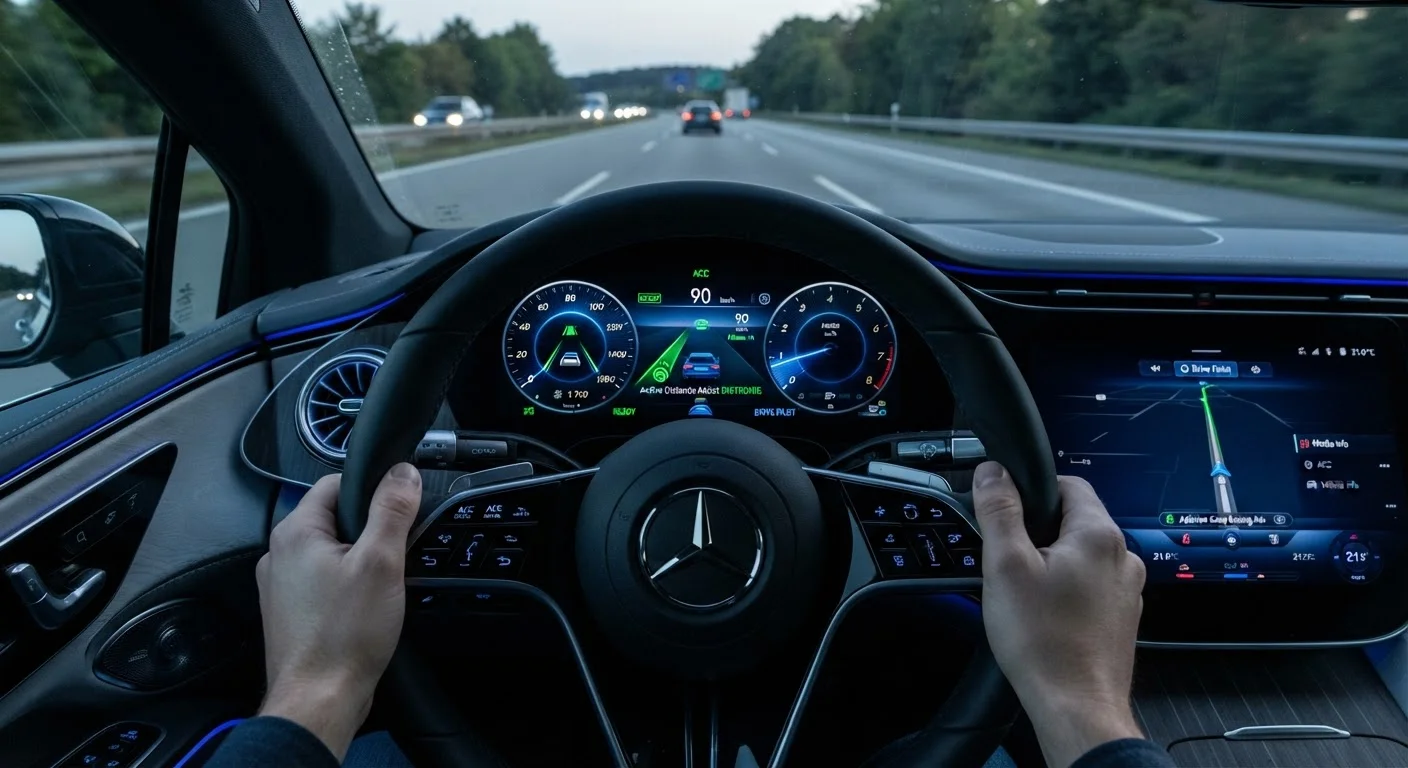
Why Evidence Should Drive Your Safety Feature Priorities
Walk into any dealership and you'll hear terms like "advanced driver assistance," "safety suite," and "intelligent protection" used interchangeably. The marketing language makes nearly every feature sound equally vital. It isn't. Independent research — primarily from the Insurance Institute for Highway Safety (IIHS) and the National Highway Traffic Safety Administration (NHTSA) — has studied which technologies measurably reduce crash frequency and severity, and the results aren't uniform across every system on the options sheet.
Understanding the evidence base helps you decide where to spend your upgrade budget and what to treat as a genuine priority versus a useful convenience. For a plain-language overview of what these systems do mechanically, see our Modern Car Safety Tech field guide. The list below focuses specifically on features whose crash-reduction impact has been substantiated by published, independent research.
Check What's Actually Standard Equipment
Safety tech is frequently split across trim levels, meaning a base model may include only FCW while AEB and LKA require a higher trim or an optional package. Before comparing vehicles, confirm the specific features included at each price point — not just the package name. A vehicle marketed with a 'safety suite' may not include all of the evidence-backed features listed here.
Safety Features With the Strongest Research Support
Automatic Emergency Braking (AEB)
Automatic Emergency Braking (AEB) detects an imminent collision using cameras, radar, or a combination of both, and applies the brakes automatically if the driver doesn't respond in time. IIHS research has found that front AEB systems are associated with meaningful reductions in rear-end crashes — both in frequency and severity — and systems that detect pedestrians have shown additional benefits for reducing pedestrian-involved crashes.
AEB is arguably the single most evidence-backed active safety feature available on passenger vehicles today. NHTSA has moved toward requiring it as standard equipment on new vehicles, which reflects its documented impact. Keep in mind that AEB systems vary — some activate only at low speeds, while others are effective across a wider speed range. Understanding those differences matters when comparing vehicles. See our detailed explanation at Automatic Emergency Braking: What Triggers It and What It Can't Do.
AEB is associated with measurable reductions in rear-end and pedestrian crashes in independent research.
Lane Departure Warning (LDW) and Lane Keeping Assist (LKA)
Lane Departure Warning alerts the driver when the vehicle drifts across a lane marking without a turn signal active. Lane Keeping Assist goes a step further by applying gentle steering input to guide the vehicle back within the lane. Roadway departure crashes — where a vehicle leaves its lane and strikes another vehicle, a barrier, or leaves the road — account for a significant share of serious and fatal crashes in the U.S.
IIHS studies have linked LDW systems to reductions in injury crashes involving lane departures, and LKA provides an additional layer of intervention when the driver doesn't respond to an alert. Together, these systems target a crash type that is both common and frequently fatal, which is why researchers place them among the higher-priority technologies for real-world impact.
Lane departure technologies target roadway departures, one of the most frequently fatal crash types.
Blind-Spot Monitoring (BSM)
Blind-Spot Monitoring uses radar sensors to detect vehicles in the zones alongside and slightly behind your vehicle that mirrors don't fully reveal. A visual indicator — typically in the mirror housing — alerts the driver when a vehicle is present in that zone. Many systems add an audible or tactile alert if you activate the turn signal while a vehicle is detected.
Research from IIHS has found that BSM is associated with reductions in lane-change crashes, which are a common source of property damage and injuries on highways. While the effect size is more modest than AEB, the crash type it addresses happens frequently enough that the cumulative benefit across a vehicle's lifetime is meaningful. Rear Cross-Traffic Alert, which often pairs with BSM, extends similar protection when reversing out of parking spaces.
Blind-spot monitoring is linked to reductions in lane-change crashes, one of the most frequent highway collision types.
Rear Automatic Emergency Braking
Rear AEB applies the brakes automatically when the vehicle detects an obstacle while reversing. This is distinct from a standard rear-view camera or parking sensors, which only alert the driver — rear AEB intervenes physically if the driver doesn't stop in time. IIHS research has found rear AEB is associated with reductions in backing crashes, which disproportionately involve children, pedestrians, and objects in tight spaces.
Backing crashes may seem minor compared to highway collisions, but they account for a notable share of pedestrian fatalities involving passenger vehicles. The physical intervention component is what separates rear AEB from alert-only systems in terms of documented impact.
Rear AEB physically intervenes during reversing — an important distinction from cameras or sensors that only alert.
Forward Collision Warning (FCW)
Forward Collision Warning detects a closing gap to a vehicle or object ahead and alerts the driver — typically with an audible chime, a visual indicator on the windshield or dashboard, or both — giving them time to brake before AEB would activate. FCW and AEB are often paired, but they're functionally distinct: FCW notifies, AEB acts.
Research has found FCW alone reduces rear-end crashes compared to vehicles without it, though the effect is somewhat smaller than when AEB is also present. FCW's value is highest when the driver remains attentive enough to respond to the warning — which is exactly the scenario it's designed for. In vehicles where full AEB isn't available, FCW still provides a documented safety benefit.
Forward Collision Warning reduces rear-end crashes even when Automatic Emergency Braking isn't present.
Every feature on this list addresses a distinct crash type. When comparing vehicles or trim packages, it's worth confirming which of these are included as standard equipment rather than optional add-ons. Our guide to comparing safety packages across trims walks through exactly what to verify before you finalize a purchase.
Putting It All Together
Safety technology does not replace attentive driving, and it's worth understanding that these systems have real limitations — particularly in poor weather, unusual lighting, or complex traffic scenarios. The strongest evidence clusters around features that intervene when a driver fails to react in time, rather than features that simply add convenience. Active safety features like AEB and LKA work alongside traditional passive protections like airbags and crumple zones — neither set replaces the other.
When prioritizing, treat AEB, LKA, and blind-spot monitoring as your baseline. Features with less crash-specific research behind them — such as automated parking or certain driver attention monitors — may still add value, but they serve a different purpose. Use evidence as your compass, not badge counts or package names.