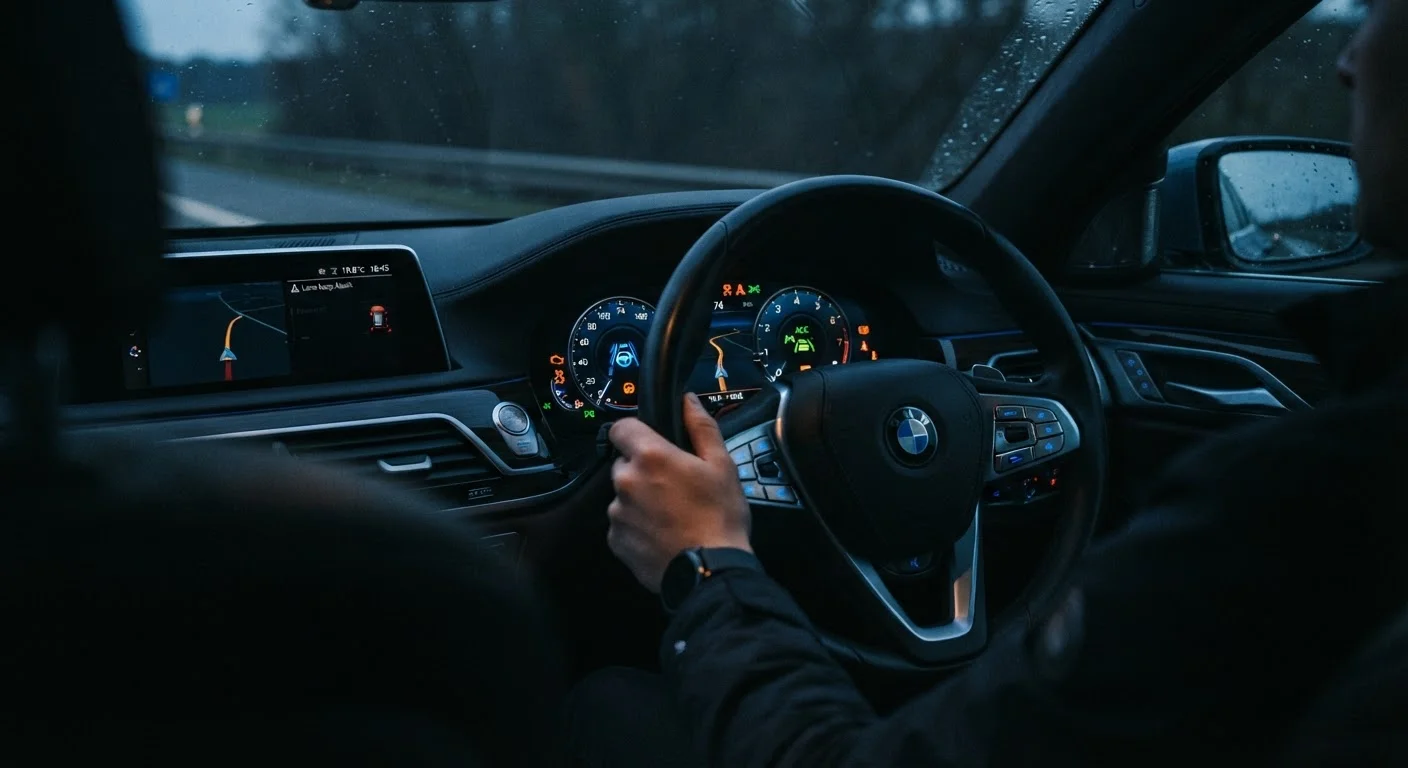
Why Safety Technology Surprises Even Careful Drivers
Modern vehicles pack radar, cameras, ultrasonic sensors, and onboard processors into systems designed to reduce crash risk. But that complexity also means the technology behaves in ways that can startle or confuse — especially drivers encountering it for the first time. A sudden braking pulse on a highway, a lane-keep nudge on a straight road, or a blind-spot alert with no car in sight can all feel like glitches. In most cases, they aren't.
The core issue is a gap between how buyers expect safety tech to work and how sensor-based systems actually function. Radar doesn't see the world the way human eyes do. Cameras lose contrast in certain lighting. Understanding that gap is the first step to using these systems confidently rather than fighting them. For a broader orientation on what each type of system does, see our plain-language field guide to modern car safety tech.
Common Mistakes Drivers Make With Safety Systems
The mistakes below reflect real patterns in how drivers misinterpret, disable, or overlook safety technology. Each one has a logical cause — and a practical fix.
Assuming a false alert means the system is broken.
Why it happens: Drivers expect safety tech to behave like a light switch — either perfectly on or clearly broken. When a radar-based system flags a highway overpass as a hazard, it feels like an error rather than a predictable sensor limitation.
Permanently turning off a system after one uncomfortable intervention.
Why it happens: An unexpected braking pulse or a sharp steering correction can startle drivers into disabling the feature entirely, treating discomfort as proof the technology can't be trusted.
Expecting safety systems to work identically in all weather and lighting conditions.
Why it happens: Marketing materials rarely emphasize sensor limitations. Buyers assume that because a feature works in clear daylight, it will perform the same in heavy rain, snow, or glare.
Ignoring a warning light because the car "seems fine."
Why it happens: Drivers who don't experience a noticeable change in vehicle behavior tend to dismiss dashboard warnings as minor nuisances, especially if the car continues to drive normally.
Misreading a system's role — expecting prevention when it only provides a warning.
Why it happens: Terms like "blind-spot monitoring" and "lane departure warning" sound active and protective. Many drivers assume the car will intervene physically, when some configurations only chime or flash an indicator.
A related pattern appears across other vehicle technologies too. Buyers often carry assumptions about how a feature works before they've actually used it, leading to frustration that could be avoided with clearer pre-purchase research. The same dynamic plays out with infotainment systems — see common infotainment assumptions that lead to buyer's remorse for a parallel look at that problem.
What to Do When Behavior Feels Genuinely Wrong
Don't Disable Safety Systems Reflexively
When a system like automatic emergency braking or lane-keep assist behaves unexpectedly, the instinct is to switch it off permanently. Doing so removes a genuine layer of crash protection. If a system repeatedly misbehaves without an obvious cause, have a qualified technician inspect it rather than simply disabling it.
Most unexpected safety tech behavior falls into the "normal sensor limitation" category. A small subset, however, signals a genuine fault — a camera obscured by a damaged bumper, a radar module misaligned after a minor collision, or a software issue requiring a dealer update.
The practical distinction: if unusual behavior is consistent, repeatable, and not tied to a recognizable environmental trigger, it deserves professional attention. Learning to describe symptoms clearly improves the quality of diagnosis you'll get. Our guide on talking to your mechanic about warning signs walks through how to communicate these issues accurately. You can also explore the full range of vehicle warning signs to better recognize what warrants action.
For the specific case of automatic emergency braking — one of the most commonly misunderstood interventions — what triggers AEB and what it can't do offers a detailed explanation of its real-world limits.
This article provides general educational information about vehicle safety technology. It is not a substitute for guidance from a qualified automotive technician regarding your specific vehicle.