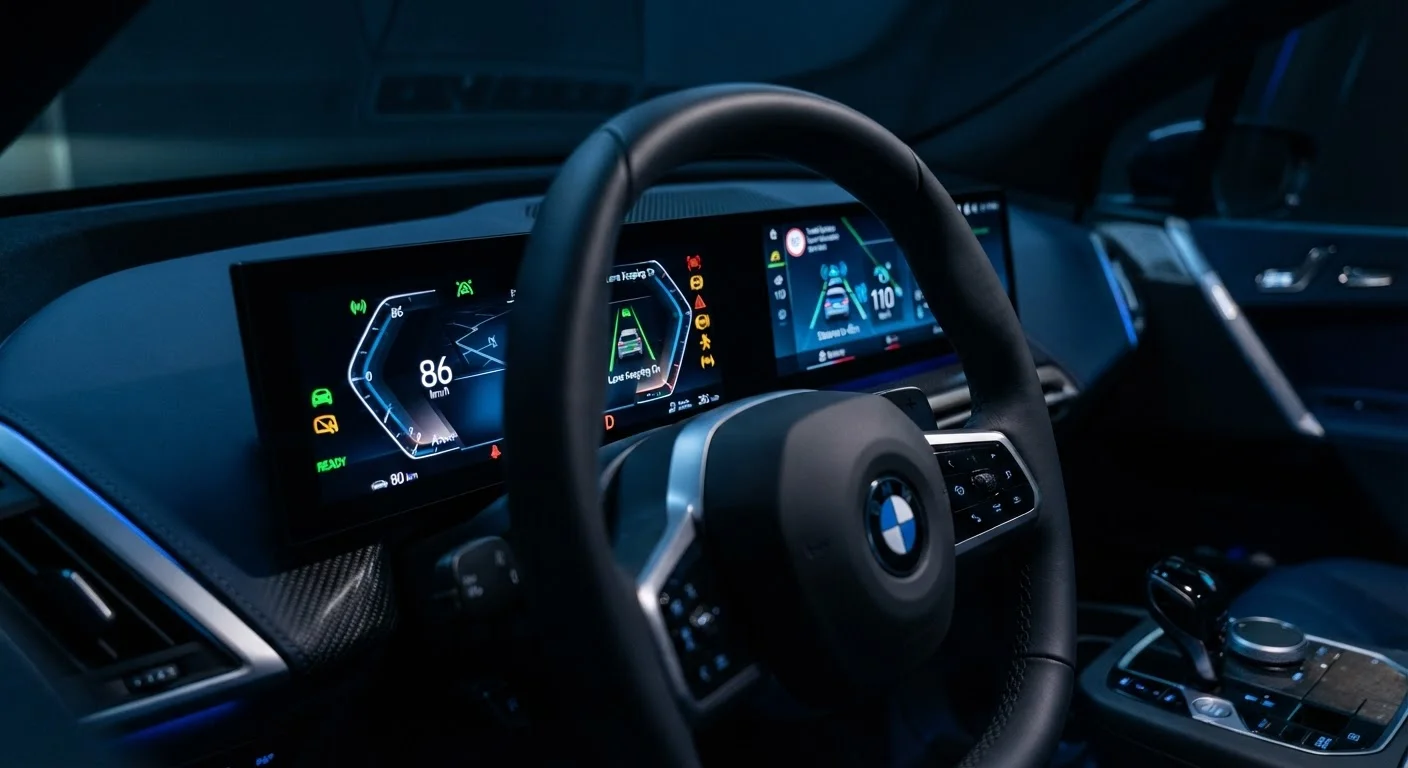
What ADAS Actually Means
Advanced Driver Assistance Systems (ADAS) is the umbrella term for any electronic system that assists the driver in controlling the vehicle or warns of potential hazards. These systems rely on a network of cameras, radar, lidar, and ultrasonic sensors to monitor the road ahead, behind, and beside the vehicle in real time.
ADAS features range from passive alerts — a beep when you drift out of your lane — to active interventions like automatic braking. Understanding which category each feature falls into helps you set realistic expectations. None of these systems make a vehicle self-driving; they are driver assistance tools, not replacements for attentive driving.
For a broader look at how these technologies fit into overall vehicle protection, see how active and passive safety systems work together. And if you want a deeper dive into a specific feature, our explainer on Automatic Emergency Braking walks through exactly how the system decides when to intervene.
| Systems covered by ADAS umbrella | 10+ distinct feature categories |
| Primary sensor types used | Camera, radar, lidar, ultrasonic |
| ADAS replaces attentive driving? | No — assistance only, not automation |
| When recalibration is required | After windshield replacement or front-end repair (General industry guidance from technician standards bodies) |
| Feature availability varies by | Trim level, manufacturer, and market region |
| Common performance limiter | Adverse weather, dirt, or damaged sensors |
The Core ADAS Feature Reference
The table below covers the most common systems you'll encounter on a window sticker or in an owner's manual. Implementations vary by manufacturer — always consult your vehicle's documentation for specifics.
| Acronym / Name | What It Does | Type |
|---|---|---|
| AEB — Automatic Emergency Braking | Detects an imminent forward collision and applies the brakes if the driver does not react in time. | Active |
| FCW — Forward Collision Warning | Alerts the driver (visual/audio) when closing speed on a vehicle ahead suggests a potential collision. | Passive Alert |
| LKA — Lane Keeping Assist | Applies gentle steering corrections to keep the vehicle within its lane when drifting is detected. | Active |
| LDW — Lane Departure Warning | Issues an alert when the vehicle crosses lane markings without a turn signal active. | Passive Alert |
| BSM — Blind Spot Monitoring | Detects vehicles in the driver's blind zone and lights an indicator mirror icon; some systems add steering resistance. | Active/Alert |
| RCTA — Rear Cross-Traffic Alert | Warns the driver of approaching cross traffic when reversing out of a parking space. | Passive Alert |
| ACC — Adaptive Cruise Control | Maintains a set speed while automatically adjusting to keep a selected following distance from the vehicle ahead. | Active |
| TSR — Traffic Sign Recognition | Reads road signs via camera and displays the current speed limit (and other signs) on the instrument cluster. | Informational |
| DMS — Driver Monitoring System | Monitors eye gaze, head position, or steering inputs to detect drowsiness or inattention and alerts the driver. | Passive Alert |
| PAS — Parking Assist / APA | Uses sensors or cameras to guide or steer the vehicle into a parking space; some systems are fully automated. | Active |
Keep in mind that road conditions and poor visibility can limit how reliably these systems perform. Learn how weather affects ADAS performance before relying on these features in challenging environments.
How to Use This Reference Day-to-Day
When you encounter an unfamiliar symbol on your dashboard, cross-reference it with our dashboard warning lights quick-reference guide. ADAS-related warnings often illuminate when a sensor is blocked — by mud, ice, or a sticker — and clearing the obstruction restores normal function.
A few practical habits worth building:
- Read your owner's manual section on ADAS before relying on any feature. Operating speeds, sensor locations, and override procedures differ by vehicle.
- Recalibrate after windshield replacement. Forward-facing cameras mount to the windshield; recalibration by a qualified technician is required after glass replacement.
- Don't assume the system sees everything you see. Sensors have physical limits. This plain-language field guide to modern safety tech covers those boundaries clearly.
- Keep sensors clean. Radar modules and cameras behind bumper covers still need the surrounding surfaces free of debris to function accurately.
For a full glossary of every acronym you might encounter beyond this reference card, see the ADAS glossary covering window-sticker terminology in detail.
ADAS
Advanced Driver Assistance Systems — the collective term for electronic features that monitor the vehicle's environment and either alert the driver or take limited control actions to reduce collision risk.
Sensor Fusion
The process of combining data from multiple sensors (radar, camera, lidar, ultrasonic) so the vehicle's computer builds a more complete and accurate picture of its surroundings than any single sensor could provide.
AEB (Automatic Emergency Braking)
A system that detects an impending collision and autonomously applies the brakes when the driver fails to respond in time, with the goal of avoiding or reducing the severity of the impact.
ACC (Adaptive Cruise Control)
An enhanced version of conventional cruise control that uses forward-facing radar or cameras to maintain a preset gap to the vehicle ahead, automatically slowing or accelerating as traffic conditions change.
Lane Keeping Assist (LKA)
A system that detects lane markings and applies small corrective steering inputs when the vehicle begins to drift, helping keep it centered in its travel lane without driver input.
Blind Spot Monitoring (BSM)
A system using rear-mounted radar or cameras to detect vehicles in the driver's lateral blind zones, typically signaling via a lit icon in the corresponding door mirror.
Driver Monitoring System (DMS)
Technology — usually an infrared camera aimed at the driver's face — that tracks eye gaze, head position, or steering engagement to detect drowsiness or distraction and issue alerts.
Recalibration
A procedure, typically performed by a qualified technician using specialized equipment, that resets a camera or radar sensor to its correct position and alignment after it has been disturbed — such as during windshield replacement or front-end repairs.