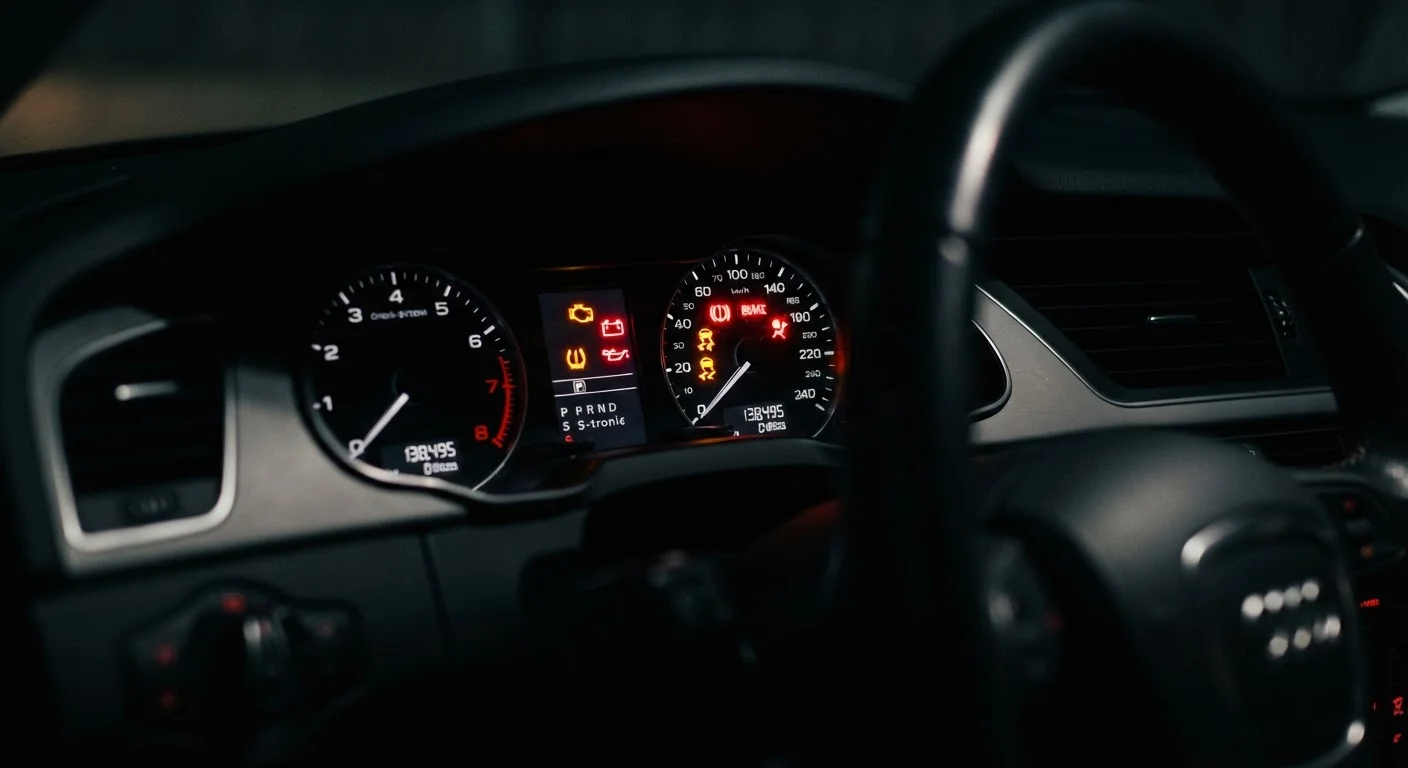
The Logic Trap: Why Drivers Delay
When a warning light blinks on and nothing feels obviously wrong, the temptation is to wait and see. The car still starts, it still moves, and the repair bill is an unwelcome thought. This reasoning is understandable — but it tends to invert the actual cost equation. A fault that costs a modest amount to fix early can multiply dramatically once secondary systems are affected.
Understanding why delay happens is the first step to breaking the habit. Most drivers aren't reckless; they're uncertain. They don't know whether a light signals a five-dollar sensor or a five-hundred-dollar repair, so they postpone the decision. Dashboard warning light meanings can help close that knowledge gap before hesitation becomes habit.
Assuming no noticeable symptoms means no serious problem.
Why it happens: Many early-stage faults — low coolant, marginal oil pressure, a failing sensor — don't immediately alter how a car drives, which makes the warning feel like a false alarm.
Driving on a red warning light because the destination is 'just nearby.'
Why it happens: Drivers rationalize short distances as low-risk, underestimating how quickly engine damage can occur when oil pressure drops or coolant temperature spikes.
Clearing the fault code without fixing the underlying fault.
Why it happens: Some drivers or quick-fix shops reset the light to make it disappear, creating a false sense that the problem is resolved.
Misidentifying one warning light as another and responding incorrectly.
Why it happens: Many dashboard icons look similar, and drivers without a reference guide may confuse, for example, an oil pressure warning (stop immediately) with a low oil level alert (add oil soon).
Postponing action because of uncertainty about repair costs.
Why it happens: Fear of a large, unknown bill causes some drivers to defer the appointment, not realizing that delay typically increases the final cost significantly.
How Small Faults Become Expensive Failures
Vehicle systems are deeply interdependent. A cooling system that runs slightly hot for weeks doesn't just stay slightly hot — it warps cylinder head gaskets, degrades coolant hoses, and can ultimately crack an engine block. An oil pressure warning driven on for even a short distance can score bearing surfaces that require a full engine rebuild. These aren't worst-case scenarios; they're documented patterns that mechanics encounter regularly.
The relationship between delay and cost is rarely linear. It tends to be exponential: a $150 thermostat job ignored for a month can become a $1,800 head gasket repair. Skipping routine maintenance compounds costs in exactly the same way — each deferred task raises the stakes on the next one.
Two warning light categories deserve particular attention. Oil-related lights — especially pressure warnings — require immediate action, not a few more miles. Oil pressure and oil level warnings mean very different things, and confusing the two can lead to driving on a starved engine. Similarly, some warning lights demand you stop the vehicle now, not at the end of the week.
~$1,200+
Average cost of a head gasket repair
Industry labor guides consistently place head gasket replacement among the costlier engine repairs — a job often traceable to ignored overheating warnings.
40%
Of roadside breakdowns linked to maintenance neglect
AAA has reported that a significant share of vehicle breakdowns it responds to involve maintenance issues that showed prior warning signs.
Getting the Diagnosis Right
One reason drivers avoid acting on warning lights is fear of an unknown repair bill. A practical first step that costs little is a diagnostic scan. Modern vehicles store fault codes in the engine control module (ECM) — the car's onboard computer — and a scan tool reads those codes in minutes. Many independent shops and service chains offer this for free or a nominal fee. The code won't always name the exact part that needs replacing, but it narrows the field considerably and prevents unnecessary guesswork.
When you do take the vehicle in, bring as much context as possible: when the light first appeared, whether it's constant or intermittent, any sounds or smells you've noticed, and recent driving conditions. This information helps a qualified mechanic confirm or rule out causes efficiently. For a plain-language breakdown of what the most common lights actually indicate, see what dashboard warning lights are actually telling you.
Not every light demands an emergency stop. Knowing whether to pull over immediately or schedule a visit is a skill every driver should develop. Treating all lights as equally urgent leads to panic; treating all lights as equally minor leads to engine damage. The goal is calibrated response — and that starts with not ignoring the light at all.