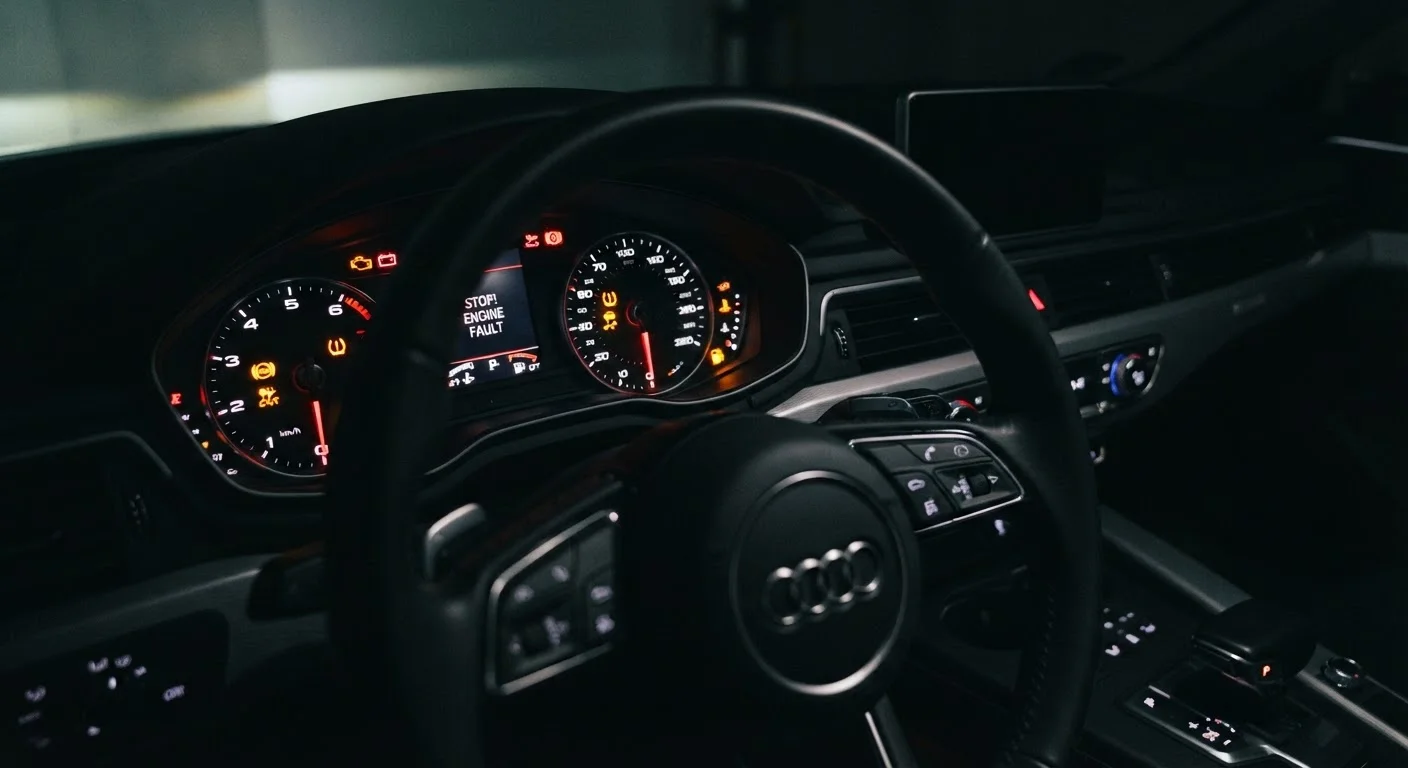
The Color Code: Understanding Urgency at a Glance
Before decoding individual symbols, understand the color system that underlies every dashboard warning light. Automakers follow a broadly consistent color convention that signals urgency — even before you know the specific meaning of an icon.
Malfunction Indicator Light (MIL)
The formal name for the check engine light. It illuminates when the vehicle's onboard diagnostic system detects a fault in the engine management or emissions systems. A mechanic can read the stored fault code with a diagnostic scanner.
TPMS
Tire Pressure Monitoring System. A sensor-based system that alerts the driver when one or more tires drop significantly below the recommended inflation pressure. It does not replace manual pressure checks.
OBD-II
On-Board Diagnostics, second generation. A standardized vehicle self-diagnostic system used in most cars sold since 1996. It stores fault codes that can be read by a compatible scanner tool.
Charging System
The combination of alternator, battery, and voltage regulator that keeps a vehicle's electrical system powered while the engine runs. A fault in this system triggers the battery warning light.
Coolant Temperature
The temperature of the liquid that circulates through the engine to absorb and dissipate heat. When this rises above the safe threshold, the temperature warning light activates.
Oil Pressure
The force at which engine oil is circulated through the lubrication system. Insufficient oil pressure means critical engine components are not receiving adequate lubrication, which can cause rapid and severe damage.
- Red lights indicate an immediate or safety-critical condition. Stop driving as soon as it is safe to do so and investigate before continuing.
- Amber or yellow lights flag something that needs attention but does not typically require you to stop immediately. Schedule a service appointment soon.
- Blue or green lights are informational — they confirm that a feature (high beams, turn signals, cruise control) is active, not that something is wrong.
Treating a red light as if it were amber is one of the most common — and potentially costly — mistakes drivers make. See our guide to stop-now versus drive-soon faults for a practical breakdown of when each response applies.
Lights That Demand Immediate Action
Certain warning lights signal conditions that can cause rapid engine damage, brake failure, or loss of control. If any of the following appear, do not continue driving until the cause is identified.
| Red light urgency | Stop driving as soon as safely possible |
| Amber light urgency | Schedule a service appointment promptly |
| Flashing check engine light | Treat as urgent — active misfire likely |
| TPMS trigger threshold | Typically 25% below recommended pressure (U.S. TPMS regulation, NHTSA) |
| Oil pressure action | Stop engine immediately; check oil level |
| Owner's manual | Primary reference for your specific vehicle's symbols |
Oil Pressure Warning
A red oil can symbol means engine oil pressure has dropped below a safe level. This could indicate low oil, a failing oil pump, or a serious internal leak. Driving even a short distance without adequate oil pressure can seize an engine permanently. Pull over, switch off the engine, and check the oil level before calling for assistance.
Engine Temperature Warning
A thermometer symbol in red signals that your coolant temperature has exceeded the safe operating range. Continued driving risks warping the cylinder head or seizing the engine. Learn the correct step-by-step response when this light appears — including when it is safe to open the hood.
Brake System Warning
A red circle with an exclamation mark inside (sometimes labeled BRAKE) can mean the handbrake is engaged, brake fluid is low, or there is a fault in the hydraulic braking system. If it stays on after releasing the handbrake, treat it as a safety-critical fault.
Amber Warnings: Act Soon, Not Immediately
Amber lights rarely require you to stop on the spot, but they should not be ignored for days or weeks. Most signal a developing fault that will worsen if left unaddressed.
Check Engine (MIL)
The Malfunction Indicator Light — an engine outline or the words CHECK ENGINE — is triggered by the vehicle's onboard diagnostics system detecting an emissions or engine management issue. The range of causes is wide: from a loose fuel cap to a failing oxygen sensor or catalytic converter. A mechanic can retrieve the specific fault code using a diagnostic scanner. Explore the full range of common culprits before assuming the worst. Note: if the MIL flashes rather than staying steady, treat it as urgent — a flashing light typically indicates active misfiring that can damage the catalytic converter.
Tire Pressure Monitoring System (TPMS)
An exclamation mark inside a flat tire outline means one or more tires are significantly under-inflated. Check all four tires with a gauge as soon as possible. Under-inflated tires increase stopping distances and risk of blowouts.
Battery Warning
A battery symbol suggests the charging system is not maintaining adequate voltage. This could point to a failing alternator, a weak battery, or a loose connection. The vehicle may continue running briefly on battery reserve, but systems will begin shutting down as charge depletes.
For a broader look at how to interpret and describe these faults when speaking with a professional, see our guide to communicating warning signs to your mechanic.
Building Good Warning-Light Habits
Knowing what a light means is only half the equation. The other half is how you respond — consistently and calmly.
- Know your owner's manual. Symbol designs vary slightly by manufacturer. Keep the manual accessible — many are now available as digital downloads through the manufacturer's website.
- Don't dismiss a light because the car feels fine. Oil pressure and early charging faults may not produce noticeable symptoms until the situation becomes critical.
- Note the circumstances. When a warning light appeared, what the car was doing (idling, accelerating, cold start), and any accompanying sounds or smells are all useful diagnostic details. This information helps a technician narrow down the cause faster.
- Act on fluid leaks in combination with dashboard warnings. A warning light paired with a puddle under the vehicle significantly narrows down the source. Use the color and location of the leak as additional diagnostic clues.
New drivers should also review how to respond to warning signs safely for a structured walkthrough of the right steps to take when a light first appears.
This article provides general educational information about vehicle warning systems. It is not a substitute for a diagnosis by a qualified mechanic. If you are unsure about the severity of a warning light, consult a licensed automotive technician before continuing to drive.