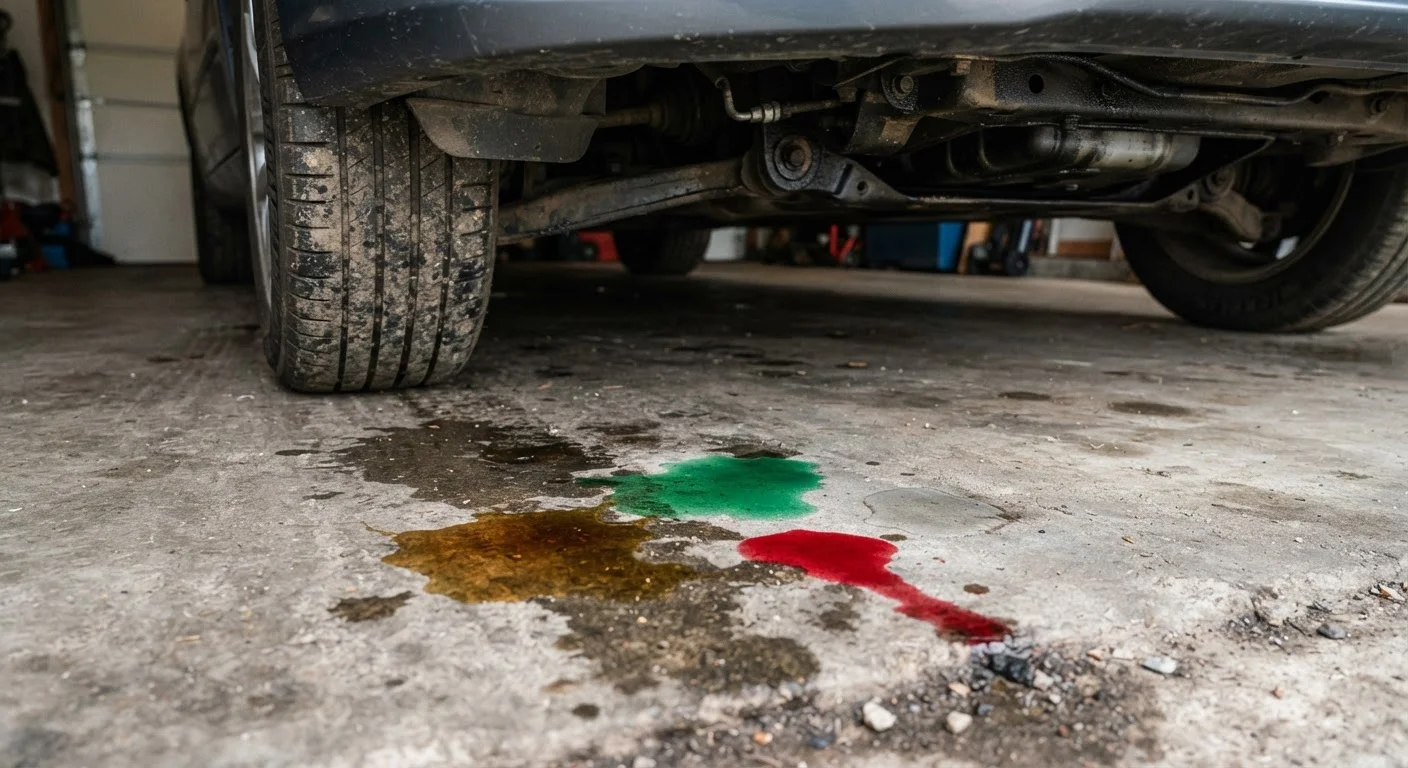
Why Colour and Location Matter
A puddle under your car is not just a nuisance — it is information. The fluid's colour, consistency, and where it sits beneath the vehicle all point toward specific systems. Before calling a mechanic, spend two minutes observing the puddle. The details you gather will help you describe the problem accurately and understand how urgently it needs attention.
Describing the symptom clearly to a mechanic — including what you spotted on the ground — can shorten diagnosis time and reduce guesswork. Start with these two questions: What colour is the fluid? and Where under the car is the drip originating?
| Coolant colour | Bright green, orange, yellow, or blue-green; sweet smell |
| Engine oil colour | Amber (fresh) to near-black (old); oily texture |
| Brake fluid colour | Clear to pale yellow; slightly oily; chemical odour |
| Transmission fluid colour | Red or pink; may smell sweet or slightly burnt |
| Normal A/C condensation | Clear water, front passenger side — not a fault |
| Highest urgency leaks | Brake fluid near a wheel; fuel; coolant with overheating |
Reading the Colour: A Fluid-by-Fluid Guide
Each automotive fluid has a characteristic colour, though age and contamination can shift the shade. Use these as starting points, not definitive verdicts.
- Bright orange, yellow-green, or blue-green: Engine coolant (antifreeze). Often has a faintly sweet smell. A coolant leak can cause overheating quickly — check the temperature gauge and monitor dashboard warning lights closely.
- Amber to dark brown, oily: Engine oil. Fresh oil is amber; old oil turns near-black. An oily film or steady drip near the engine is a common sign of a worn gasket or seal.
- Red or pink, thin: Automatic transmission fluid or power steering fluid. Both are often dyed red. Transmission fluid may smell slightly sweet; power steering fluid can smell slightly burnt if overheated.
- Clear to slightly yellow, thin: Brake fluid or water. Water under the car on a hot day is normal condensation from the air conditioning system — it is not a leak. Brake fluid, however, has a faintly oily feel and a mild chemical odour. Any suspected brake fluid loss is a safety priority.
- Dark brown to black, very thick: Differential or gear oil. Less common but possible on older vehicles. Has a strong, sulphurous odour.
- Light blue or transparent blue: Windshield washer fluid. Low urgency, but worth topping up.
For guidance on checking fluid levels yourself, see our article on car fluids every owner should know how to check.
Coolant (antifreeze)
A water-based fluid circulated through the engine to regulate operating temperature. It prevents both overheating in summer and freezing in winter.
Brake fluid
A hydraulic fluid that transmits force from the brake pedal to the brake components at each wheel. Loss of brake fluid can directly impair stopping ability.
Transmission fluid
Oil used in automatic or manual transmissions to lubricate gears and, in automatics, to transmit hydraulic pressure for gear changes.
Differential fluid
A thick gear oil found in the differential — the component that allows wheels to rotate at different speeds during turns. Common in rear-wheel and all-wheel-drive vehicles.
Power steering fluid
Hydraulic fluid that assists steering effort in vehicles with hydraulic power steering systems. Often dyed red or clear depending on the manufacturer.
Location as a Second Clue
Once you have noted the colour, look at where the puddle forms relative to the vehicle's footprint. This narrows the source system considerably.
| Puddle Location | Likely Source System |
|---|---|
| Front-centre, beneath engine | Engine oil, coolant, power steering |
| Front passenger side | Air conditioning condensate (normal) or coolant |
| Centre of vehicle | Transmission fluid, fuel line |
| Rear axle area | Differential fluid, brake fluid |
| Near a wheel | Brake fluid (possible caliper or wheel cylinder leak — urgent) |
A puddle near any wheel combined with a spongy brake pedal is a serious safety concern. Do not drive the vehicle until the brake system has been inspected by a qualified mechanic.
If you recently purchased a used vehicle, unfamiliar staining under the car may also indicate pre-existing leaks. Our resource on hidden damage signs sellers hope you miss covers what to look for during a pre-purchase inspection.
When to Act — and How Quickly
Not every drip demands an emergency stop. Use this general urgency framework:
- Act immediately (do not drive): Suspected brake fluid near a wheel; coolant leak with rising temperature gauge; fuel smell or visible fuel on the ground.
- Schedule within a day or two: Active oil drip; transmission fluid loss; any fluid that is diminishing a critical level quickly.
- Monitor and book soon: Slow, intermittent drips of oil or power steering fluid with stable reservoir levels.
- Low urgency: Clear water puddle on a warm day beneath the front passenger area — this is normal A/C condensation.
When in doubt, check the relevant fluid reservoir level using your owner's manual. A sudden drop in level — even without a visible puddle — confirms an active leak. Always verify you are checking the correct reservoir; mixing fluids can cause serious and expensive damage.
This article provides general educational guidance only. For any safety-critical concern — particularly involving brakes or fuel — consult a qualified, licensed mechanic before operating your vehicle.