Why Hidden Damage Is So Easy to Miss
Used cars with significant flood or accident histories regularly make it to private listings and dealer lots without clear disclosure. Body shops can refinish panels to near-factory appearance, and cosmetic cleaning can temporarily mask water damage. Buyers focused on price, mileage, and appearance often skip the slower, methodical checks that reveal what's underneath.
The stakes are real. Structural repairs done without proper equipment or materials can compromise crash safety. Flood-damaged electrical systems corrode progressively, leading to failures that are expensive to diagnose and repair. Understanding where damage hides — and which checks to run — gives you a measurable advantage before committing to a purchase. For a broader look at how skipping research steps leads to regret, see why buyers regret their car purchase.
Common Mistakes Buyers Make When Checking for Damage
The following errors show up repeatedly among buyers who later discover undisclosed damage. Each one is avoidable with a structured approach.
Relying solely on a vehicle history report and skipping the physical inspection.
Why it happens: History reports are easy to obtain and feel authoritative, leading buyers to treat them as a complete picture rather than a partial one.
Inspecting only in artificial light or inside a dim garage.
Why it happens: Appointments are often scheduled at the seller's convenience, and buyers may not think to ask for a different location or time of day.
Ignoring interior odor because the car appears freshly detailed.
Why it happens: Sellers often deep-clean and use odor-neutralizing products before showing a flood-damaged vehicle, which masks smell temporarily.
Accepting a seller's verbal assurance that minor bodywork was done for cosmetic reasons only.
Why it happens: Buyers want to trust the seller and avoid conflict, and vague explanations can sound plausible in the moment.
Skipping the under-hood and undercarriage check entirely.
Why it happens: Buyers without mechanical experience feel uncertain about what they're looking at and avoid areas where they don't feel confident.
If a deal collapses because damage surfaces during negotiation, that outcome is still better than discovering it post-sale. Common reasons deals fall apart often trace back to exactly these disclosure issues.
What a Thorough Physical Inspection Covers
Walk the perimeter of the vehicle in good daylight and crouch to view panels at a low angle — this reveals waves, texture inconsistencies, and color mismatches that are invisible head-on. Check the gaps between doors, fenders, and the hood: uniform gaps (roughly 4–5mm) indicate the car has not been reassembled after a collision. Uneven or tapered gaps suggest panel replacement or realignment work.
Open every door and inspect the door jambs and hinge pillars. Look for overspray — thin misting of paint on rubber seals, bolts, or plastic clips — which indicates the car was repainted without full disassembly. Pop the hood and examine the radiator support, inner fender liners, and strut towers for rippling, welding seams that don't match factory appearance, or mismatched bolts.
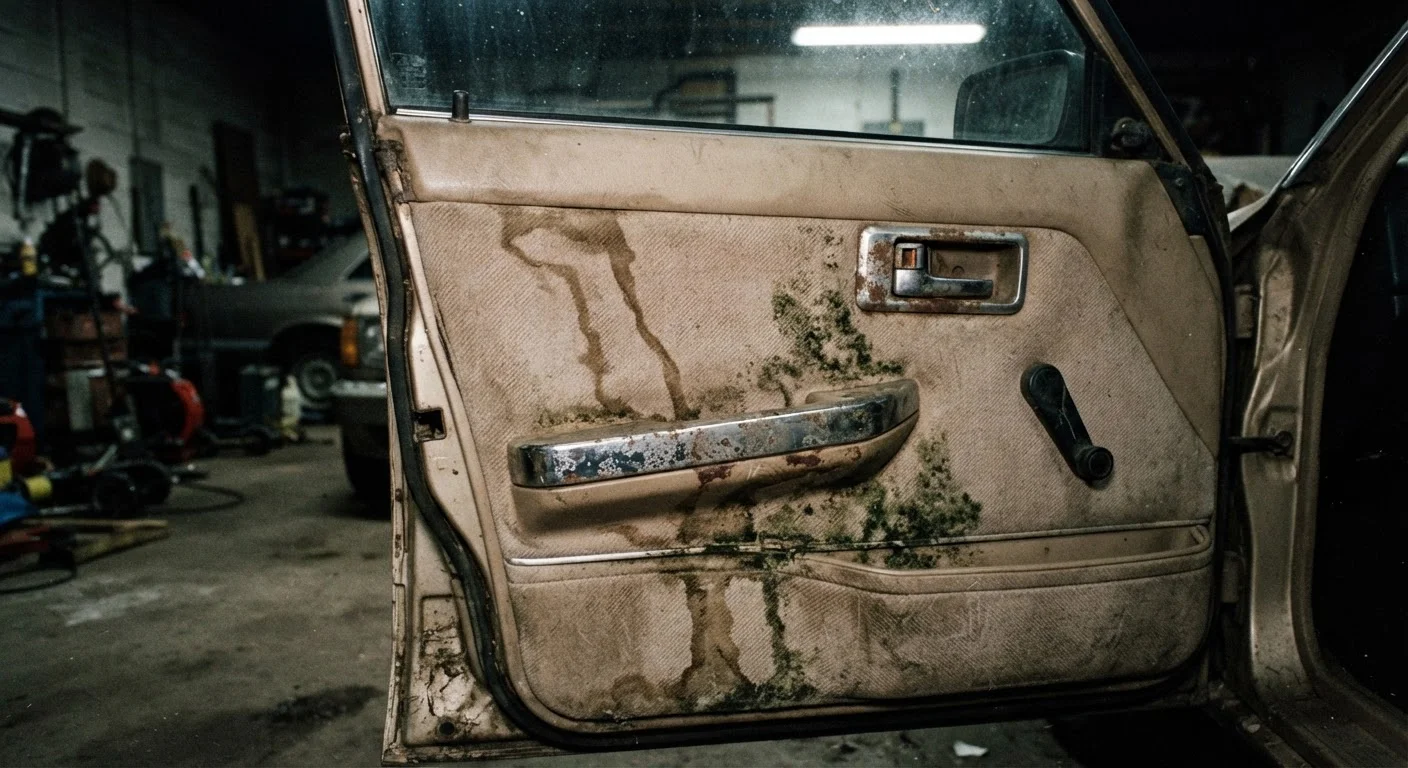
For flood damage, lift the floor mats and press the carpet firmly to check for dampness underneath. Smell the interior carefully, particularly under the seats and in the trunk. Check the seat belt anchors and lower seat frame rails for rust lines. Examine the spare tire well, as water pools there and leaves a distinct high-water mark. Corroded or brittle wiring connectors behind the dashboard are another strong indicator. Fluid leaks under the car can also point to damage-related seal failures worth investigating.
Rebuilt and Salvage Titles Cross State Lines
A vehicle totaled in one state can be retitled in another with fewer disclosure requirements — a practice sometimes called 'title washing.' Always run the VIN through NMVTIS and check the title brand history across all states where the car was previously registered. A clean title in the selling state does not mean the vehicle has a clean history nationally.
For a full framework on reading bodywork condition beyond crash and flood damage, reading a used car's body condition covers rust, filler, and structural corrosion in detail.
Research Tools That Support Your Inspection
A vehicle history report — pulled using the car's 17-character VIN — documents reported accidents, title brands (including flood and salvage designations), odometer readings, and registration history. These reports draw from insurer claims, DMV records, and auction data, but they only capture incidents that were formally reported. Private repairs and cash settlements often leave no record.
Cross-reference the VIN with the National Motor Vehicle Title Information System (NMVTIS), a federally authorized database that aggregates title brands across states. A salvage or rebuilt title in any state will appear here even if the car has since been re-registered elsewhere. Before visiting a seller, reading the listing carefully can surface early red flags — photo quality, disclosure language, and pricing relative to market value all carry information.
Finally, budget for a pre-purchase inspection (PPI) by an independent mechanic or a certified body shop with a frame measuring system. A PPI costs roughly $100–$200 and can identify structural damage, hidden corrosion, and mechanical issues that no visual walk-around will catch. It is the single most reliable tool available to a used car buyer.