Why Fluid Checks Matter
Your car depends on a network of fluids to lubricate, cool, clean, and transmit force across its mechanical systems. When any one of these drops too low or degrades in quality, components work harder, wear faster, and eventually fail. The good news: catching problems early through routine visual checks takes less than ten minutes and requires no special tools.
This guide covers the six fluids every owner should be able to locate, read, and understand — giving you the confidence to spot issues before they become expensive repairs. For a full overview of what routine upkeep involves, see A Beginner's Map to Car Maintenance.
Dipstick
A long metal rod dipped into the oil sump that lets you read the current fluid level and inspect its condition without draining anything.
Hydraulic system
A system that uses liquid under pressure to transmit force — brakes and some power steering setups both rely on this principle.
Coolant reservoir
A translucent plastic tank that holds excess coolant and allows you to check the level safely without opening the pressurized radiator.
Fluid degradation
The gradual breakdown of a fluid's chemical properties over time, reducing its ability to lubricate, cool, or protect — even when the fluid level appears normal.
Brake fluid specification
A rating (such as DOT 3 or DOT 4) that describes how much heat brake fluid can handle before it boils. Using the wrong specification can reduce braking performance.
Engine Oil
Engine oil lubricates the hundreds of moving metal parts inside your engine, reducing friction and carrying heat away from critical surfaces. It also holds microscopic particles in suspension so they can be trapped by the oil filter rather than scoring engine walls.
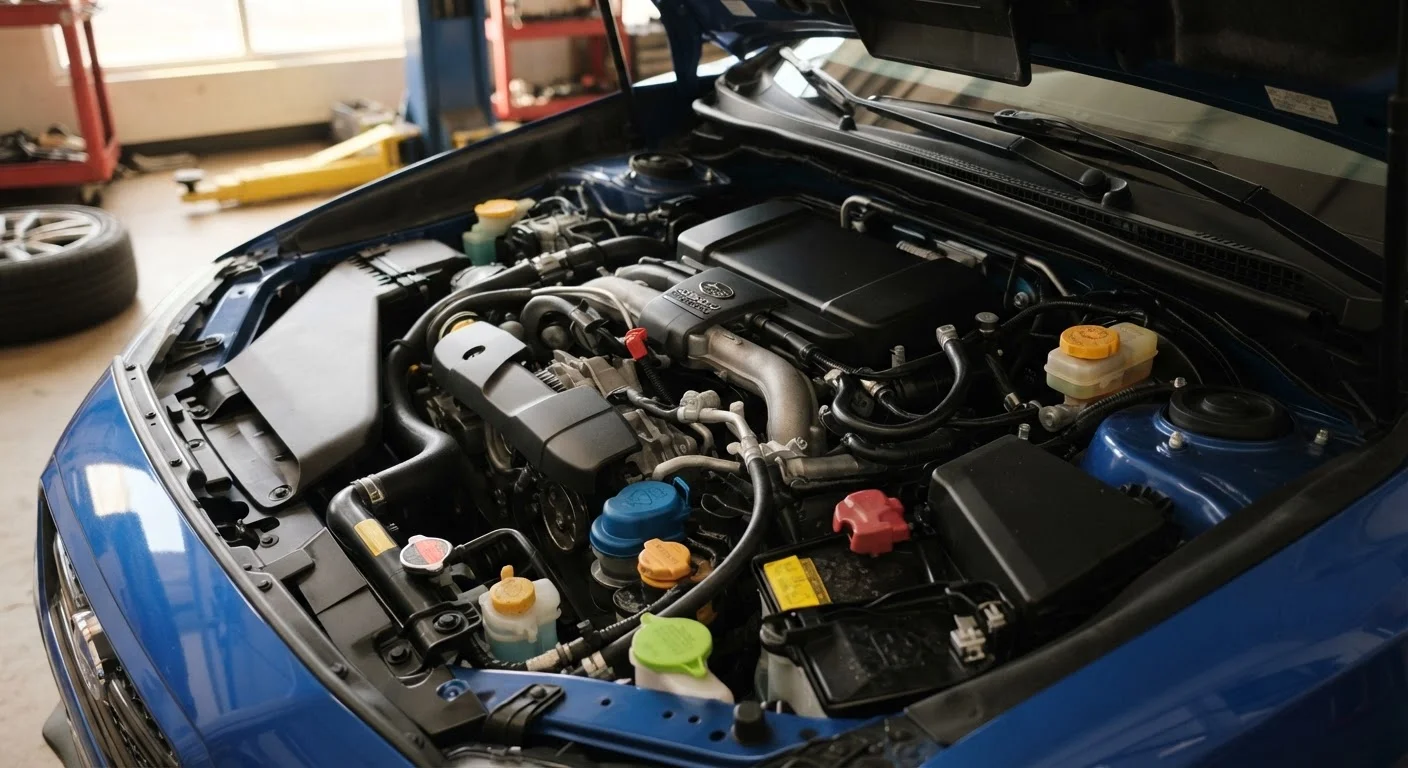
Where to find it: Look for a dipstick — typically a brightly colored loop or handle near the center of the engine bay. Pull it out, wipe it clean with a rag, reinsert fully, then pull again. The oil level should sit between the two marks at the bottom of the dipstick.
What to look for: Healthy oil is amber to light brown. Very dark or gritty oil is ready for a change. Milky or foamy oil can indicate coolant contamination — a condition requiring immediate professional attention. Check oil monthly and before long road trips.
Coolant (Antifreeze)
Coolant circulates through the engine and radiator to absorb combustion heat and prevent both freezing in winter and boiling in summer. It also contains corrosion inhibitors that protect metal and rubber components throughout the cooling system.
Where to find it: A translucent plastic reservoir labeled coolant or marked with a temperature warning symbol. It has MIN and MAX lines visible from the outside — you do not need to open the cap to read the level.
Critical safety note: Never remove the coolant reservoir or radiator cap when the engine is warm. Pressurized steam can eject and cause serious burns. Always check coolant cold.
Coolant degrades over time and loses its protective properties even when the level looks fine. For a deeper look at what happens when it breaks down, see The Real Reason Coolant Flushes Matter.
Brake Fluid
Brake fluid transmits the force from your foot on the pedal through hydraulic lines to the brake calipers at each wheel. It must withstand very high temperatures without boiling, because vapor bubbles in the brake line dramatically reduce stopping power.
Where to find it: A small semi-transparent reservoir, usually near the firewall on the driver's side, with MIN and MAX markings. The fluid inside should appear clear to light yellow. Dark or murky brake fluid has absorbed moisture and should be replaced.
What level changes mean: Brake fluid doesn't evaporate, so a falling level almost always indicates worn brake pads (normal) or a leak (not normal). If the level drops noticeably without recent pad replacement, have a mechanic inspect the system promptly.
If you ever notice unexplained puddles beneath your car, Fluid Leaks Under Your Car explains how to read color and location as diagnostic clues.
Do Not Ignore a Spongy Brake Pedal
If your brake pedal feels soft, spongy, or sinks lower than usual, do not continue driving and do not attempt to diagnose this yourself. This can indicate air or moisture in the brake lines — a safety-critical condition. Have the vehicle inspected by a qualified mechanic before driving it again.
Power Steering and Transmission Fluid
Power steering fluid (on vehicles with hydraulic systems) pressurizes the steering rack so the wheel turns with minimal effort. On vehicles with electric power steering, there is no fluid to check. Consult your owner's manual to determine which system your car uses. The reservoir — if present — is typically a small capped container near the power steering pump, with MIN/MAX markings.
Transmission fluid lubricates gears and enables smooth gear changes. Some modern transmissions are factory-sealed and only serviceable by a mechanic; others have a dipstick similar to the engine oil dipstick. Check your manual. Healthy transmission fluid is bright red and slightly sweet-smelling; dark, burnt-smelling fluid signals it is overdue for service.
For hands-on guidance on locating and inspecting all of these reservoirs safely, see our step-by-step fluid check walkthrough.
Windshield Washer Fluid
Washer fluid is the least mechanically critical fluid on this list, but running empty at the wrong moment — behind a salt-spraying truck in winter, for example — creates a real visibility hazard. It is also the only fluid where topping up with plain water is acceptable in an emergency, though purpose-made fluid offers better cleaning and freeze protection.
Where to find it: A reservoir marked with a windshield-and-spray-arc symbol, usually blue-capped. The level is visible through the translucent plastic wall. Fill with washer fluid rated for your local winter temperatures.
Monitoring all six fluids as a monthly habit keeps you connected to your car's condition and helps you catch warning signs before they escalate. A few minutes under the hood is one of the most cost-effective investments you can make in your vehicle's longevity.
This article provides general educational information about vehicle maintenance. Always consult your vehicle's owner's manual and, where in doubt, seek advice from a qualified mechanic before performing any maintenance task.