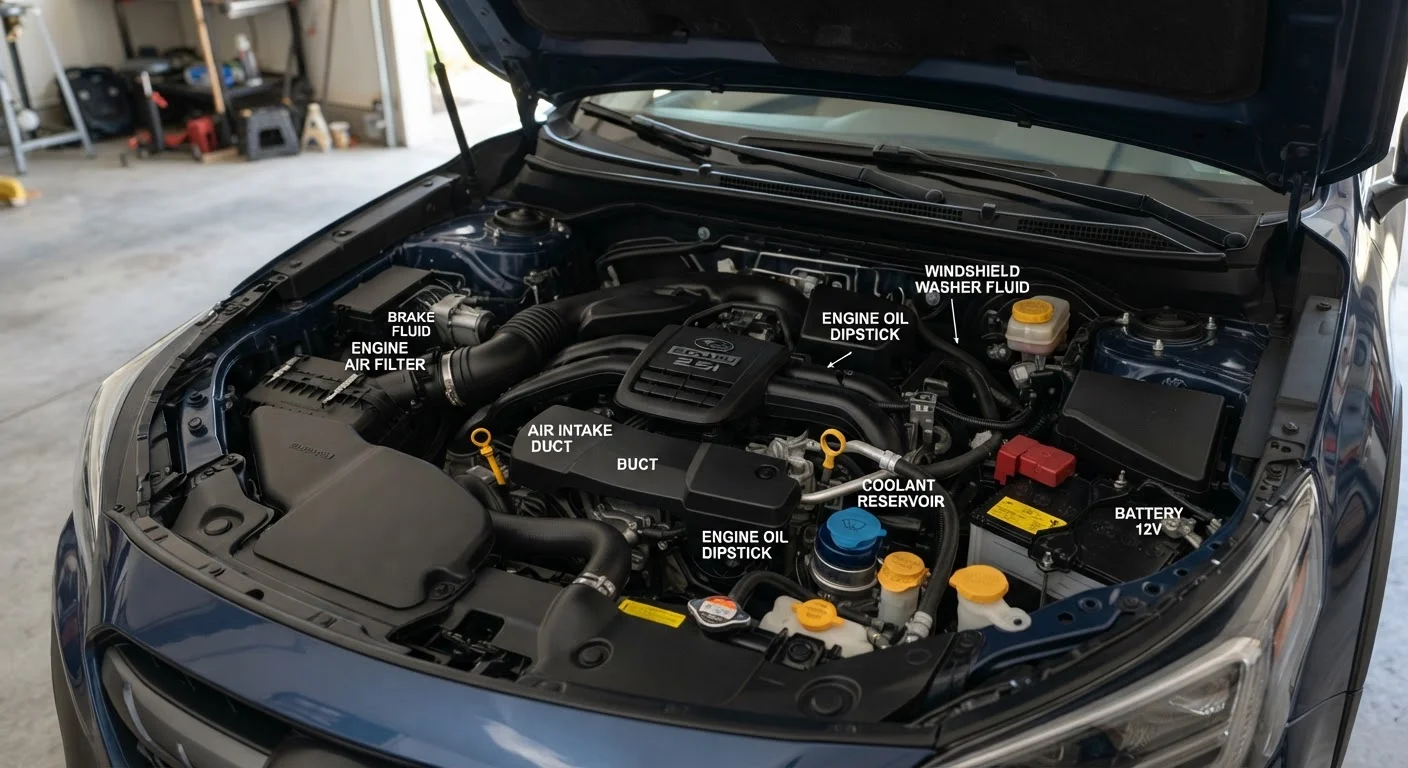
Why Regular Fluid Checks Matter
Your car relies on several fluids to keep its mechanical systems lubricated, cooled, and safe. Letting any one of them drop too low — or deteriorate past its useful life — can accelerate wear, trigger warning lights, or in some cases cause a breakdown. The good news is that checking fluid levels is one of the most accessible maintenance habits you can build.
This walkthrough covers four fluids every driver should monitor: engine oil, engine coolant, brake fluid, and windshield washer fluid. For context on where fluid checks fit within your broader maintenance schedule, see our beginner's guide to car maintenance.
Build a Simple Fluid-Check Habit
Aim to check engine oil and coolant once a month and before any journey over 100 miles. A quick visual on brake fluid and washer fluid at the same time adds only a few minutes. Setting a recurring reminder on your phone can prevent these checks from slipping through the cracks.
If you spot an unexplained puddle under your parked car, the guide to identifying fluid leaks by colour and location can help you narrow down the source quickly.
What You'll Need Before You Start
Gather the following before opening the hood. Having everything within reach makes the process quicker and avoids the temptation to skip steps.
What you will need
Park on a flat, level surface and engage the parking brake. Allow at least 10 minutes after the engine was last running before opening the hood — longer if the vehicle has been driven hard. An engine that is still hot poses a burn risk and can give inaccurate fluid readings.
Step-by-Step: Checking and Topping Up Each Fluid
Work through the fluids in the order below. Engine oil and coolant should always be checked first because they are the most critical to engine health.
Check the Engine Oil Level
Locate the oil dipstick — it typically has a brightly colored (yellow or orange) loop or handle. Pull it out fully, wipe it clean with a rag, reinsert it all the way, then pull it out again. Note where the oil film ends relative to the MIN and MAX markers.
The oil should be amber to light brown in color. If it is on or below the MIN mark, add small amounts of the correct oil grade (shown in your owner's manual) through the oil filler cap, waiting a moment between additions and re-checking the dipstick each time. Do not overfill past the MAX mark.
Check the Engine Coolant Level
The coolant (antifreeze) reservoir is a translucent plastic tank, usually connected to the radiator by a hose. With the engine completely cold, check that the fluid level sits between the MIN and MAX lines marked on the outside of the tank.
If it is low, remove the reservoir cap slowly and add the correct pre-mixed coolant (matching the color and type specified in your manual). Do not add plain water as a long-term solution — it dilutes the corrosion inhibitors and lowers the boiling point.
Inspect the Brake Fluid
The brake fluid reservoir is a small, opaque or semi-transparent container mounted on top of the brake master cylinder, typically near the back of the engine bay on the driver's side. Check the level against the MIN/MAX markings on the reservoir body — you usually do not need to open it.
The fluid should be pale yellow to light golden. Very dark or murky fluid indicates it has degraded and should be replaced by a mechanic. If the level is significantly low and you have ruled out normal pad wear, have the system inspected for leaks before driving further.
Refill the Windshield Washer Fluid
The washer fluid reservoir is usually a large translucent container marked with a windshield-and-water symbol. Unscrew the cap and fill it to the neck using a washer fluid solution rated for your climate — formulas with antifreeze protection are available for colder regions.
After filling, test the washer jets briefly to confirm they are spraying correctly and that no nozzles are blocked.
If you are unsure whether a task is within your skill level, our article on deciding which maintenance tasks are safe to DIY offers a practical framework for making that call.
Knowing When to Call a Mechanic
Topping up fluids is generally safe for any careful owner. However, some findings during a fluid check are signals to seek professional help rather than self-correct:
- Engine oil that is milky, foamy, or smells burnt — possible coolant contamination or internal engine damage.
- Coolant that is rusty, oily, or full of particles — the system may need a professional flush. See our deeper look at why coolant flushes matter for more detail.
- Brake fluid that is very dark or near the minimum line — dark fluid typically means it has absorbed moisture and lost effectiveness; a low level can indicate a leak in the braking system. Do not drive the vehicle until a qualified mechanic has inspected it.
- Any fluid that needs repeated topping up — this points to a leak or internal consumption that requires diagnosis.
For advice on working productively with a mechanic once you've identified a concern, see getting the most out of a mechanic visit.
Pairing regular fluid checks with other monthly habits — such as the tyre pressure and tread depth inspection routine — gives you a solid foundation for keeping your vehicle roadworthy between scheduled services.