Why Monthly Is the Right Frequency
Tyres naturally lose air over time — typically 1–3 PSI per month under normal conditions, and more rapidly in cold weather as air contracts. That slow loss rarely triggers a dashboard warning light (most tyre pressure monitoring systems only alert at around 25% below recommended pressure), which means a tyre can be significantly under-inflated without any obvious sign.
Pressure and tread depth directly affect your ability to stop and steer, making them the two most safety-critical tyre measurements you can take. A monthly check takes under 20 minutes and costs nothing beyond a simple gauge. For a broader picture of what these numbers mean on the road, see why tyre pressure is one of the most overlooked safety factors.
This routine also feeds into longer-interval services. Consistent pressure and tread records help you spot problems early — irregular wear logged over two or three monthly checks is a clear signal to schedule rotation, balancing, or alignment before the damage becomes expensive.
Never Read Pressure From a Hot Tyre
Tyre pressure increases as the tyre heats up during driving — sometimes by 4–6 PSI above the cold reading. Checking a hot tyre and releasing air to match the cold spec will leave the tyre dangerously under-inflated once it cools. Always measure pressure when the tyre is cold for a reliable result.
Sidewall Damage Requires Immediate Professional Evaluation
Bulges, deep cuts, or cracks in a tyre sidewall are not cosmetic issues — they indicate structural damage that cannot be repaired. A tyre in this condition can fail suddenly at speed. Do not drive on a visibly damaged tyre; have a qualified tyre technician evaluate it before continuing.
Tools You'll Need
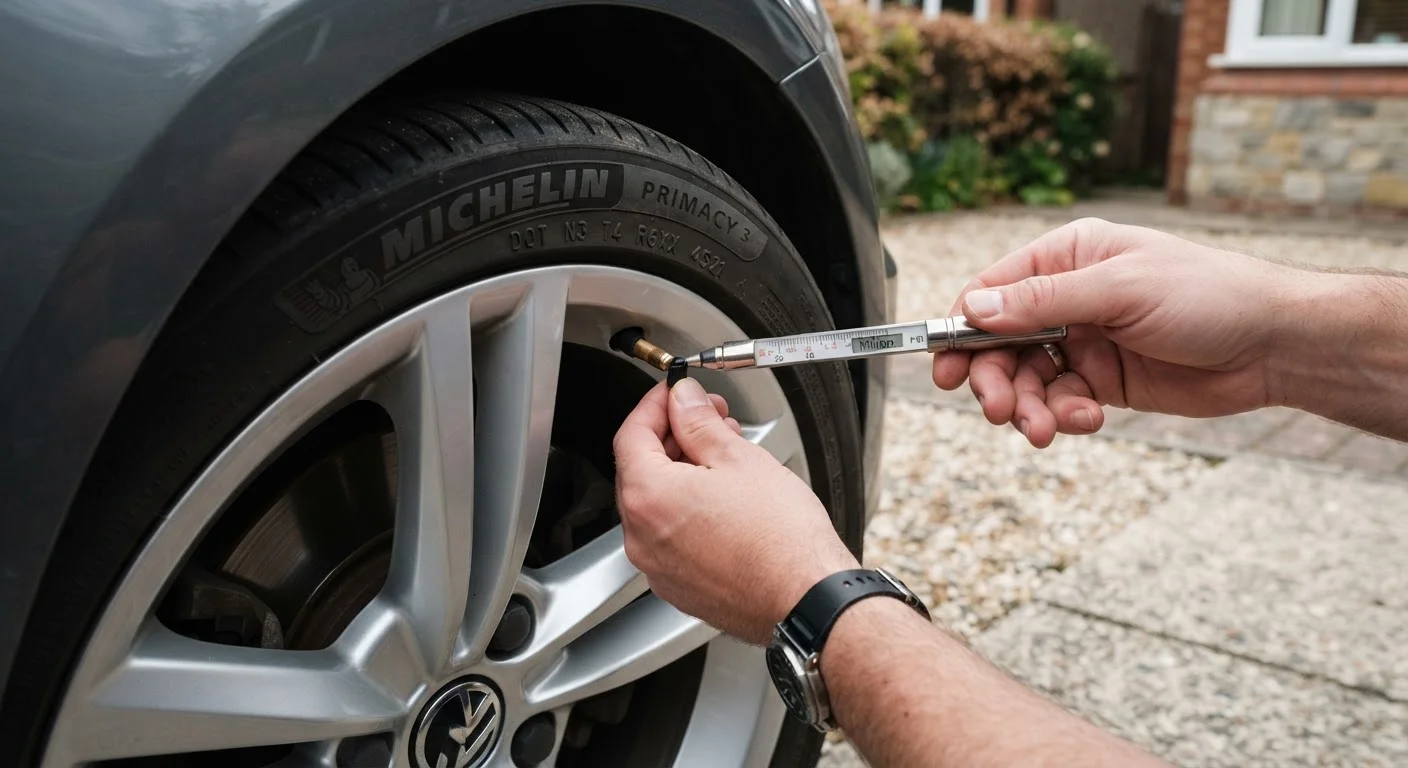
You don't need a workshop full of equipment to complete this inspection confidently. The two non-negotiable tools are a tyre pressure gauge and a tread depth gauge — both are widely available and inexpensive. A portable air compressor or inflator makes the check truly self-contained, so you can correct under-inflation immediately rather than driving to a petrol station.
Tyre Pressure Gauge
Measures tyre inflation in PSI to verify it matches the vehicle manufacturer's specification.
Tread Depth Gauge
Provides an accurate measurement of remaining tread depth in 32nds of an inch.
Air Compressor or Portable Inflator
Used to add air to under-inflated tyres without needing to visit a filling station.
Flashlight or Headlamp
Illuminates tyre sidewalls and inner edges to spot damage that is hard to see in shade.
If you already perform other routine checks at home, this inspection pairs naturally with fluid top-ups. Our guide to checking and topping up your car's fluids at home outlines a similarly straightforward process you can run the same day.
The Monthly Inspection Checklist
Work through each tyre systematically — front left, front right, rear right, rear left, then the spare. Taking readings in a consistent order prevents accidental omissions. Record your results each month, even briefly in a notes app; a written log makes irregular wear patterns far easier to spot over time.
Do Not Use the Sidewall PSI Number
The maximum PSI printed on a tyre's sidewall is the tyre's structural limit, not your vehicle's recommended inflation pressure. Using that number will over-inflate your tyres, causing a harsher ride, reduced grip, and accelerated center-tread wear. Always use the pressure listed on your vehicle's door jamb sticker or owner's manual.
Before You Start
Pressure Check
Tread Depth Inspection
Visual and Physical Inspection
If any tyre shows tread depth at or below 4/32 inch (approximately half the legal minimum), start planning for replacement. At that depth, wet-weather braking distances increase meaningfully. Tyre wear patterns also carry history — useful context if you've recently purchased a used vehicle and want to understand how it was previously maintained.