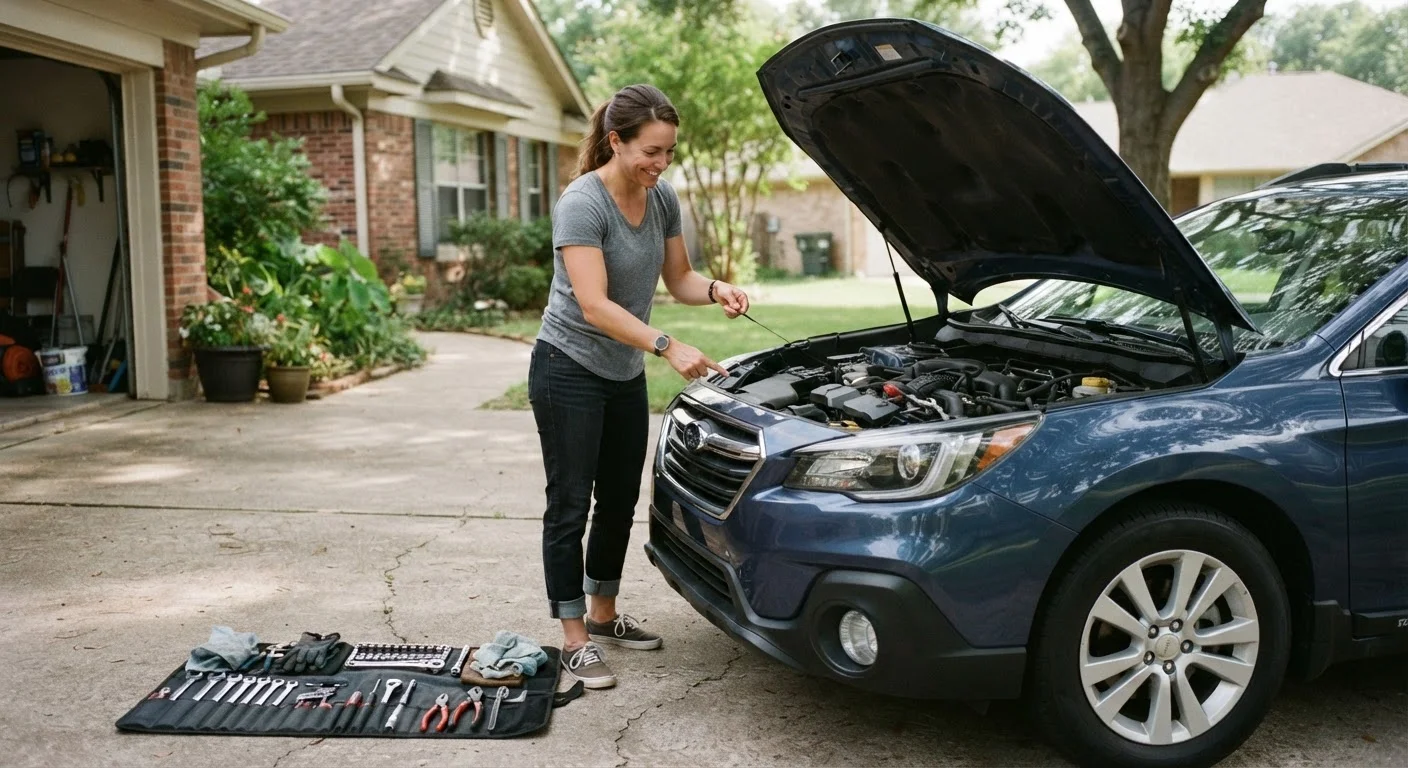
Why the DIY vs. Professional Question Matters
Vehicle ownership involves a steady stream of maintenance decisions. Some are low-stakes; others, if handled incorrectly, can compromise safety or lead to expensive downstream damage. The goal isn't to discourage hands-on ownership — it's to help you make an informed call each time a maintenance task comes up.
Two factors reliably separate safe DIY territory from professional-only work: the consequences of getting it wrong, and the tools and knowledge required to get it right. Tasks where an error means a leaking windshield washer reservoir are very different from tasks where an error means brake failure at highway speed.
Before any job, consult your owner's manual. Manufacturers specify service intervals and, in many cases, flag procedures that require dealer-level equipment or training. That guidance is your starting point — not a YouTube tutorial.
Maintenance Tasks That Are Generally Safe to DIY
Several routine jobs fall well within reach of an owner who is methodical, patient, and willing to read the instructions carefully.
- Engine air filter replacement: Typically involves releasing a few clips on a plastic housing. No special tools needed, and the consequences of a minor misstep are low.
- Cabin air filter replacement: Usually located behind the glove box or under the dashboard. Your owner's manual will show the exact location.
- Windshield wiper blades: Replacement is designed to be consumer-friendly. Follow the blade packaging instructions and your manual's sizing guidance.
- Checking and topping up fluids: Engine oil, coolant, brake fluid, and washer fluid can all be inspected and topped up at home. See the fluid check walkthrough for a step-by-step approach.
- Battery terminal cleaning: Removing corrosion from terminals with a wire brush (after disconnecting the negative terminal first) is manageable, provided you follow proper disconnection order to avoid electrical issues.
- Bulb replacement (exterior lighting): Many vehicles allow simple bulb swaps for brake lights or turn signals, though some modern designs require partial disassembly and may be better left to a shop.
| Task | DIY-Friendly | Professional Recommended | |
|---|---|---|---|
| Engine / cabin air filter | Yes — simple clip or slide mechanism | Only if access is unusually complex | |
| Windshield wiper blades | Yes — no tools required | Rarely necessary | |
| Fluid top-ups (oil, coolant, washer) | Yes — with correct fluid type confirmed | If system shows contamination or leak | |
| Brake pads / rotors | Not recommended for most owners | Yes — safety-critical precision required | |
| Timing belt / chain service | No — high engine damage risk | Yes — specialist tools and knowledge needed | |
| Suspension / steering parts | No — affects vehicle control | Yes — alignment equipment required | |
| Fuel system repairs | No — flammable, pressurised system | Yes — certified technician required | |
| Battery terminal cleaning | Yes — with proper disconnection sequence | If battery or charging system is faulty |
Jobs That Belong With a Qualified Mechanic
The following tasks carry meaningful safety or complexity risks that make professional service the appropriate choice for most owners.
- Brake system work: Brake pad replacement may look straightforward, but incorrect installation — including improper caliper compression, uneven pad seating, or wrong torque on hardware — can cause brake fade or failure. Rotor and caliper work raises the stakes further.
- Suspension and steering components: Worn ball joints, tie rods, or shocks affect vehicle control. Improper repairs in this area can cause handling instability or component failure while driving.
- Timing belt or chain service: Misalignment by even one tooth can cause serious engine damage. This is a precision job requiring the right tools and mechanical knowledge. The timing belt vs. timing chain guide explains why this service matters and how intervals differ.
- Fuel system repairs: Working on fuel lines, injectors, or the fuel pump involves flammable materials under pressure. This is firmly professional territory.
- Advanced electrical and diagnostic work: Modern vehicles rely on complex control modules. Misdiagnosis without proper scan tools can lead to unnecessary parts replacement and leave underlying faults unresolved.
When you do take a vehicle in, knowing how to evaluate what you're told helps considerably. The guide to getting the most from a mechanic visit walks through the right questions to ask. And if you receive a written estimate, the repair estimate field guide will help you interpret it clearly.
A Completed Job Isn't Always a Correct Job
One of the most common pitfalls in DIY maintenance is finishing a task and assuming it's done correctly because nothing immediately went wrong. Some errors — like slightly undertorqued lug nuts or an improperly seated brake pad — may not reveal themselves until the vehicle is under load or stress. If you have any doubt about a safety-critical repair you've performed, have a qualified mechanic inspect the work before driving at highway speeds or in demanding conditions.
How to Evaluate Any Task Before You Start
When you encounter a maintenance item and aren't sure which category it belongs in, work through these questions before picking up a wrench:
- What happens if I make a mistake? If the failure mode involves loss of vehicle control, fire risk, or fluid contamination of safety systems, defer to a professional.
- Does the job require specialist tools? Torque wrenches, spring compressors, scan tools, and alignment rigs exist because certain jobs genuinely require them. Improvising around tool requirements is a common source of incorrect repairs.
- Is the vehicle under warranty? Some manufacturer or extended warranties require that certain services be performed by authorized facilities. Check before proceeding.
- Have I done this or something similar before? Confidence built through experience is legitimate. But each new task type deserves its own research — don't assume familiarity with one system transfers to another.
For a broader look at repair decisions, the DIY vs. professional repairs overview covers a wider range of scenarios. And for anything that takes you onto public roads, safe vehicle condition is directly tied to safe driving practices — the two go hand in hand.