Coolant Does Far More Than Prevent Freezing
Many drivers think of coolant as something to worry about in winter, but its job runs year-round. Your engine produces enormous amounts of heat during normal operation — coolant absorbs that heat from the engine block, carries it to the radiator, and releases it into the air. Without adequate coolant circulation, an engine can overheat within minutes.
Coolant also contains chemical inhibitors that prevent corrosion inside your cooling system. Aluminum components, copper radiators, rubber hoses, and steel passages are all in contact with the same fluid. Those inhibitors form a protective film that slows the electrochemical reactions that would otherwise eat away at metal surfaces. This dual role — thermal management and corrosion protection — is what makes coolant condition so important regardless of season.
To understand the full picture of how seasonal temperature extremes interact with your cooling system, see our guide to seasonal car maintenance.
Why Coolant Degrades — and What That Costs You
Coolant doesn't last forever. The corrosion inhibitors that protect your system are consumed through normal use — they react with metal surfaces, oxidize, and break down chemically. Once those inhibitors are depleted, the coolant itself can become mildly acidic. At that point, instead of protecting metal components, the fluid is slowly attacking them.
Degraded coolant creates a cascade of potential damage: corrosion pits form in the radiator, the water pump impeller wears faster, and scale deposits build up in narrow coolant passages, reducing the system's ability to move heat efficiently. A heater core — a small radiator inside the dashboard — is particularly vulnerable because of its fine passages and high heat exposure.
30,000–50,000 mi
Typical coolant flush interval
Most vehicle manufacturers recommend a cooling system flush within this mileage range, though extended-life formulas may extend to 100,000 miles per specific manufacturer guidance.
~50%
Coolant remaining after drain-only service
Industry technician training materials note that simply draining from the radiator petcock can leave nearly half the old coolant behind in the block, hoses, and heater core.
$150–$300
Estimated cost of a professional coolant flush
Pricing varies by vehicle, region, and service provider; this range represents typical shop estimates and is provided for general reference only.
The chemistry also affects rubber. Hoses and gaskets that sit in acidic coolant become brittle faster than they should. A hose failure on the road can cause rapid coolant loss and engine overheating in a matter of minutes — an expensive and avoidable outcome.
What a Coolant Flush Actually Involves
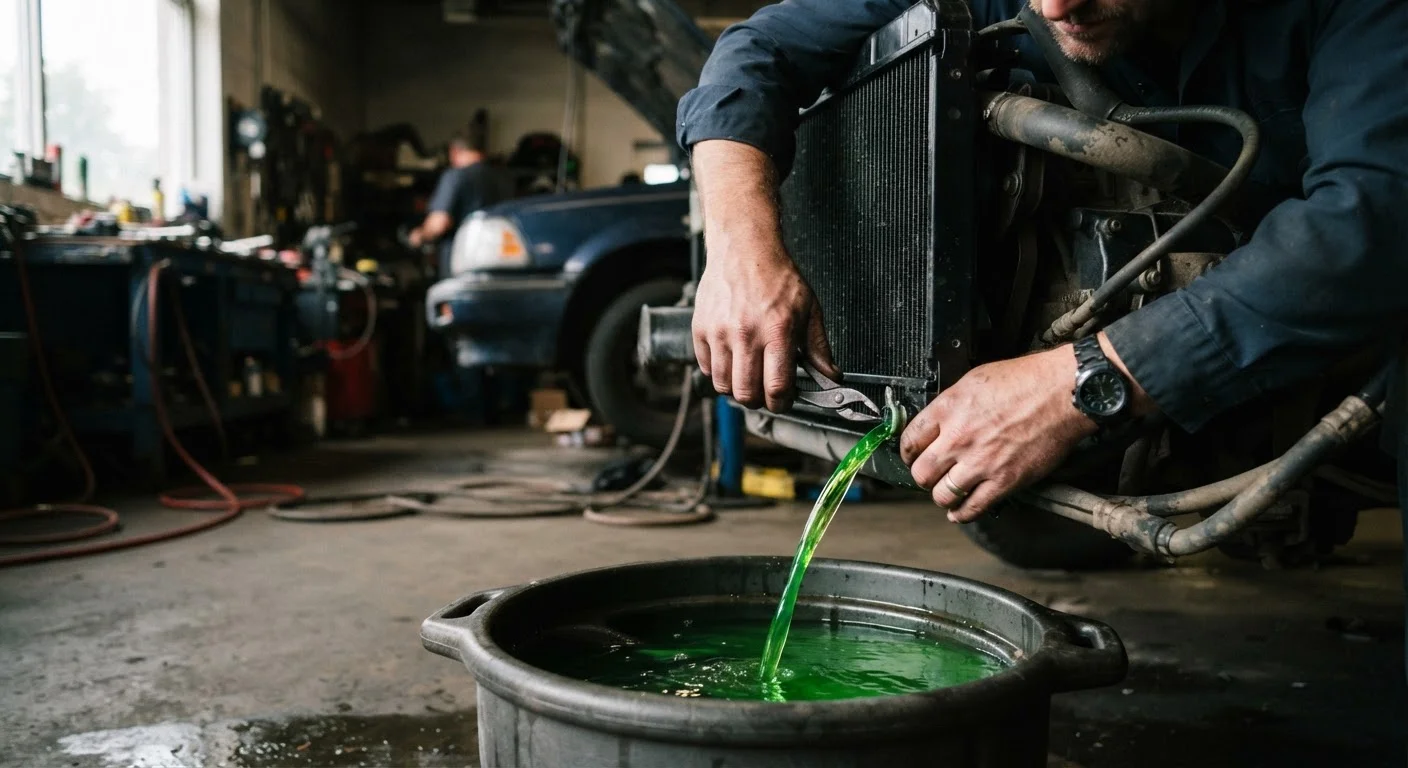
A coolant flush is not the same as draining the radiator and refilling it. When you simply drain through the radiator petcock, a significant portion of old coolant remains in the engine block, heater core, and hoses. A proper flush forces new fluid through the entire system, displacing old fluid from every passage.
The process typically involves connecting a flushing machine to the cooling system, circulating a cleaning solution to break up scale and deposits, then pushing fresh coolant through until the outflow runs clean. The system is then refilled to the correct mixture ratio — usually 50% coolant concentrate to 50% distilled water — and checked for leaks.
If you want to monitor your coolant between service visits, our guide on checking and topping up your car's fluids at home walks through the process safely and without specialist tools.
Most manufacturers recommend a flush every 30,000 to 50,000 miles, though extended-life coolants may go longer. Your owner's manual is the authoritative source for your specific vehicle.
Signs Your Coolant Needs Attention Now
You don't have to wait for a scheduled interval to catch coolant problems. Several warning signs can appear earlier:
- Rust-colored or murky fluid in the reservoir — fresh coolant is translucent and bright; brown or cloudy fluid indicates contamination or oxidation.
- A sweet smell from the engine bay or inside the cabin — coolant has a distinctive sweet odor; if you can smell it without opening the hood, there may be a leak.
- A rising temperature gauge — if your gauge climbs higher than normal, degraded coolant or a blocked passage may be reducing heat transfer efficiency.
- White residue around hose connections or the reservoir cap — this often indicates coolant has been seeping and evaporating, leaving mineral deposits behind.
If you observe any of these signs, having the cooling system inspected promptly is worthwhile. Delaying can turn a straightforward flush into a more involved repair.
It's also worth noting that not every cooling system problem requires a flush alone — sometimes issues overlap with other maintenance myths. Our article on common myths about car repairs that cost owners money can help you separate fact from fiction.