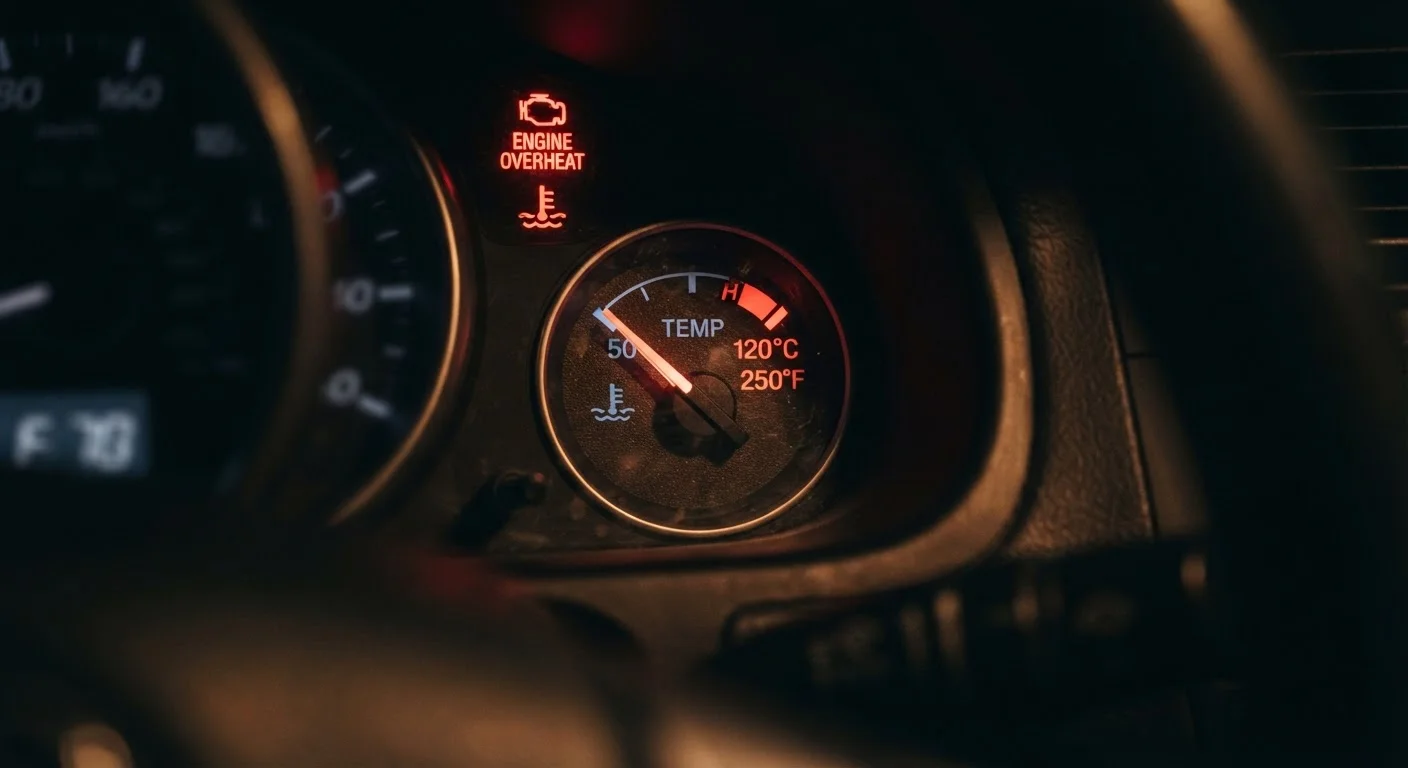
Why an Overheating Engine Is a Drop-Everything Emergency
Your engine operates within a narrow temperature band — typically between 195°F and 220°F. The cooling system, which circulates coolant through the engine and radiator, is what keeps it there. When something in that system fails — a leak, a broken thermostat, a failing water pump — heat builds faster than it can escape.
The consequences are rapid and severe. Aluminum cylinder heads can warp at sustained high temperatures. Pistons can seize inside cylinders. A blown head gasket (the seal between the engine block and cylinder head) can allow coolant and oil to mix, compounding the damage further. Repairs for these failures commonly run into thousands of dollars — or can total an otherwise functional vehicle.
Understanding what the temperature gauge is actually signaling, and what to do in the first few minutes, is one of the most valuable pieces of knowledge a driver can have. For a broader look at which dashboard warnings demand immediate action, see our guide on when to stop driving immediately.
Stop Driving Immediately
An engine operating in the red zone can seize or warp cylinder heads within minutes. Do not assume you can make it to your destination or a shop — pull over as soon as it is safe to do so and shut off the engine. Continuing to drive risks turning a manageable repair into an engine replacement.
What You'll Need Before You Begin
Most of the response to an overheating engine requires patience rather than tools — but being prepared helps. Keep the following in your vehicle:
What you will need
If you don't have coolant on hand, that's fine — the priority is always stopping safely first. Topping up fluid is only relevant once the engine is fully cool.
Prevention Starts With Routine Checks
Most overheating events are preceded by a slow coolant leak or a neglected flush interval. Checking your coolant level monthly and following the manufacturer's recommended flush schedule — typically every 2–5 years depending on the coolant type — significantly reduces the risk. Catching a small leak early is far less costly than dealing with a seized engine.
Step-by-Step: What to Do When the Gauge Spikes
Follow these steps in order. Speed of response in the first minute matters, but so does not rushing the cool-down period.
Turn off the A/C and turn on the heater
The moment you notice the gauge climbing toward red, switch off the air conditioning immediately — it adds load to the engine. Then turn the cabin heater to its highest setting and maximum fan speed. The heater core acts as a small secondary radiator, drawing heat away from the coolant and buying you a minute or two to find a safe place to stop.
Pull over safely and shut off the engine
Signal, check mirrors, and pull completely off the road onto a flat, stable surface. Turn off the engine — do not leave it idling. On modern vehicles the electric cooling fan may continue running briefly after shutdown, which is normal. Apply the parking brake and turn on your hazard lights.
Wait and watch for steam or smoke
From inside or a safe distance outside the vehicle, look for steam or smoke rising from under the hood. A small amount of steam, especially near the hood seams, is common with mild overheating. Heavy smoke, a strong burning smell, or visible fluid pooling underneath are signs of a more serious problem. Do not attempt any inspection until all steam has stopped.
Open the hood and locate the coolant reservoir
After the engine has cooled completely — at least 30 to 45 minutes — open the hood. Locate the translucent plastic coolant reservoir (also called the overflow tank), which is connected to the radiator by a hose. You can read the MIN and MAX markings on its side without opening it. If the fluid level is visibly below MIN, low coolant is the likely trigger for overheating.
Top up coolant if available and the system is fully cool
If you have pre-mixed coolant or distilled water in an emergency, slowly remove the reservoir cap only after confirming the engine is fully cool to the touch. Add fluid until it reaches the MAX line. In an emergency, plain distilled water can be used as a temporary measure — but have the system properly flushed and refilled with the correct coolant type as soon as possible. For guidance on checking and topping up all your vehicle's fluids safely, see our step-by-step fluids guide.
Restart, monitor the gauge, and drive cautiously to a shop
If the coolant level was low and you've topped it up, restart the engine and watch the temperature gauge closely for the first few minutes. If it remains in the normal range and you see no further warning signs, drive directly to a qualified mechanic — do not run errands or make other stops. If the gauge begins climbing again, pull over immediately and call for a tow. Do not attempt further driving.
Never Open a Hot Radiator Cap
The cooling system operates under pressure. Opening the radiator cap or coolant reservoir cap while the engine is hot can release a burst of scalding steam and coolant. Always wait at least 30–45 minutes after shutting off the engine before touching any cooling system component.
Common Causes Your Mechanic Will Investigate
Once you've reached a shop safely, a technician will pressure-test the cooling system and inspect for the root cause. The most frequent culprits include:
- Low or leaking coolant: A slow leak from a hose, the radiator, or the water pump is the leading cause of overheating. Coolant doesn't evaporate — if the level is dropping, there's a leak somewhere.
- Failed thermostat: The thermostat regulates coolant flow. A thermostat stuck in the closed position prevents coolant from circulating, causing rapid heat buildup.
- Faulty water pump: The water pump moves coolant through the system. A worn impeller or broken belt can reduce flow to near zero.
- Clogged radiator: Scale, debris, or old degraded coolant can restrict airflow and fluid flow through the radiator.
- Blown head gasket: If you notice white smoke from the exhaust, a sweet smell, or bubbling in the coolant reservoir, a head gasket failure is possible — a more serious and costly repair.
Familiarizing yourself with dashboard warning signals more broadly can help you catch early signs before they escalate. Our guide to warning lights that should never be ignored covers the full range of critical alerts.