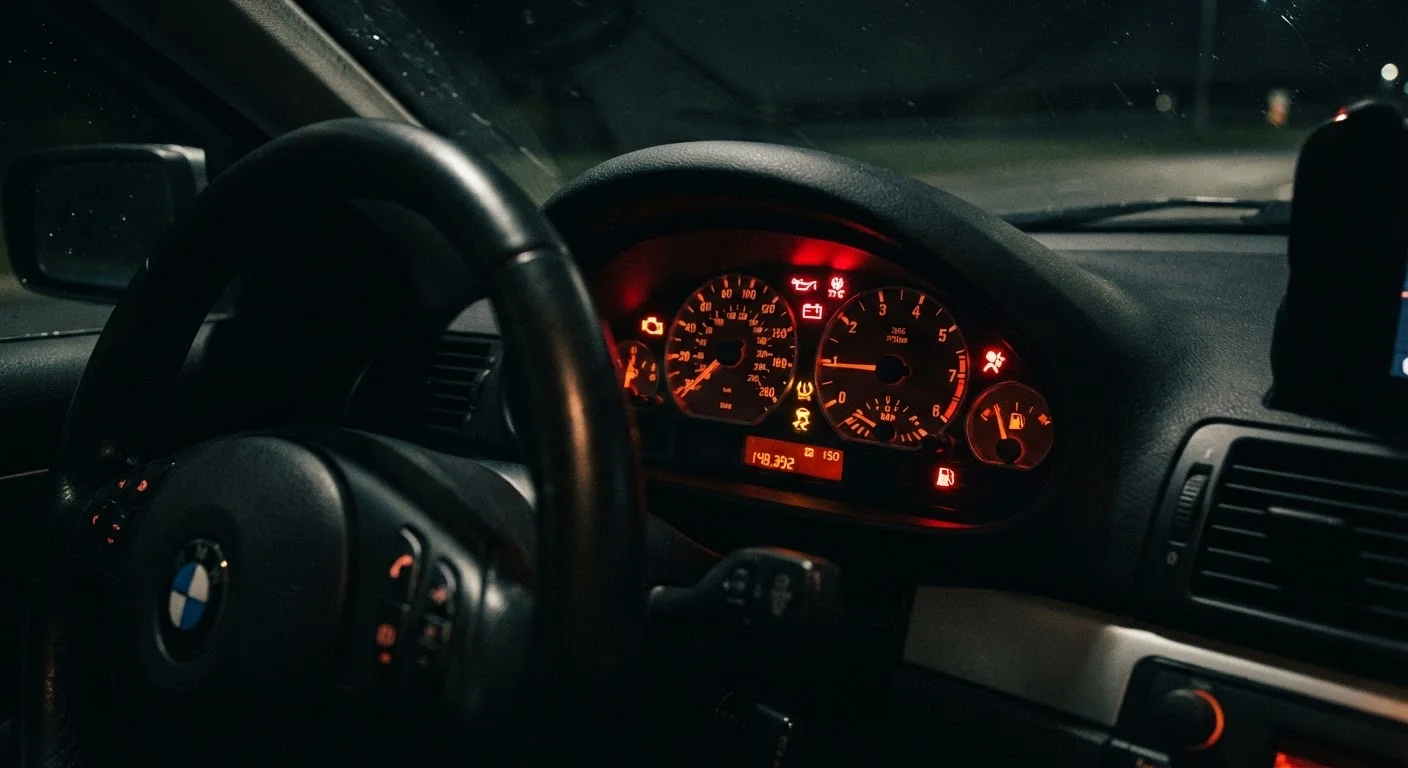
Why the Distinction Matters
Every driver eventually faces a dashboard light, a strange noise, or an odd smell and wonders: Can I make it home, or do I pull over right now? Getting this call wrong in either direction has real consequences. Stopping unnecessarily on a busy highway creates its own hazard; driving on a failing system can result in a crash, a seized engine, or a repair bill that dwarfs what early action would have cost.
The general rule is straightforward: if a fault compromises your ability to steer, stop, or see — or if your engine is at risk of catastrophic failure in the next few minutes — you stop immediately. If the fault is a monitored system issue with no immediate safety impact, a careful, direct trip to a mechanic is appropriate. For a broader reference on what specific lights mean, see our dashboard warning lights guide.
Stop Driving Immediately: These Symptoms Cannot Wait
The following signs indicate a condition that can worsen within minutes. Pull off the road as soon as it is safe — use a parking lot, a wide shoulder, or an exit — turn on your hazard lights, and call for roadside assistance or a tow.
- Oil pressure warning light (red): Low or lost oil pressure means metal components are grinding together without lubrication. Continued driving can seize the engine within minutes. Switch off the engine as soon as you are safely stopped.
- Temperature gauge in the red or steam from the hood: An overheating engine can warp cylinder heads or crack the block. See our step-by-step overheating response guide for what to do first.
- Smoke — any color — from under the hood or from the cabin: White smoke can indicate coolant burning; blue or black smoke signals oil or fuel burning. Either can precede a fire.
- Brake pedal goes to the floor or feels spongy: A sudden loss of braking feel suggests brake fluid loss or a failed master cylinder. Do not attempt to drive to a garage.
- Steering suddenly heavy or unresponsive: Power steering failure or a broken steering component makes the vehicle dangerous to control at any speed.
- Electrical burning smell or visible sparks: These indicate a wiring fault that could lead to a vehicle fire.
Never Open a Hot Radiator Cap
If your engine has overheated, do not open the radiator or coolant reservoir cap while the engine is hot. Pressurized steam can escape with enough force to cause serious burns. Wait at least 30 minutes for the engine to cool before approaching the cap, and keep a rag over it when you do open it. Let a qualified mechanic investigate the underlying cause before driving the vehicle again.
Drive to a Garage Soon: Symptoms That Allow a Short Journey
These symptoms indicate a fault worth taking seriously — ideally addressed the same day or within a day or two — but they do not typically require roadside abandonment. Drive directly and calmly to a repair shop; avoid highways where possible and keep speeds moderate.
| Symptom | Stop Now | Drive to Garage Soon | |
|---|---|---|---|
| Oil pressure light (red) | Yes — stop immediately | No | |
| Temperature gauge in red / steam | Yes — stop immediately | No | |
| Brake pedal to the floor | Yes — stop immediately | No | |
| Any smoke from engine or cabin | Yes — stop immediately | No | |
| Check engine light (steady amber) | No | Yes — same day | |
| Squealing brakes, firm pedal | No | Yes — within 1–2 days | |
| TPMS warning, tire appears normal | No | Yes — check pressure first | |
| Battery / charging system warning | No | Yes — drive directly, don't stop engine | |
| Two or more symptoms together | Yes — treat as stop-now | No |
- Check engine light (amber) with no other symptoms: This light covers a wide range of faults, most of which are not immediately dangerous. If it is steady (not flashing) and the car drives normally, a diagnostic scan at a garage is the next step. A flashing check engine light, however, signals an active misfire that can damage the catalytic converter — treat that as a stop-soon situation.
- Low coolant or oil level warning (amber): If the car is not currently overheating and oil pressure reads normal, adding fluid and driving carefully to a shop is reasonable. Do not ignore it beyond that day.
- Squealing brakes with a firm pedal: Worn brake pad indicators produce a high-pitched squeal as a deliberate alert. The brake pad wear guide explains what to expect at each stage. Grinding — metal on metal — escalates this to urgent.
- TPMS (tire pressure) warning: A slow leak or underinflated tire is drivable for a short distance at reduced speed. Check the pressure visually; if a tire appears flat, do not drive on it.
- Battery or charging system warning: The vehicle may keep running for a short time on battery reserves, but the car may stall. Drive directly to the nearest shop and avoid switching the engine off until you arrive.
For context on how deferring these symptoms tends to escalate costs, see why ignoring a warning light costs more later.
Keep a Small Emergency Kit in Your Vehicle
A basic kit — reflective triangles, a flashlight, a phone charger, and gloves — means that if you do need to stop, you can do so more safely. Reflective triangles placed behind your vehicle help alert approaching traffic, especially on roads without a wide shoulder. Check your kit at the start of each season to make sure items are in working order.
When Symptoms Combine: Always Escalate
A single amber light on an otherwise normal-driving car sits firmly in the 'garage soon' category. But symptoms rarely stay isolated. Any time two or more signs appear together — an amber light plus a burning smell, a rough idle plus a temperature rise, squealing brakes plus a soft pedal — treat the combination as a stop-now situation. The interaction between faults is almost always more serious than either symptom alone.
New drivers in particular can find this judgment difficult. Our guide for new drivers on warning signs provides a calm, plain-language walkthrough of how to assess and respond in the moment. Before your next long trip, a quick pre-drive check using the pre-journey warning sign checklist can catch many of these issues before they become roadside emergencies.
This article provides general vehicle safety information for educational purposes. Always consult a qualified mechanic for diagnosis and repair of your specific vehicle. If you are uncertain whether a symptom is safe to drive on, err on the side of stopping and seeking professional assistance.