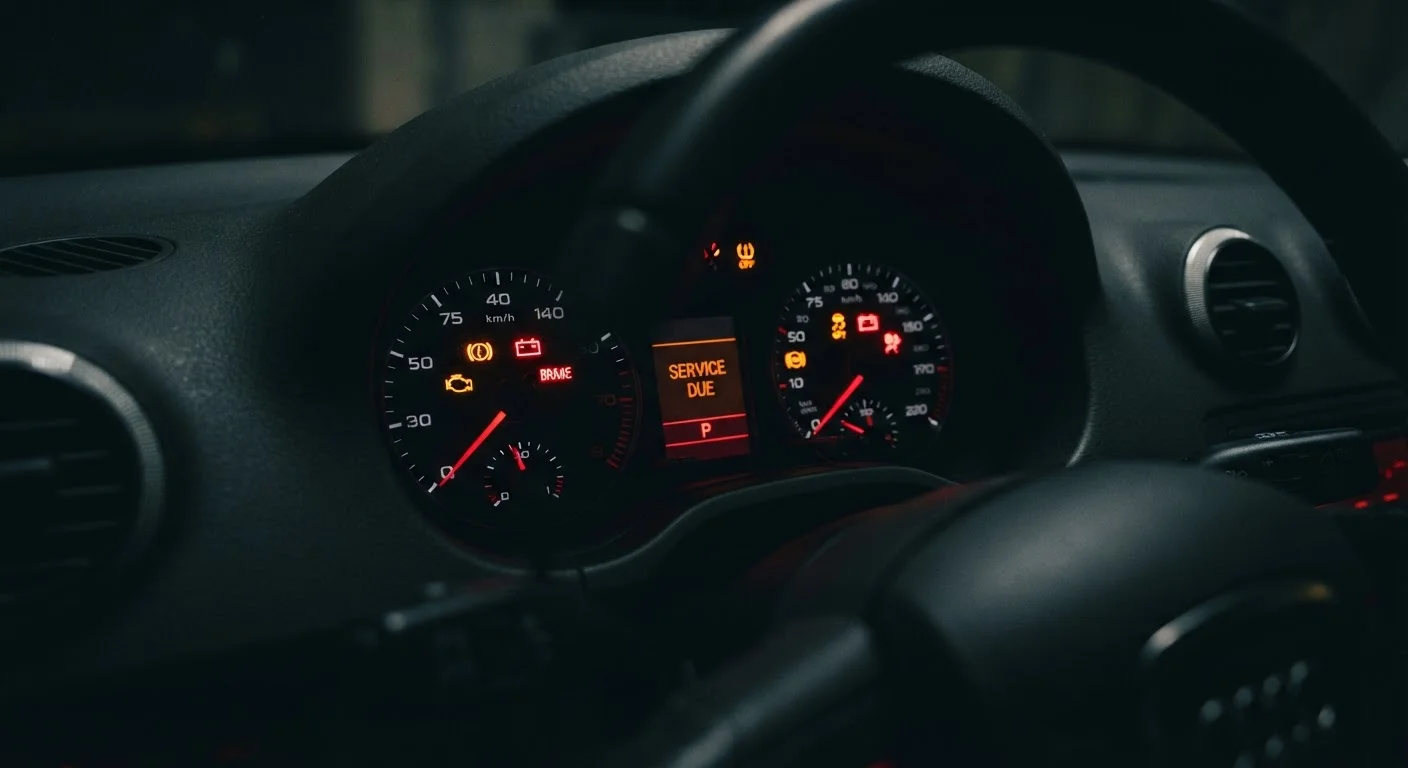
Why Some Warning Lights Can't Wait
Modern vehicles monitor dozens of systems simultaneously, and when something falls outside acceptable parameters, a warning light appears on your dashboard. The challenge for most drivers is knowing which lights signal a genuine emergency and which are routine reminders. Getting that distinction wrong can mean the difference between a quick fix and a catastrophic repair bill.
As a general rule, red lights demand immediate action, amber or yellow lights call for prompt attention, and blue or green lights are informational. But color alone doesn't tell the whole story — a flashing light of any color typically signals a more urgent condition than a steady one. For a broader lookup-style reference to what each symbol represents, see our Dashboard Warning Lights: A Driver's Quick-Reference Guide.
The warning lights below represent the ones most likely to cause serious — and expensive — harm if you continue driving. Understanding what each one means, and how to respond, is one of the most valuable things you can do as a vehicle owner.
Oil Pressure Warning
The oil pressure light — typically a red oil can symbol — is one of the most serious alerts your dashboard can show. It indicates that oil pressure has dropped to a level where engine components are no longer being adequately lubricated. Metal-on-metal contact can cause irreversible engine damage within minutes of the light coming on.
What to do: Pull off the road safely as soon as possible, shut off the engine, and do not restart it. Check the oil level with the dipstick once the engine has cooled slightly. If the level is adequate and the light remains on, have the vehicle towed — do not drive it.
Metal-on-metal contact can cause irreversible engine damage within minutes of the oil pressure light appearing.
Engine Temperature Warning
When your coolant temperature gauge climbs into the red zone or a temperature warning light illuminates, your engine is overheating. An overheating engine can warp cylinder heads, blow head gaskets, or seize entirely — repairs that frequently cost thousands of dollars.
What to do: Turn off the air conditioning, pull over safely, and shut down the engine. Never open the radiator cap on a hot engine. Our companion guide, Temperature Gauge Creeping Into the Red? Do This First, walks through the exact steps to take in this situation.
An overheating engine can seize entirely — repairs that frequently cost thousands of dollars.
Brake System Warning
A red brake warning light (distinct from the parking brake reminder) can indicate low brake fluid, a hydraulic failure, or a serious fault in the braking system. Your ability to stop the vehicle may already be compromised when this light appears.
What to do: Test your brakes gently while still at low speed. If the pedal feels soft, spongy, or sinks toward the floor, reduce speed carefully and pull over. Have the vehicle inspected before driving further. Do not ignore this light and continue at highway speeds.
Your ability to stop the vehicle may already be compromised the moment a brake system warning appears.
Check Engine Light (Flashing)
A steady check engine light covers a wide range of issues — from a loose fuel cap to a failing oxygen sensor — and while it warrants a diagnostic scan, it doesn't always mean stop immediately. A flashing check engine light is a different matter entirely. It typically indicates an active engine misfire serious enough to damage the catalytic converter within a short drive.
What to do: If the light is flashing, reduce speed, avoid heavy acceleration, and get the vehicle to a mechanic as soon as safely possible. For a full breakdown of what can trigger this symbol, see Before You Assume It's the Engine.
A flashing check engine light signals an active misfire that can destroy a catalytic converter quickly.
Battery or Charging System Warning
The battery warning light — usually a red rectangle with a plus and minus symbol — indicates the charging system is not maintaining adequate voltage. Once the battery is depleted, the engine will stall and the vehicle will not restart. Power steering and braking assist may also fail on some vehicles before the engine cuts out.
What to do: Reduce electrical load by turning off non-essential accessories (heated seats, rear defroster, audio system). Drive directly to a workshop or auto parts store for a charging system test. Do not turn the engine off if you can avoid it, as restarting may not be possible.
Once battery voltage drops too low, power steering and braking assist can fail before the engine stalls.
Low Oil Level Indicator
Separate from the oil pressure warning, some vehicles also have a dedicated low oil level light. While this alert gives you slightly more margin than a pressure failure, running an engine critically low on oil quickly leads to the same outcome: accelerated wear and potential seizure.
What to do: Check your oil level as soon as it is safe to do so. If the level is below the minimum mark on the dipstick, add the grade specified in your owner's manual before driving further. Repeated low oil levels between changes should be investigated by a mechanic for leaks or consumption issues.
Repeated low oil levels between changes point to a leak or consumption issue that needs professional investigation.
What Happens When You Ignore These Lights
Every one of the lights listed above has a documented failure chain: the longer you drive through the warning, the more systems it touches and the higher the eventual repair cost. Why Ignoring a Warning Light Often Costs Far More Later explores exactly how quickly small faults escalate into major mechanical failures.
Keep Your Owner's Manual Accessible
Your vehicle's owner's manual contains a dedicated section illustrating every warning light specific to your make, model, and trim. Many manufacturers also offer digital versions through their official websites or companion apps. Storing a photograph of the warning light pages on your phone gives you an instant reference if a light appears while you're on the road.
If you're ever uncertain whether a light means stop now or schedule a visit, our guide on Warning Signs That Mean Stop Driving Now vs. Drive to a Garage Soon draws a clear, practical line between the two scenarios. When in doubt, pulling over and calling for assistance is always the safer choice.
This article provides general vehicle maintenance information for educational purposes. Always consult a qualified mechanic for diagnosis and repair of your specific vehicle.