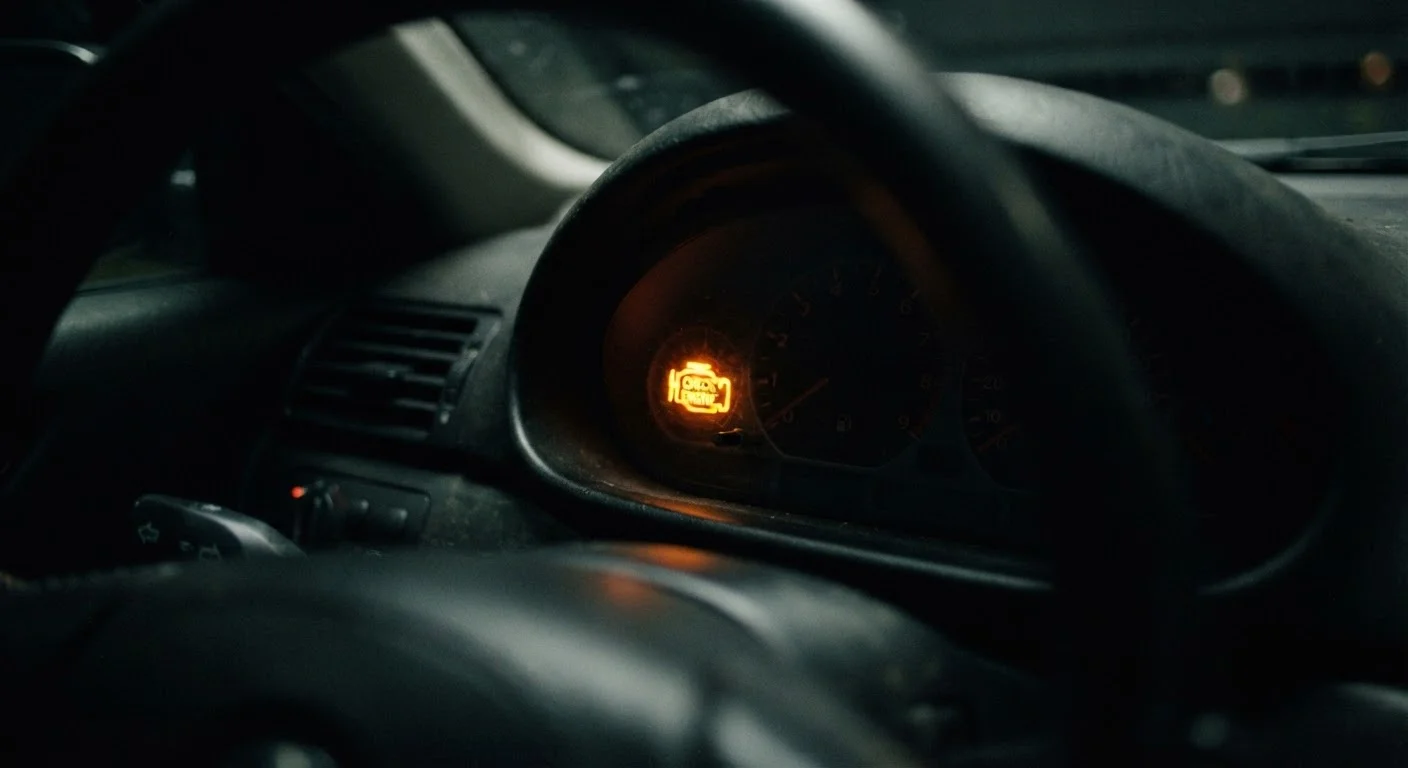
Why One Light Covers So Many Problems
The check engine light was designed to consolidate dozens of possible fault signals into a single, driver-facing indicator. Under the hood, your vehicle's engine control module (ECM) — the main computer — continuously monitors sensors across the fuel, ignition, exhaust, and emissions systems. When any reading falls outside its programmed limits, the ECM logs a Diagnostic Trouble Code (DTC) and illuminates the MIL.
Because the light represents such a wide net, it's genuinely one of the most misunderstood symbols on any dashboard. Understanding what your dashboard warning lights actually mean is the foundation for responding to them correctly — and avoiding unnecessary panic or unnecessary delay.
Common non-engine triggers include:
- Loose or faulty fuel cap — causes an EVAP system leak code
- Failing oxygen sensor — affects fuel mixture calculations
- Worn spark plugs or ignition coils — can cause misfires
- Mass airflow (MAF) sensor failure — disrupts air-fuel ratio
- Catalytic converter efficiency drop — flagged by downstream oxygen sensor readings
- Exhaust gas recirculation (EGR) valve fault — affects emissions performance
- EVAP system leak — from cracked hoses or a failing purge valve
Common Myths — and What's Actually True
Most driver anxiety around the check engine light comes from a handful of persistent misconceptions. The myth-and-fact breakdowns below address the most common ones, grounded in how OBD-II diagnostics and vehicle emissions systems actually work.
Myth
If the check engine light comes on, there must be something seriously wrong with the engine itself.
Fact
The check engine light is connected to the vehicle's emissions and engine management system, which monitors dozens of components — most of which are not the engine.
The light is officially called the Malfunction Indicator Lamp (MIL). It activates whenever the vehicle's onboard diagnostics system (known as OBD-II, standard on US vehicles since 1996) detects a fault code outside acceptable parameters. Those parameters cover oxygen sensors, evaporative emission controls, fuel system pressure, ignition timing, and much more. A faulty mass airflow sensor or a defective purge valve can trigger the same light as a misfiring cylinder. The light itself tells you nothing about severity — only an OBD-II scan can retrieve the specific fault code that points to the real cause.
Myth
A steady check engine light and a flashing one mean the same thing — just drive to a shop when convenient.
Fact
A flashing or blinking check engine light typically signals an active engine misfire that can damage the catalytic converter within minutes of continued driving.
When the light flashes, unburned fuel enters the exhaust system, causing the catalytic converter to overheat. Catalytic converter replacement is among the more expensive repairs a vehicle can need. A steady light, by contrast, usually indicates a stored fault that does not require you to pull over immediately — though it still warrants a diagnostic appointment soon. Learn how to read the difference between solid and flashing check engine lights to make the right call in the moment.
Myth
Clearing the fault code yourself with an OBD-II scanner fixes the underlying problem.
Fact
Clearing a code erases the symptom record but does nothing to repair the fault. If the underlying issue persists, the light will return — often within one or two drive cycles.
Erasing codes without addressing the root cause can also temporarily hide a problem from a mechanic, making diagnosis harder. It can also cause issues during an emissions inspection: most state programs check for recently cleared codes and may fail the vehicle if the system hasn't completed its self-tests. Use a scanner to read and record the code, then research what that code means before deciding on next steps. Sharing that code number with a qualified mechanic gives them a useful starting point.
Myth
The gas cap couldn't possibly cause the check engine light to come on.
Fact
A loose, cracked, or missing fuel cap is one of the most frequent triggers of the check engine light in everyday driving.
Modern vehicles use an evaporative emission control system (EVAP) that captures fuel vapors and routes them into the engine rather than releasing them into the atmosphere. The fuel cap seals this system. When the cap is loose or damaged, the OBD-II system detects a pressure leak and sets a fault code — commonly a P0440 or P0442. Re-tightening the cap (or replacing a cracked one) and driving for a few cycles often clears the light on its own. It's always worth checking the cap first before assuming a more expensive repair is needed.
Myth
If the car seems to be running fine, the check engine light can be safely ignored indefinitely.
Fact
Many check engine light triggers produce no noticeable drivability symptoms early on, but ignoring them can allow minor faults to escalate into major repairs.
A failing oxygen sensor, for example, may not cause rough idling initially, but running with incorrect fuel mixture data over time degrades fuel economy and can damage the catalytic converter. The check engine light is the vehicle's early-warning system — its job is to catch problems before they become expensive. Some warning lights signal an immediate stop; the check engine light usually allows time for a proper diagnosis, but that window shouldn't be stretched indefinitely.
This article is for general informational purposes only. For diagnosis and repairs, consult a qualified mechanic. Do not attempt repairs beyond your skill level, as incorrect work can cause injury or further vehicle damage.
What to Actually Do When the Light Comes On
Follow these steps in order when your check engine light activates:
- Check the fuel cap first. Turn it until it clicks. If it's cracked or stripped, replace it. Drive normally for a day or two and see if the light clears.
- Note the light's behavior. Steady means schedule a diagnostic appointment soon. Flashing means reduce speed, avoid hard acceleration, and get the vehicle to a shop promptly — do not continue driving normally.
- Get an OBD-II scan. Many auto parts stores offer free code reading. The DTC number narrows the fault to a specific system and saves diagnostic time at the shop.
- Don't clear the code without fixing the fault. Record the code, research it, and share it with your mechanic.
- Act within a reasonable timeframe. A steady light rarely means stop immediately, but weeks of delay can turn a minor fix into a major repair.
For a broader look at which dashboard warnings require immediate action versus a scheduled visit, see this plain-language guide to common dashboard warning lights.