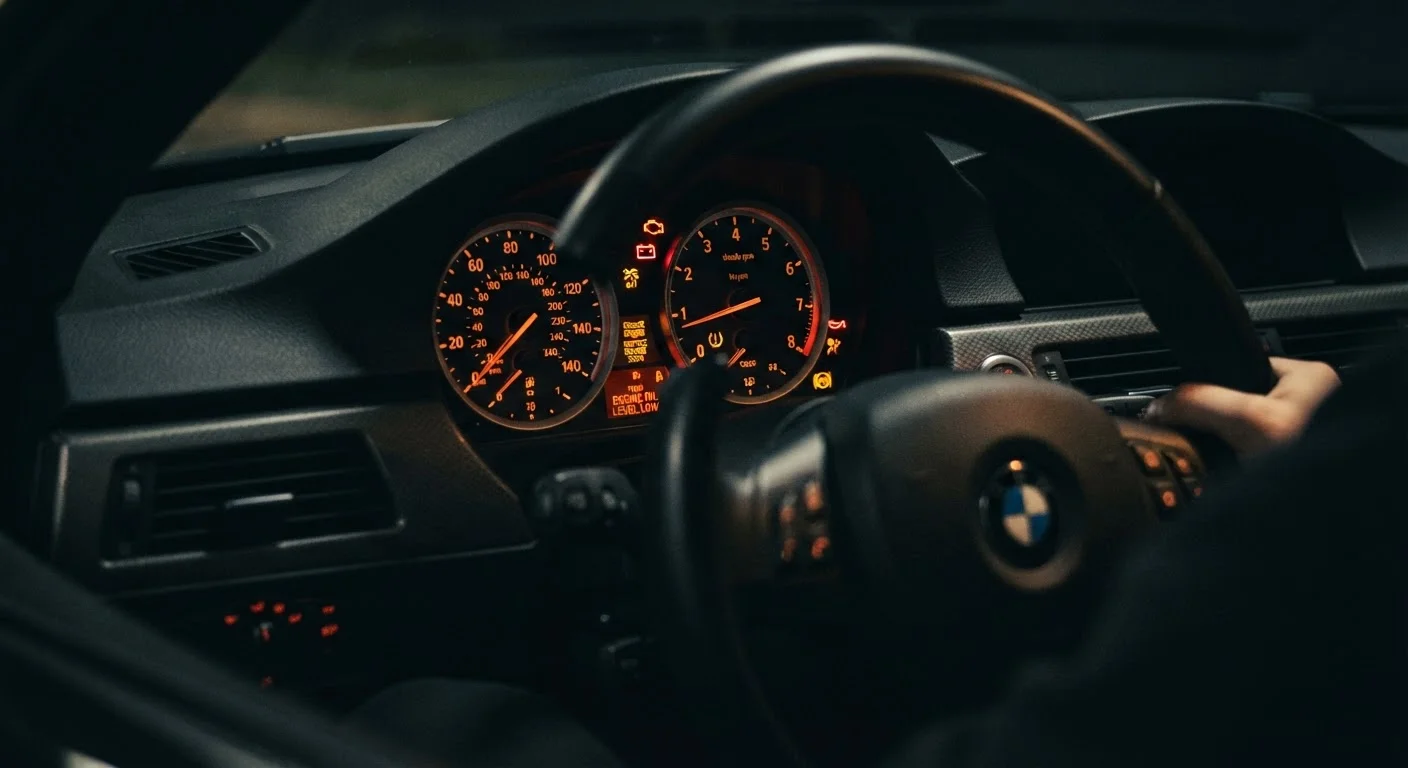
The Color-Code System: What Each Hue Signals
Every dashboard warning light follows a broadly standardized color convention that tells you how urgently you need to act — even before you know exactly what triggered it.
- Red: Indicates a serious or potentially dangerous condition. Stop the vehicle safely as soon as possible and investigate. Examples include the oil pressure warning, engine temperature, and brake system lights.
- Amber or Yellow: Signals a caution — something needs attention, but you typically have time to reach a shop without stopping immediately. The check engine light and TPMS light usually fall here.
- Blue or Green: These are informational indicators, not warnings. They confirm an active system — high beams on, turn signal engaged, or cruise control active.
Understanding color alone can prevent panic when a light appears and help you judge whether to pull over immediately or schedule service within the week.
| Color: Red lights | Require immediate action — stop driving if safe to do so |
| Color: Amber/Yellow lights | Caution — service soon, but not necessarily stop immediately |
| Color: Blue/Green lights | Informational — system is active (e.g., high beams, turn signal) |
| OBD-II scan tools | Available at most auto parts stores, often loaned free of charge |
| TPMS trigger threshold | Typically 25% below recommended tire pressure (U.S. NHTSA TPMS regulation (FMVSS No. 138)) |
| Vehicles covered | Most model year 1996 and later vehicles have OBD-II diagnostics (U.S. EPA mandate) |
High-Priority Lights That Demand Immediate Attention
Some warning lights should prompt you to stop driving as soon as it is safely possible. Continuing to drive with these active risks serious damage or a safety hazard.
Oil Pressure Warning (Red Oil Can Icon)
Low oil pressure means the engine's moving parts are not being adequately lubricated. Pull over, shut off the engine, and check the oil level. Do not restart and continue driving until the cause is identified — severe engine damage can occur within minutes. See our guide to warning lights that should never be ignored for a full list of stop-immediately scenarios.
Engine Temperature Warning (Thermometer in Water Icon)
This red light means the coolant temperature is dangerously high. Overheating can warp cylinder heads and cause lasting engine damage. Turn off the air conditioning, pull over safely, and allow the engine to cool before opening the hood. Never open the radiator cap on a hot engine.
Battery Warning (Battery Icon)
If this appears while driving, the charging system has failed and the car is running on battery power alone. You may have limited time before the engine stalls. Drive directly to a shop or safe location and avoid unnecessary electrical loads.
Brake System Warning (Exclamation Mark in Circle)
Check whether the parking brake is engaged first. If it is released and the light remains on, brake fluid may be low or there may be a fault in the braking system — a critical safety concern requiring immediate professional inspection.
Your Owner's Manual Is the Final Authority
Dashboard symbols can vary between manufacturers. While color conventions and common icons are broadly standardized, some automakers use unique symbols or share icons across different systems. Always cross-reference an unfamiliar light with the warning lights section of your vehicle's owner's manual — most are also available as free PDFs on manufacturer websites.
Amber Lights: Urgent But Not Necessarily an Emergency Stop
These lights signal faults that need professional attention soon — typically within days, not weeks — but usually do not require you to stop immediately.
Check Engine Light (MIL)
This is the most misunderstood light on the dashboard. It can be triggered by something as minor as a loose gas cap or as significant as a failing catalytic converter. A steady amber light means schedule service soon. A flashing check engine light indicates an active misfire that can damage the catalytic converter — reduce speed and seek service the same day. An auto repair professional can retrieve the fault code with an OBD-II scan tool to identify the exact cause.
TPMS (Tire Pressure Icon)
One or more tires has dropped below the recommended pressure threshold. Underinflated tires affect handling, fuel economy, and tire longevity. Check and adjust all four tires when it is safe to do so. Our deeper look at TPMS, ABS, and ESP warning lights explains how the system works and common reasons it triggers unexpectedly.
Traction Control / Stability Control (Car with Squiggly Lines)
If this flickers during acceleration on a slippery road, the system is working normally. If it stays on continuously, the system may be disabled or faulted — have it inspected, as traction and stability control are important safety features.
For a comprehensive lookup of additional symbols, the Dashboard Warning Lights Quick-Reference Guide covers icons from battery symbols to tire pressure indicators in plain language.
MIL (Check Engine Light)
The Malfunction Indicator Lamp, commonly called the check engine light, signals that the engine control system has detected a fault. It can represent issues ranging from a loose gas cap to serious powertrain problems.
TPMS
Tire Pressure Monitoring System — a sensor-based system that alerts the driver when one or more tires fall significantly below the recommended inflation level, typically 25% below spec.
ABS
Anti-lock Braking System — a safety feature that prevents wheel lockup during hard braking, helping the driver maintain steering control. When its warning light activates, the system may be disabled.
OBD-II
On-Board Diagnostics II — the standardized vehicle diagnostic system present in most cars sold after 1996. A scan tool plugged into the OBD-II port reads stored fault codes to identify the source of a warning light.
Oil Pressure Warning
A red light shaped like an oil can that signals dangerously low oil pressure in the engine. This is a stop-immediately warning — continuing to drive risks severe engine damage.
Battery Warning Light
Indicates the vehicle's charging system is not maintaining proper voltage. Common causes include a failing alternator, a weak battery, or a broken drive belt.