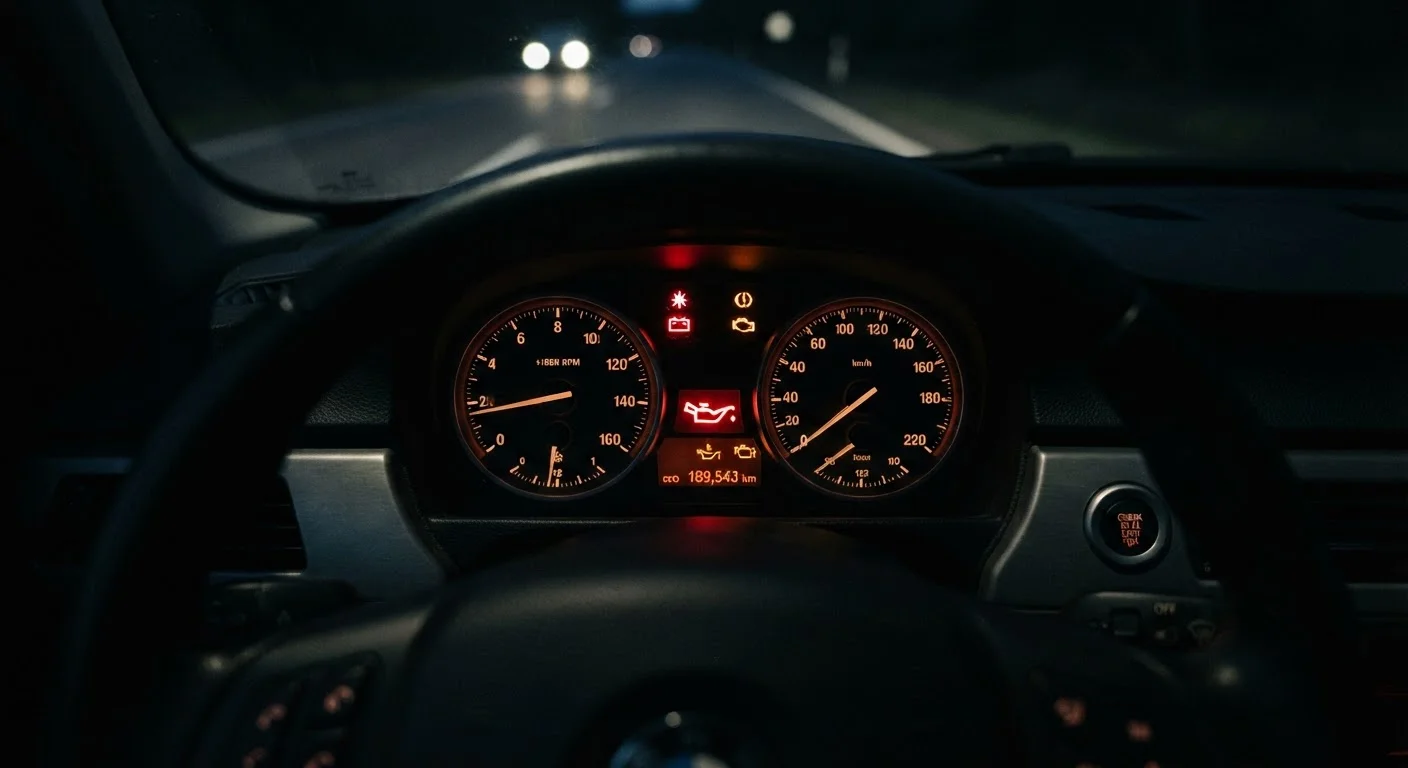
Why These Two Warnings Are Easily Confused
Both oil-related dashboard warnings involve a small oil-can icon, and both appear suddenly without much context. It is easy to assume they mean the same thing — your car is low on oil. But that assumption can be costly. One warning signals a mechanical condition already underway that can destroy your engine in minutes; the other flags a maintenance issue that needs attention within hours or days.
Understanding the difference starts with how each system works. Your engine relies on a continuous flow of pressurized oil to lubricate metal components moving at thousands of revolutions per minute. Pressure and volume are related but not identical — you can have adequate oil volume in the pan while pressure drops due to a failing pump, a blocked passage, or a leak. Conversely, very low oil volume will eventually cause pressure to collapse, but the level warning may appear first.
For a broader look at which dashboard signals demand immediate action, see Warning Lights That Should Never Be Ignored.
What Each Warning Actually Measures
The oil pressure warning (typically a red oil-can symbol, sometimes with a drip) is triggered by an oil pressure sensor, also called a sending unit, mounted in the engine block or oil gallery. When oil pressure falls below a safe threshold — often around 4–7 PSI at idle, though this varies by engine — the sensor closes a circuit and illuminates the light. By the time this light comes on, internal lubrication has already failed or is failing. Bearings, camshafts, and cylinder walls are receiving inadequate film protection.
The oil level warning (often amber, sometimes a similar oil-can icon with wave lines beneath it) is triggered by a float-style sensor in the oil pan — similar in concept to a fuel gauge float. It activates when oil volume drops below a defined minimum, typically about one quart below the full mark. It does not directly measure pressure; it measures volume. At this point, pressure may still be within normal range, but the margin of safety is shrinking.
| Criterion | Oil Pressure Warning | Oil Level Warning |
|---|---|---|
| Typical light color | Red | Amber |
| What it measures | Oil pressure (PSI) | Oil volume in pan |
| Sensor type | Pressure sending unit | Float-style level sensor |
| Urgency level | Stop immediately | Address within hours |
| Safe to keep driving? | No — engine damage imminent | Briefly, to reach a safe stop |
| Common causes | Pump failure, bearing wear, blockage | Leak, burning oil, overdue service |
| Immediate driver action | Pull over, engine off, call tow | Check dipstick, add correct oil grade |
Our plain-language dashboard warning guide explains the sensor systems behind other common indicators as well.
How to Respond to Each Warning
Oil pressure light (red): Treat this as a roadside emergency. Signal, slow down safely, and stop the vehicle as soon as it is safe to do so — ideally within seconds, not minutes. Turn off the engine. Do not restart it. Even a short drive with no oil pressure can score cylinder walls, spin main bearings, and require a full engine rebuild or replacement. Call for a tow. A qualified mechanic needs to diagnose the cause before the engine is run again.
Oil level light (amber): Reduce your speed and find a safe place to pull over within the next few miles. Turn off the engine and wait two minutes for oil to drain back into the pan. Check the dipstick — a clean rag and the dipstick port are usually accessible without tools. If the level is below the minimum mark, add the grade of oil specified in your owner's manual. Do not overfill. Once the level is corrected, the light should go off. Schedule a service appointment to determine why oil is being consumed — burning, leaking, or extended intervals are common causes.
As our guide on warning light costs explains, deferring either signal rarely saves money and typically makes repairs far more expensive.
Common Causes and What to Tell Your Mechanic
Knowing likely causes helps you communicate clearly with a technician and understand the repair scope.
- Oil pressure drop causes: Failed oil pump, severely worn engine bearings, blocked oil pickup tube (often from sludge), very low oil level causing the pump to draw air, or a faulty pressure sensor itself.
- Low oil level causes: External leak (valve cover gasket, drain plug, front or rear crankshaft seal), internal burning (worn piston rings or valve seals), or simply overdue oil changes allowing excessive consumption.
When you describe the situation to a mechanic, note when the light appeared, whether the engine made any unusual sounds (a knock or rattle during a pressure event is serious), and how recently oil was last changed or topped up. This information narrows diagnosis significantly.
For context on how other urgent signals compare, the brake warning light guide walks through a similar stop-or-monitor decision process.
This article is for general informational purposes only. Always consult a qualified mechanic before operating a vehicle that has displayed an oil pressure warning. Do not attempt engine diagnosis or repair tasks beyond your skill level, as improper work can cause injury or additional vehicle damage.