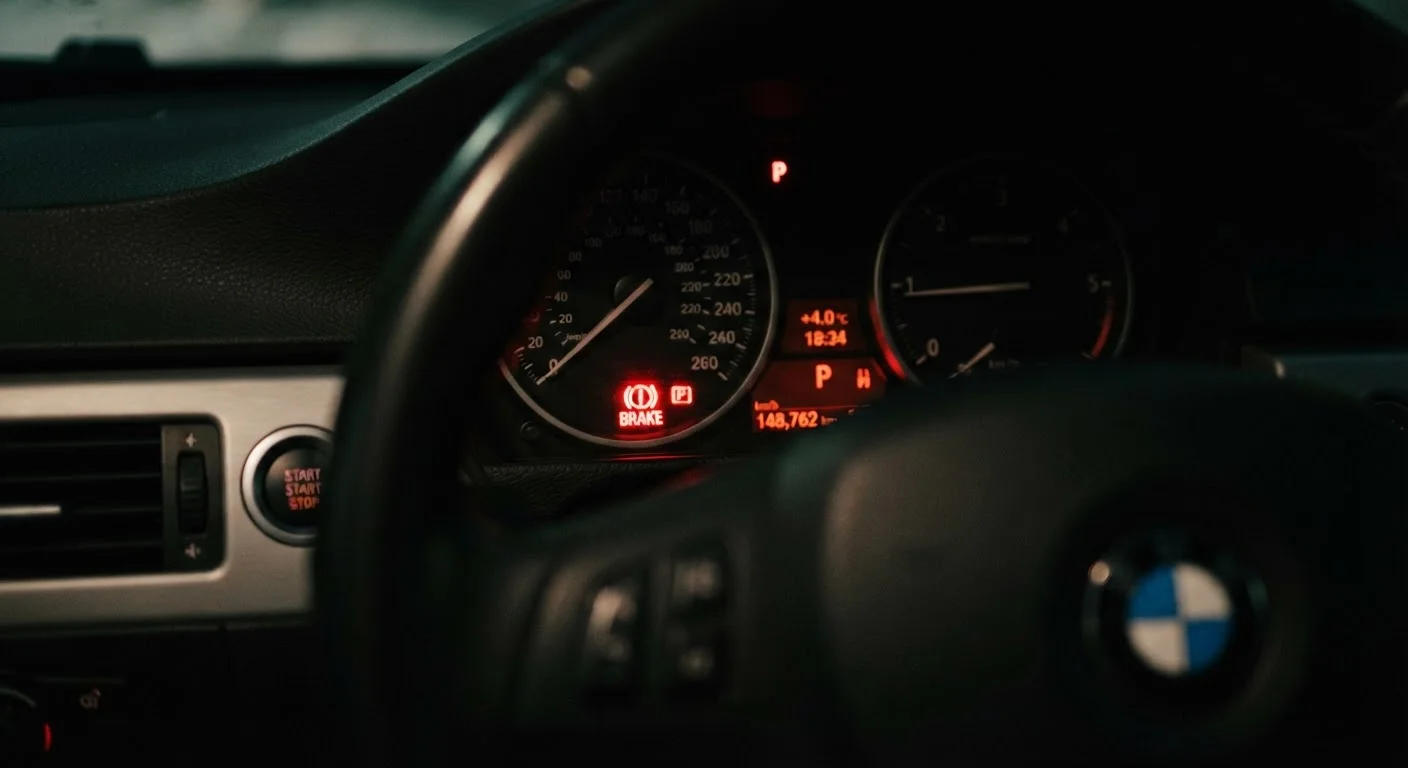
Why the Brake Warning Light Is Never 'Just' One Thing
Unlike some dashboard lights that point to a single, well-defined fault, the brake warning light functions more like a general alarm. It draws from several different sensors and switches in your braking system, which means one light can have very different meanings depending on your situation.
The most common triggers include:
- Parking brake (handbrake) engaged: The most benign cause. If you pull away with the handbrake still on, the light will illuminate immediately.
- Low brake fluid: A float sensor in the brake fluid reservoir detects when the level drops below a safe threshold.
- Brake system pressure imbalance: A fault in one of the hydraulic circuits — left vs. right, or front vs. rear — can trigger the warning.
- Worn brake pads: Some vehicles route the brake pad wear sensor signal through the same warning light, though many use a separate indicator.
- Faulty sensor or wiring: Occasionally, the light itself is the result of a sensor malfunction rather than an actual brake problem.
For a broader look at how dashboard warning lights work and what they signal, see our guide to common dashboard warning lights.
How to Read the Situation in the Moment
When the brake warning light appears, your first step is to assess context — not panic. Ask yourself these questions:
- Is the parking brake engaged? Fully release it and see if the light goes off. If it does, you're done.
- Did the light come on suddenly while driving? This is the more serious scenario. Pull over when it's safe to do so.
- Does the brake pedal feel different? A soft, spongy, or low pedal alongside the warning light is a sign of brake fluid loss or hydraulic failure. Do not continue driving.
- Are multiple warning lights on? If the brake light and ABS light are both illuminated, a significant system fault is likely.
Check Fluid Level Before Calling for Help
If your brake warning light comes on while driving and the pedal still feels firm, a quick check of the brake fluid reservoir under the hood can give you useful information before you call a mechanic. Look for the MIN/MAX markings on the translucent reservoir. If the fluid is at or above MIN and the pedal feels normal, the issue may be a sensor fault — but a professional inspection is still warranted. Never add brake fluid without identifying why the level dropped.
Once you've stopped safely, you can check the brake fluid reservoir under the hood — it's a translucent plastic container near the firewall, usually marked with MIN and MAX lines. A level below MIN confirms low fluid. However, topping it off yourself is only a temporary measure; finding out why it's low is the critical next step.
For guidance on what worn brakes actually look and feel like, brake pad wear warning signs offers a practical companion read.
When to Act Immediately vs. When to Monitor
Not every brake warning light moment is an emergency, but the stakes are high enough that erring on the side of caution is always the right call.
| Trigger | Urgency Level | Recommended Action |
|---|---|---|
| Handbrake left on | Low | Release handbrake; light should go off |
| Low brake fluid (minor) | Moderate | Schedule mechanic inspection soon |
| Soft or low brake pedal | High | Stop driving; call for assistance |
| Sudden light while driving | High | Pull over safely; do not continue |
| Brake + ABS lights together | High | Stop driving; professional diagnosis needed |
Brake problems rarely improve on their own. If you're unsure what's causing the light, a qualified mechanic should inspect the system before you put more miles on the vehicle. For a broader view of which dashboard lights demand immediate attention versus which can wait, see what your dashboard warning lights are actually telling you.
It's also worth noting that brake warning lights operate differently from other system warnings — for comparison, see how oil pressure and oil level warnings differ to understand why reading the right light correctly matters so much.