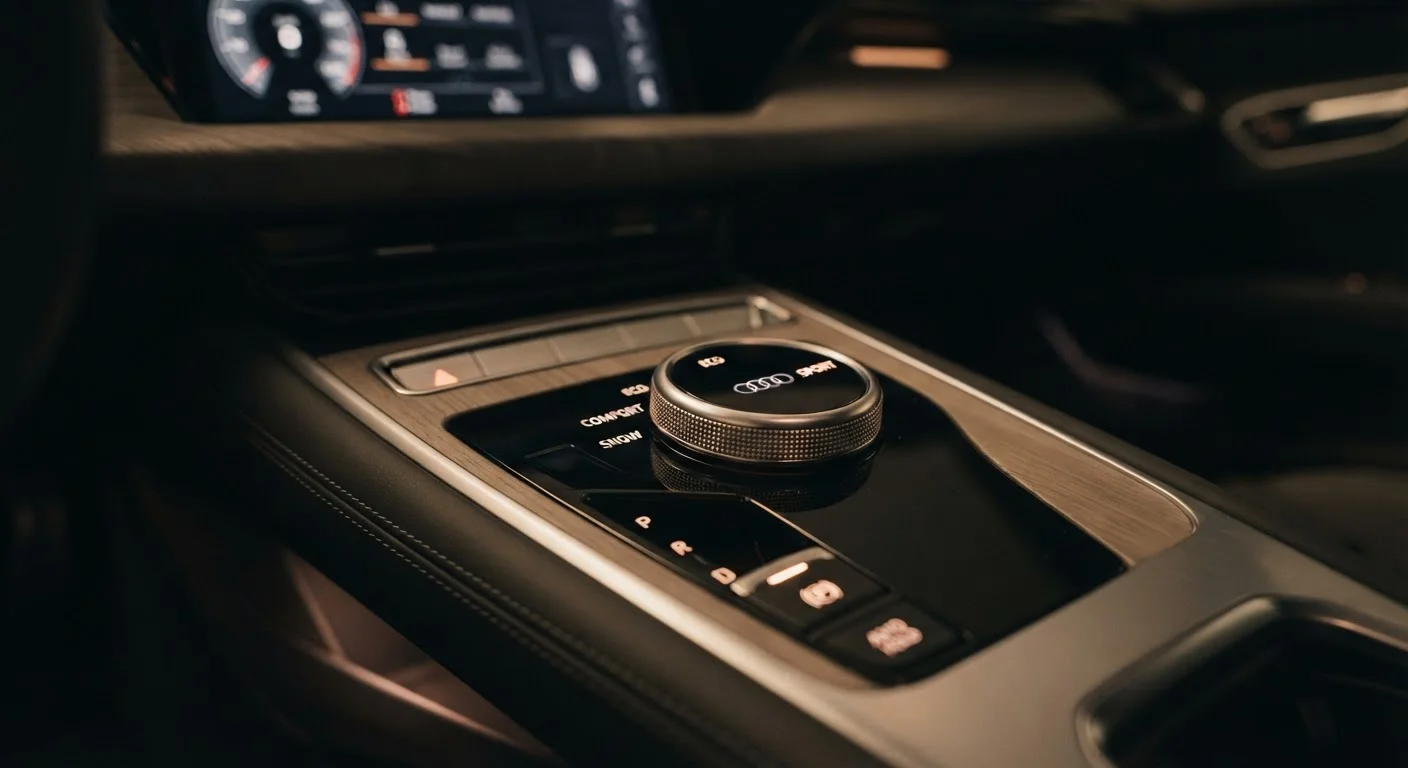
What Drive Modes Actually Change
When you select a drive mode, you're not flipping a mechanical switch — you're sending an instruction to your car's electronic control units, which then adjust multiple systems simultaneously. The core systems affected are:
- Throttle mapping: How aggressively the engine responds to accelerator pedal position. Sport mode sharpens this curve; Eco mode softens it.
- Transmission shift points: When the gearbox changes up or down. Eco mode encourages earlier upshifts to keep engine revs low; Sport mode holds gears longer for stronger acceleration.
- Steering weight: Many vehicles add artificial resistance in Sport mode for a more connected feel, and lighten it in Comfort for ease of parking.
- Stability and traction control sensitivity: In Sport mode, some systems allow a small amount of wheel slip before intervening, giving more dynamic feel. Snow mode keeps these systems fully active and intervenes earlier.
On vehicles fitted with adaptive suspension, mode selection also controls damper stiffness — firmer in Sport, softer in Comfort. For a deeper look at how performance specs relate to these systems, see our guide to reading a car's performance spec sheet.
The Common Modes, One by One
Naming conventions vary by manufacturer, but these are the modes you'll encounter most often and what each one actually does:
Eco
Eco mode prioritizes fuel efficiency above all else. Throttle response becomes deliberately soft — pressing the accelerator halfway won't produce the same urgency you'd feel in Normal mode. The transmission shifts to higher gears sooner and avoids unnecessary downshifts. On hybrids, Eco mode often increases the proportion of electric-only driving and enhances regenerative braking. The trade-off is a car that can feel sluggish when you need quick acceleration.
Normal / Comfort
This is the manufacturer's balanced default — calibrated as the starting point for everyday driving. Some cars label this "Normal," others "Comfort." Where a separate Comfort mode exists, it usually softens suspension damping specifically for rough surfaces or long journeys.
Sport
Sport mode sharpens throttle sensitivity, holds lower gears for longer, weights up steering, and (where applicable) firms the suspension. The engine sounds more responsive because you're operating higher in the rev range. Fuel economy decreases noticeably. For a detailed breakdown of every system Sport mode touches, this companion article on what Sport mode changes under the hood goes further.
Snow / Wet
Designed for low-traction surfaces, Snow mode limits initial power delivery to prevent wheelspin on acceleration, keeps traction control fully engaged, and may instruct an AWD system to distribute torque more proactively. Understanding how your drivetrain handles power before you reach slippery conditions is worthwhile — our drivetrain explainer covers each layout in plain terms.
Check Your Owner's Manual for Mode-Specific Limits
Some manufacturers specify speed thresholds for engaging certain modes — Off-Road or Snow modes in particular may have recommended activation speeds. Your owner's manual will list any restrictions, and following them protects both the drivetrain and the system's effectiveness.
Drive Modes in Hybrids and EVs
In hybrid and fully electric vehicles, drive modes take on an additional dimension: battery management. Eco mode in a hybrid may prioritize electric-only driving and extend the range of the battery pack. Sport mode permits the electric motor and combustion engine to work together more aggressively for maximum combined output, which draws down the battery faster.
Many EVs also include a dedicated B mode or enhanced regenerative braking setting — sometimes folded into a "One-Pedal" driving option. This isn't a traditional drive mode but adjusts how strongly the motor acts as a generator when you lift off the accelerator, slowing the car and recovering energy simultaneously. If you're researching electric or hybrid vehicles specifically, our EV and hybrid review hub offers factual comparisons across a range of models.
Up to 10%
Potential fuel savings in Eco mode vs. Normal
Independent vehicle testing by automotive publications consistently finds Eco mode can reduce fuel consumption by a meaningful margin in city driving cycles, though results vary by vehicle and driving style.
3–5 systems
Vehicle systems adjusted by a single mode change
Modern drive modes typically recalibrate throttle mapping, transmission shift points, steering weight, and stability control simultaneously — sometimes also adaptive suspension damping.
Varies widely
Number of modes offered across current vehicles
Entry-level vehicles may offer two or three modes, while performance-focused or luxury models can include five or more, including custom user-defined configurations.
Choosing the Right Mode for the Situation
There's no single "correct" mode for all driving. The practical guide is simpler than the technology behind it:
- City commuting or long highway runs: Eco or Normal. You'll save fuel without sacrificing safety or convenience.
- Merging onto a busy highway or overtaking: Normal or Sport gives you crisper throttle response exactly when you need it.
- Icy, snowy, or wet roads: Snow or Wet mode before you move, not after you've started sliding.
- Winding back roads or driving enjoyment: Sport mode lets the car breathe — just be aware of the fuel cost.
- Rough, poorly surfaced roads: Comfort mode (where available with adaptive suspension) cushions the ride.
Drive modes work alongside — not instead of — other active safety systems. Features like automatic emergency braking and lane-keeping assistance generally remain active across all modes. For a broader picture of how today's electronics keep you safe, see our plain-language guide to modern car safety tech.