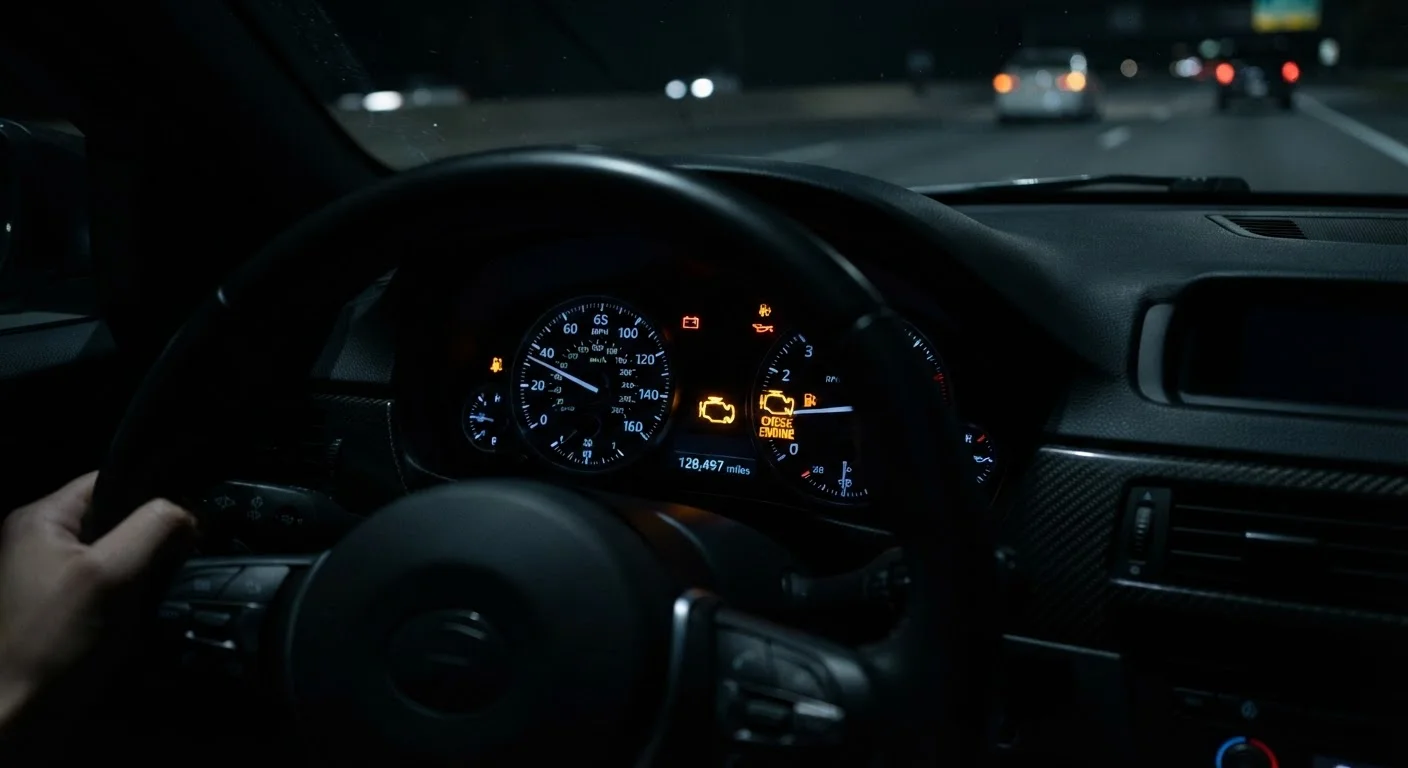
Solid vs. Flashing: The Most Important Distinction
When the check engine light comes on, the first thing to notice is how it is behaving. That single detail separates a "schedule a service appointment" situation from a "pull over now" situation.
- Solid (steady) light: A fault has been detected, but it is not actively damaging the engine at this moment. Common examples include a failed oxygen sensor, a loose gas cap, or a problem with the EVAP system. You should get it diagnosed soon — ideally within a few days — but you do not need to stop driving immediately if the car feels and sounds normal.
- Flashing light: This is the urgent scenario. A flashing check engine light nearly always means the engine is actively misfiring — cylinders are firing incorrectly or not at all. Unburned fuel is passing into the exhaust, where it can destroy the catalytic converter (an expensive component) within a short drive. Stop in a safe location as soon as possible. Do not continue driving until a mechanic has assessed the vehicle.
Your Car's Dashboard Warning Lights, Decoded covers the broader range of dashboard symbols and which ones demand immediate action.
What the Light Actually Detects
Your vehicle's OBD-II system continuously monitors dozens of sensors across the engine, transmission, and emissions equipment. When a sensor reading falls outside an acceptable range — or a component stops responding — the system logs a diagnostic trouble code (DTC) and switches on the light.
The light itself carries no specific diagnosis. A P0420 code (catalytic converter efficiency below threshold) and a P0457 code (EVAP system leak detected — loose fuel cap) both illuminate the same amber symbol. That is why a scan tool is essential.
P0420
One of the most common check engine codes in the US
Catalytic converter efficiency codes are among the most frequently recorded DTCs according to OBD-II diagnostic data aggregated by automotive service providers.
~40%
Check engine lights linked to emissions components
Industry estimates from automotive diagnostic sources suggest a substantial share of check engine lights involve emissions-related systems, including oxygen sensors and EVAP components.
$800–$1,200+
Typical catalytic converter replacement cost
Driving with an active misfire (flashing light) can destroy a catalytic converter rapidly; replacement costs vary widely by vehicle type and region.
For a detailed breakdown of what components and systems most commonly trigger the light, see what else can trigger a check engine light.
Reading the Context Around the Light
The check engine light rarely tells the whole story on its own. Pay attention to what else your car is doing at the same time — these accompanying symptoms sharpen the urgency:
- Rough idle or shaking: Points toward a misfire or ignition problem. Treat this as urgent, especially if the light is flashing.
- Reduced power or hesitation: The engine management system may have entered a protective "limp mode," limiting output to prevent further damage.
- Unusual smells: A sulfur or rotten egg odor can indicate a failing catalytic converter or rich fuel mixture. An acrid burning smell warrants immediate attention.
- No noticeable symptoms: If the car drives, accelerates, and idles completely normally, the fault is likely minor or emissions-related. Still get it read promptly.
Also check whether any other warning lights came on at the same time. A check engine light appearing alongside a temperature warning or an oil pressure warning escalates the urgency significantly. See warning lights that should never be ignored for those critical combinations.
Your Practical Next Steps
Once you have assessed whether the light is solid or flashing and noted any accompanying symptoms, here is how to proceed:
- Check the gas cap first. Tighten it until it clicks. If it was loose, the light may go off after a few drive cycles — though the code will remain stored until the system clears it.
- Get the code read. Many auto parts stores offer free OBD-II scans. This gives you the fault code so you can have an informed conversation with a mechanic. It does not replace a professional diagnosis.
- Book a service appointment promptly. A solid light with no symptoms is not an emergency, but delaying diagnosis routinely turns small problems into larger repair bills.
- Do not simply clear the code and hope for the best. Erasing a code without fixing the underlying fault means the light will return — and you lose the stored information that helps a mechanic pinpoint the issue faster.
For a broader look at how dashboard symbols communicate different levels of urgency, what your dashboard warning lights are actually telling you is a useful companion reference.