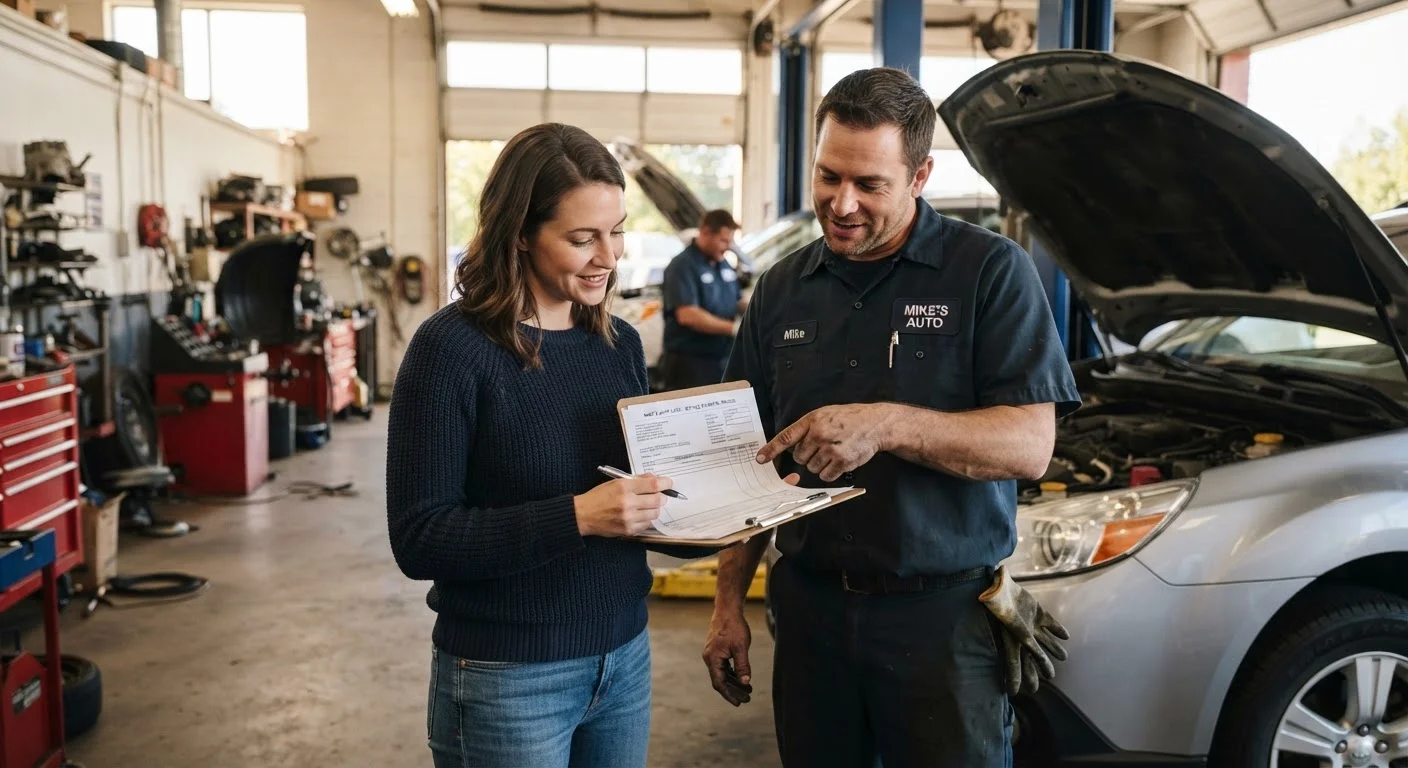
Arrive Prepared, Not Empty-Handed
The quality of a mechanic visit often depends on what you bring into it. Before dropping off your vehicle, take five minutes to jot down every symptom you've noticed — unusual sounds, warning lights, changes in handling, or smells. Note when each symptom occurs: at startup, at highway speed, when braking, or only in wet weather. This specificity dramatically narrows the diagnostic window and reduces labor time.
Bring your vehicle's maintenance records if you have them. Knowing what's already been replaced — and when — prevents duplicate work and helps the mechanic focus on what's actually overdue. If your check engine light is on, you can get a free diagnostic trouble code read at many auto parts stores beforehand, giving you a reference point to compare against whatever the shop finds.
For more context on evaluating what repair shops tell you, see our guide to reading a repair estimate.
Best Practices for the Visit Itself
How you engage during the appointment shapes how well your needs get addressed.
Request a written estimate before authorizing any work
A verbal quote is hard to dispute if the final invoice is higher. A written estimate creates a clear reference point and protects you if the scope of work expands unexpectedly. Most reputable shops provide these as standard practice.
Distinguish between safety-critical repairs and non-urgent ones
Lumping all repairs together makes it easy to overspend in one visit. Brake wear, steering issues, and tire integrity directly affect safe operation; a loose interior trim panel does not. Separating the two lets you prioritize intelligently.
Ask for the old parts back when components are replaced
Seeing the removed part confirms the repair was actually performed and gives you a sense of how worn it truly was. This is especially useful for parts like brake pads, belts, or filters where wear is visible.
Clarify what the diagnostic fee covers and whether it applies to the repair
Some shops charge a diagnostic fee separately; others roll it into the repair cost if you proceed. Knowing this upfront prevents surprise charges and helps you compare shop pricing more accurately.
Keep a simple log of every service performed
A running maintenance record — even a notes app on your phone — makes future visits more efficient and helps you spot patterns like recurring issues that may signal an underlying problem.
If you're unsure whether a repair is something you could safely handle yourself, our mechanic vs. DIY guide walks through the practical dividing line.
Start Here: Quick Actions Before You Leave Home
Even a few minutes of preparation before the visit can save you significant time and money at the shop. Checking your own fluid levels beforehand, for instance, can confirm whether a complaint is related to a leak — our fluid check walkthrough shows you how to do that safely at home.
Evaluating Recommendations Without Feeling Pressured
A mechanic's job is to tell you what they find. Your job is to decide what to act on. Not every recommendation requires immediate action, and distinguishing between safety-critical repairs and convenience items is essential to avoiding bill shock.
When a mechanic presents additional repairs beyond what you came in for, ask these three questions: Is this a safety issue? What happens if I wait 30–60 days? Can I see the worn part? Reputable shops will answer these clearly and without pressure. If you feel rushed to authorize work without adequate explanation, that's a signal to slow down.
Before signing anything, use our pre-approval checklist to make sure you've covered the key questions. For complex jobs, getting a second opinion from another qualified shop is entirely reasonable — and any professional mechanic will understand that.
It's also worth knowing the difference between an independent shop inspection and a dealership assessment, especially for used vehicles. Our comparison of independent vs. dealership inspections explains what each typically includes and when each makes sense.
This article provides general educational information about working with automotive repair professionals. It is not a substitute for advice from a qualified, licensed mechanic who has inspected your specific vehicle.