Why This Checklist Matters
Authorising a vehicle repair without a clear paper trail is one of the most common — and costly — mistakes everyday car owners make. Shops vary widely in their communication practices, and even well-intentioned mechanics can leave you surprised by the final invoice if expectations aren't set upfront.
This checklist gives you a structured way to slow down, ask the right questions, and protect yourself before you say "go ahead." It works whether you're dealing with a dealership service department, an independent shop, or a specialist. Pair it with our guide on getting the most out of a mechanic visit for a fuller picture of how to handle the whole appointment.
You don't need mechanical expertise to use this checklist — you just need to ask, confirm, and document before work begins.
Verbal Agreements Don't Protect You
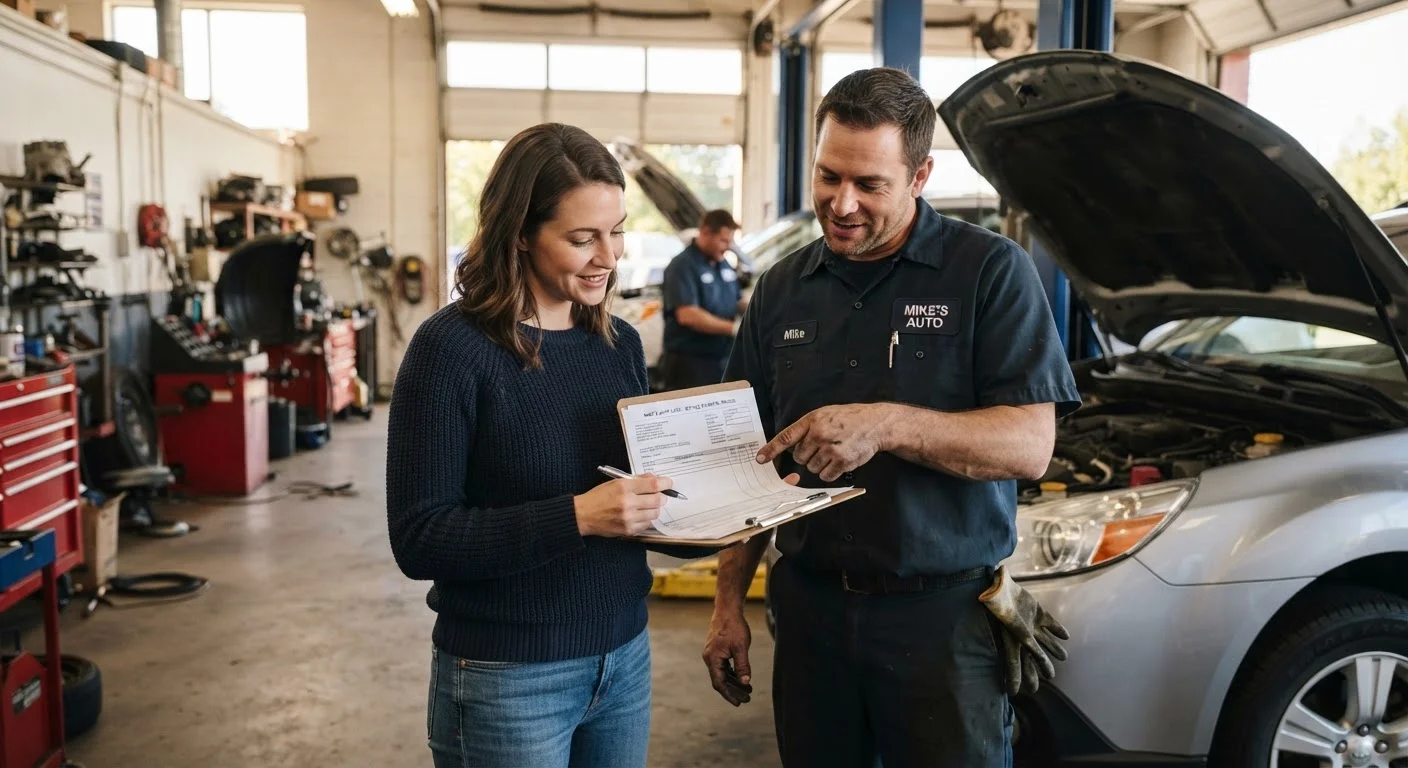
A verbal authorisation is difficult to dispute if the final invoice doesn't match what you were told. In most US states, auto repair shops are legally required to provide a written estimate and obtain written or recorded authorisation before beginning work — but only if you ask for it. Don't assume this happens automatically; make the request explicit every time.
Avoid Approving Open-Ended Work Orders
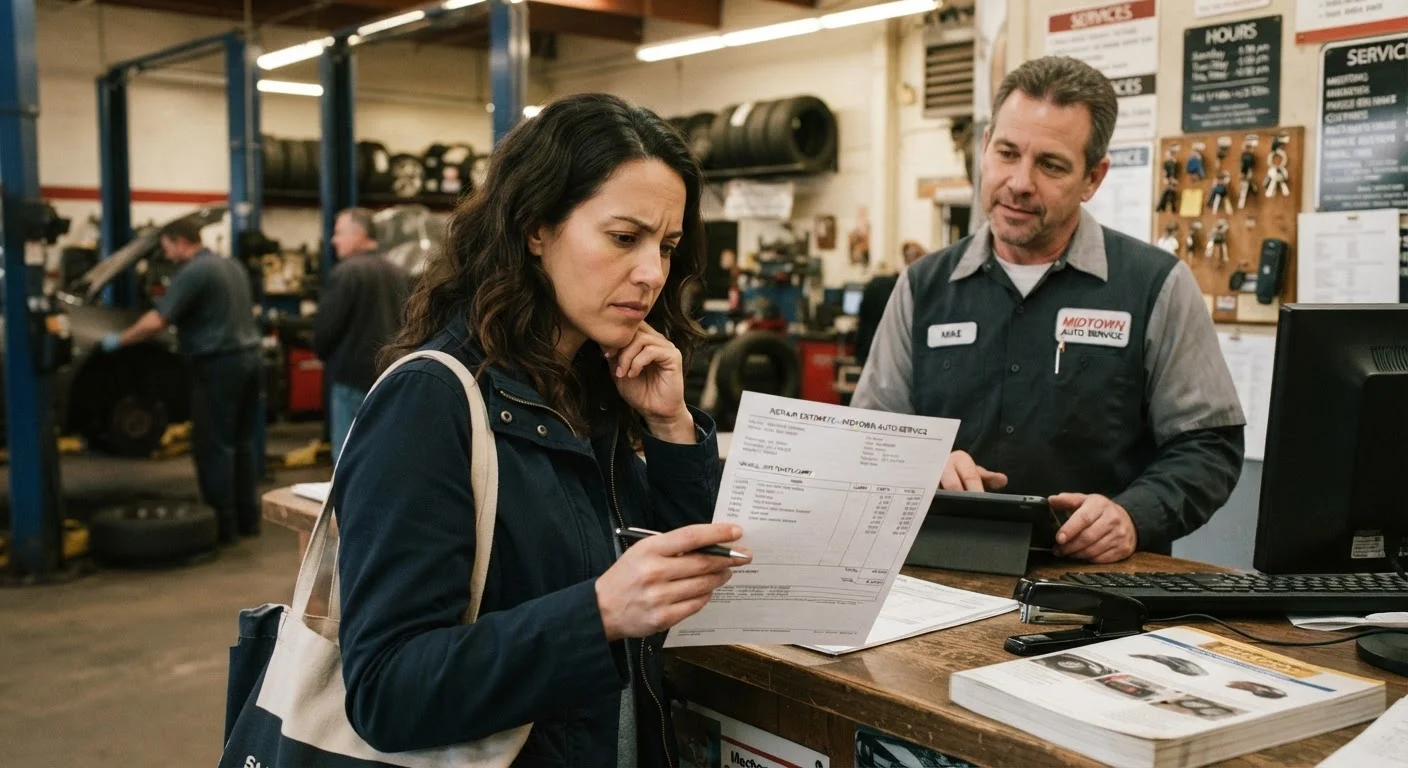
Some repair forms include language that authorises the shop to perform "any necessary repairs" up to a broad dollar ceiling. Read authorisation language carefully and cross out or negotiate any clause that gives the shop unlimited scope. If a form can't be modified, that alone warrants a conversation before you sign.
Tools and Documents to Have Ready
Before you contact a shop or drop off your vehicle, gather the following. Having these on hand speeds up the process and helps you ask informed questions.
Your vehicle owner's manual
Lets you cross-reference the recommended parts specifications and service intervals for your specific make and model.
Previous service records
Helps you and the mechanic avoid duplicate repairs and demonstrates the vehicle's maintenance history.
Notepad or notes app
Use this to write down what the mechanic tells you verbally so you can compare it against the written estimate later.
Smartphone camera
Photograph the written estimate, repair order, and old parts before you leave the shop for a reliable personal record.
Your state's consumer protection resource
Most US states have an auto repair consumer protection law; knowing your rights before a dispute is easier than learning them during one.
The Pre-Approval Checklist
Work through these items in order. The groups follow the natural sequence of a repair conversation — from initial diagnosis through to final sign-off. If a shop is unwilling to address any of the "must" items below, treat that as a red flag worth taking seriously.
Before the Shop Starts Work
Understanding the Diagnosis
Parts and Warranty
Authorisation and Documentation
What to Do After You Authorise
Signing the work order isn't the end of your involvement. Keep a copy of the authorisation form and the written estimate together in one place — a folder, a photo on your phone, or an email thread. If the shop calls midway through with a revised scope, ask them to send the updated estimate in writing before you approve additional work.
When you pick up the vehicle, check that the invoice matches what was quoted. Ask for your old parts if you requested them — this is a reasonable, standard ask and confirms the work was actually done. Review the repair order line by line; if any charge is unclear, ask for a plain-language explanation before you pay.
Keeping good records also supports any future warranty claim. Most part and labour warranties require you to show the original repair documentation, so don't discard your paperwork once you drive away. For broader context on vehicle upkeep and when to schedule your next service, the car maintenance hub is a useful ongoing reference.
This article is for general informational purposes only. For complex or safety-critical repairs, consult a qualified, licensed mechanic who can evaluate your specific vehicle and situation.