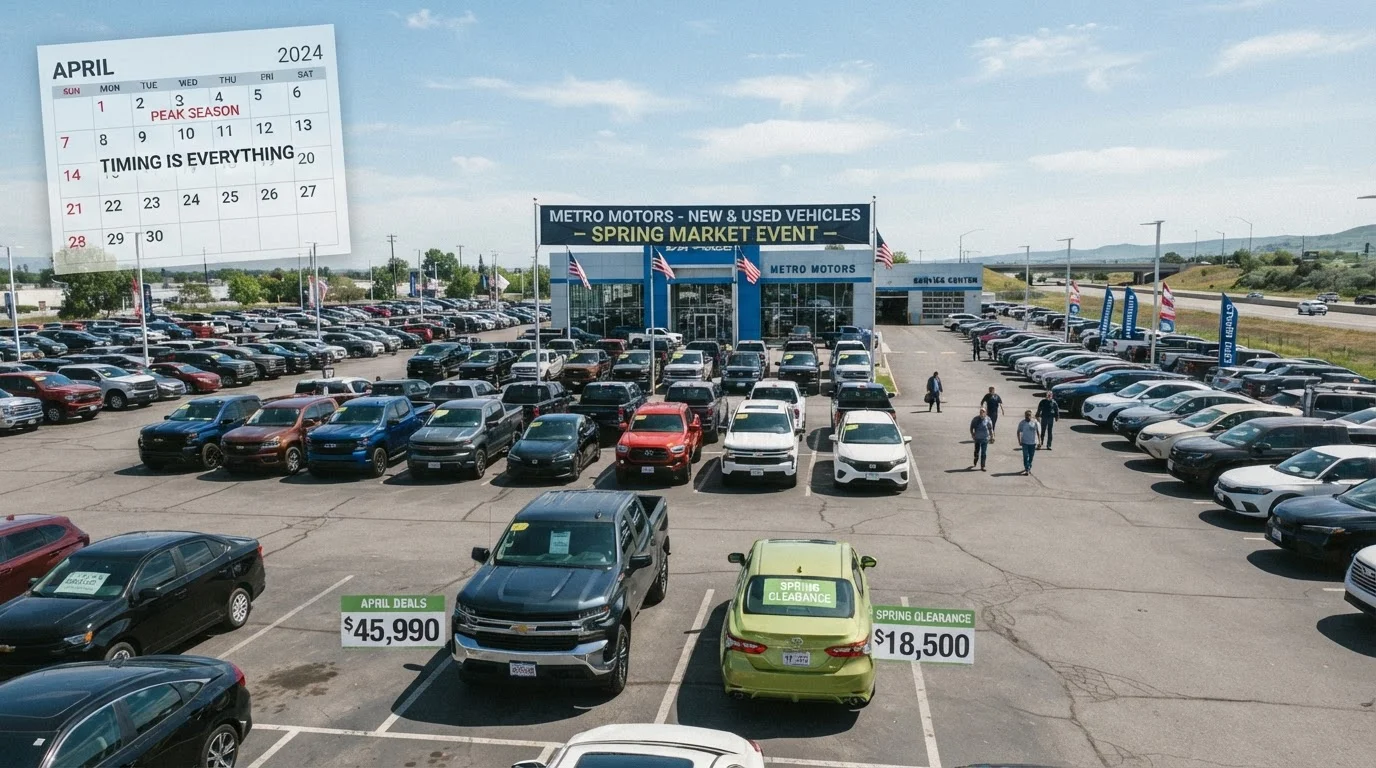
How Seasonal Patterns Work Differently for New and Used Cars
New and used vehicle markets follow distinct seasonal rhythms, and conflating the two can lead buyers to act on the wrong assumptions. For new cars, the most recognized pattern is the model-year transition - typically late summer through early fall - when dealers receive next-year inventory and work to clear current-year stock. This often produces genuine pricing flexibility on outgoing models. Calendar year-end (November through December) represents a second window, driven by dealer sales quotas and manufacturer incentive programs.
The used-car market operates differently. Prices here respond more to supply dynamics - how many vehicles are entering the used-car pool - than to the calendar alone. Tax refund season (roughly February through April) historically drives up demand for affordable used vehicles as buyers use refunds as down payments. Summer months see elevated demand for family-sized SUVs and minivans. These demand surges can push prices up at exactly the moments when buyers feel most motivated to shop.
The practical implication: a buyer targeting a new vehicle may benefit from calendar-aware shopping, while a buyer focused on used vehicles needs to think more like a supply-and-demand analyst than a calendar watcher. See our full breakdown of new vs. used cost differences for context on why these market dynamics have real dollar consequences.
~15-20%
Typical new-car depreciation in year one
Industry estimates consistently show new vehicles lose a significant share of their value within the first 12 months, making the timing of a new purchase relevant to resale planning.
Q4
Quarter with historically elevated new-car incentives
Automotive industry observers have long noted that manufacturer incentive programs tend to concentrate in the fourth quarter as automakers push toward annual sales targets.
Feb-Apr
Peak used-car demand season driven by tax refunds
Tax refund disbursements have historically coincided with increased used-vehicle purchase activity, particularly in the under-$15,000 segment of the market.
Broader Market Forces That Override the Calendar
Seasonal patterns are tendencies, not guarantees. Broader market conditions can amplify or completely neutralize them. Several forces deserve attention:
- Interest rates: When benchmark interest rates rise, the cost of financing increases for all buyers. Used-car loans typically carry higher rates than new-car loans to begin with, so used buyers are often hit harder on a percentage basis. How financing differs between new and used vehicles explains how these rate gaps affect monthly payments in practice.
- Inventory levels: When vehicle production is constrained - whether from parts shortages, plant disruptions, or other supply-side factors - new-car inventory tightens and dealer leverage increases. Simultaneously, demand often spills into the used market, pushing those prices up as well.
- Fuel prices: Rapid fuel price increases historically shift demand toward fuel-efficient vehicles quickly, raising their used-market values while softening prices for trucks and larger SUVs.
- Depreciation curves: The segment a vehicle belongs to significantly affects how its value behaves over time. How depreciation varies across car segments is worth reviewing before deciding whether timing your purchase around a new or used vehicle makes more strategic sense for your budget.
No single market signal determines whether it is a good time to buy. The goal is to read several signals together and understand whether they favor the new or used side of the ledger given your specific vehicle category.
Applying Timing Awareness to Your New vs. Used Decision
Timing awareness is most useful when it informs - rather than drives - your decision. Start with the fundamentals: your budget, financing options, and the type of vehicle that fits your needs. Then layer in timing as a secondary variable.
For new-car buyers, understanding the model-year calendar for your target vehicle gives you a concrete anchor. If a new model year brings meaningful updates or safety improvements, buying at the current model-year discount may not be the value it appears. If the update is cosmetic, the outgoing model at a reduced price could represent strong value. Consider reviewing scenarios where new can be the smarter financial choice alongside any timing analysis.
For used-car buyers, timing flexibility matters more than hitting a specific month. In a tight inventory environment, patience and a wider geographic search radius often do more for your outcome than waiting for a seasonal dip. Strategies for finding a used car in a tight market outlines approaches that hold up regardless of the season.
Negotiation dynamics also shift with market conditions. In a high-demand, low-inventory environment, sellers - whether dealers or private parties - hold more leverage. Understanding that dynamic before you enter a conversation shapes how you approach the process. How negotiating on a used car differs from buying new walks through the distinctions in useful detail.
Ultimately, the new-vs.-used decision should rest on your total cost of ownership picture, your financing situation, and your tolerance for uncertainty - not on seasonal timing alone. For a broader framework, the decision framework beyond price covers the full set of variables worth weighing.
This article provides general educational information about vehicle market patterns and is not personalized financial or purchasing advice. Consult qualified financial and automotive professionals for guidance specific to your situation.