Why the Negotiation Landscape Is Fundamentally Different
When you walk into a dealership to buy a new car, every unit of the same trim level starts from the same Manufacturer's Suggested Retail Price (MSRP). That shared baseline - plus published invoice prices and manufacturer incentives - gives buyers a reliable framework for measuring what a fair deal looks like.
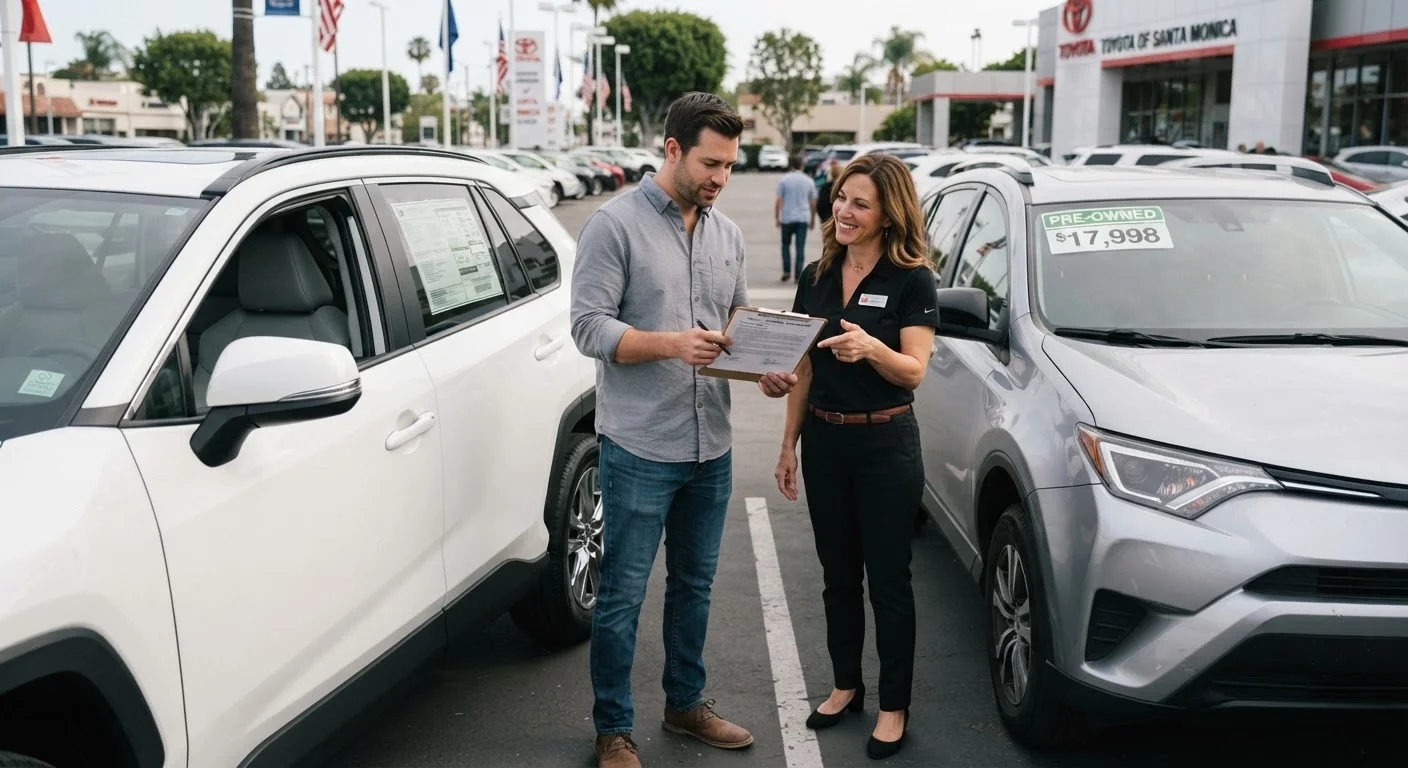
Used cars have no equivalent anchor. Every pre-owned vehicle is unique: it carries its own mileage, accident history, service records, and wear pattern. That individuality creates both opportunity and complexity. Sellers have wide latitude to price based on their own cost basis, emotional attachment, or simply what they think the market will bear. This means buyers must construct their own price framework before the conversation starts.
See our decision framework for new vs. used vehicles to understand how pricing fits into the broader set of factors worth evaluating before you commit to either path.
The Levers Available on a Used Car
Because no two used cars are identical, your negotiating leverage comes from documented evidence about that specific vehicle rather than from manufacturer pricing guides. The most effective levers include:
- Comparable market listings. Search similar vehicles - matching year, trim, mileage, and region - on aggregator sites to establish a realistic price band. Screenshots of lower-priced comps are concrete, hard-to-dismiss data points.
- Vehicle history and condition. A reported accident, a lapsed service record, or deferred maintenance all represent real future costs to you. Each is a legitimate basis to request a price reduction.
- Independent inspection findings. A pre-purchase inspection by a qualified mechanic may reveal items the seller hasn't disclosed. Repair estimates from a third party carry more weight than verbal descriptions of vehicle condition.
- Days on market. A listing that has sat for several weeks indicates the seller hasn't found a buyer at the current price - that stale inventory is negotiating room for you.
For a practical walkthrough of how to apply these levers step by step, see negotiating a used car price: approaches that actually work.
How New Car Negotiation Differs - and What Crosses Over
On a new car, the dominant strategies involve working from the dealer's invoice price, timing purchases around manufacturer incentive periods, and understanding holdback (a percentage of MSRP that manufacturers rebate to dealers after the sale). None of these mechanics apply to used vehicles.
What does cross over is the discipline of keeping deal components separate. Whether buying new or used at a dealership, you should negotiate the vehicle purchase price before introducing your trade-in value or discussing financing terms. Bundling all three allows a salesperson to adjust one number while appearing to give ground on another.
Learn how trade-in bundling can obscure real value - the same principle applies when buying used at a dealership. On financing, note that used car loans typically carry higher interest rates than new car loans, which affects your total cost of ownership. Our article on financing a new car vs. a used car explains how those rate differences shape affordability.
Private Seller vs. Dealership: Adjusting Your Approach
The channel you buy through changes the negotiation dynamic considerably. Dealerships have acquisition costs, reconditioning expenses, and overhead baked into their asking prices - but they also have more flexibility to adjust fees, include certified inspection paperwork, or throw in a short warranty.
Private sellers are often motivated by a clean transaction rather than profit maximization. They may be more open to a lower offer, but they also have fewer obligations: no implied warranty in most states, no financing options, and no recourse if problems emerge post-sale. Your due diligence burden is higher.
Market timing also matters for used vehicles - inventory and pricing shift seasonally, and understanding those patterns can strengthen your position regardless of seller type. For a full comparison of the two buying routes, see private seller vs. dealership: what to expect.
This article provides general educational information about car-buying negotiation. It is not legal or financial advice. Consult a qualified professional for guidance specific to your situation.