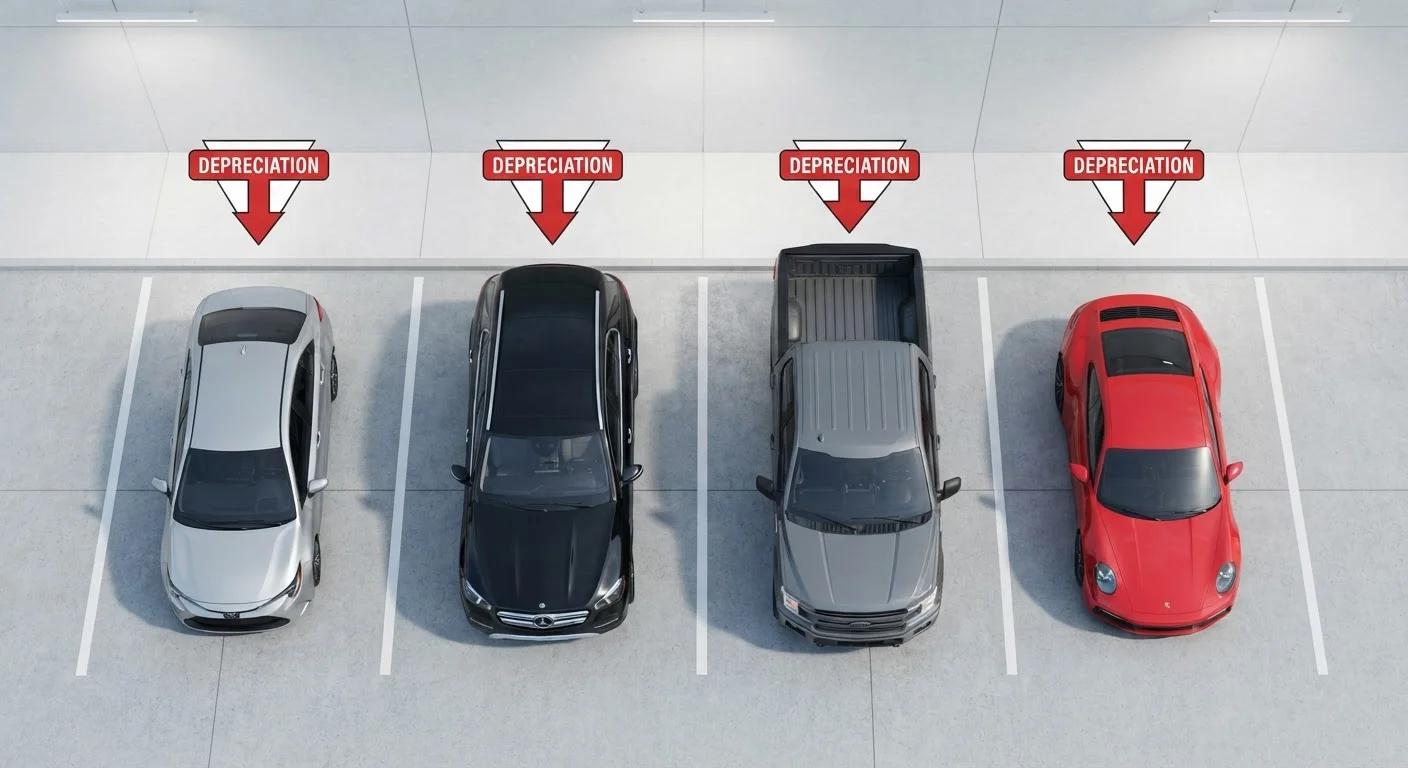
Why Depreciation Isn't One-Size-Fits-All
When comparing two vehicles at similar purchase prices, most buyers focus on monthly payments, fuel economy, or features. What often goes unexamined is how differently those vehicles shed value over time - and how dramatically that difference changes the real cost of ownership.
Depreciation is not a flat, universal rate applied equally across all cars. It varies by segment, driven by factors like production volume, buyer demand, brand perception, technology obsolescence, and repair cost reputation. A $45,000 luxury sedan and a $45,000 pickup truck may cost the same to drive off the lot, but three years later, the financial picture can diverge by tens of thousands of dollars.
For buyers weighing new versus used options, understanding which segment a vehicle sits in - and how that segment typically depreciates - is one of the most practical analytical tools available.
Segment-by-Segment: How the Curves Differ
Economy and compact cars tend to depreciate at a moderate, relatively steady pace. High production volumes and broad resale demand keep the market liquid, but lower sticker prices mean the absolute dollar loss can still sting early owners.
Mainstream family sedans and crossovers often follow a middle-of-the-road depreciation curve. Strong used-car demand and wide service networks help support resale values, though the segment faces pressure from shifting buyer preferences toward SUVs.
Luxury and near-luxury vehicles historically show the steepest depreciation curves, particularly in the first one to three years. These models carry high MSRPs but serve a narrower pool of used-car buyers. The result is that a three-year-old luxury sedan purchased new can lose 40-55% of its original value - creating real opportunity for used buyers willing to absorb the risk.
Full-size pickup trucks and body-on-frame SUVs have long demonstrated stronger residual values than most segments. Persistent commercial and recreational demand, limited incentive-driven discounting at launch, and durable utility perceptions all support resale prices.
Sports cars and performance vehicles depreciate unpredictably. Iconic or limited-production models can appreciate, while mass-market performance trims follow steep early drops.
Electric vehicles represent an evolving picture. Rapid improvements in range and technology have historically pressured older EV values, though models with sustained demand have shown more moderate retention. Buyers should review current used EV pricing carefully rather than relying on older segment benchmarks.
49%
Average luxury sedan value lost in 3 years
Industry residual value analyses have consistently found luxury sedans among the highest-depreciating segments, with some models losing close to half their MSRP within 36 months.
~30%
Typical full-size pickup depreciation at 3 years
Full-size pickup trucks have historically shown depreciation rates well below the industry average, driven by sustained buyer demand and strong commercial utility.
20-25%
Value lost in year one across most new vehicles
Regardless of segment, new vehicles typically experience their sharpest single-year value drop in the first 12 months, partly driven by the transition from 'new' to 'used' status.
How Depreciation Changes the Maths on Your Purchase
Depreciation reshapes the comparison between a new and used purchase in concrete ways. Consider a buyer looking at a new luxury sedan versus a certified pre-owned example of the same model from three years prior. If the new model depreciates at 50% over three years, the used buyer effectively transfers that first-owner loss to someone else - potentially saving a significant sum upfront.
The calculation isn't purely about the purchase price, though. A higher-depreciation vehicle purchased used may carry higher financing rates, shorter remaining warranty terms, and potentially steeper maintenance costs as it ages. Our article on five-year ownership costs walks through how those variables interact across a full ownership window.
For new car buyers, choosing a segment with stronger residual value matters if you plan to sell or trade within five years. It also directly affects lease payment calculations - vehicles with higher residual values (expressed as a percentage of MSRP) generate lower monthly lease payments at equivalent selling prices, all else being equal.
Depreciation also intersects with reliability. A high-depreciation luxury vehicle may offer exceptional features at a low used price, but if its out-of-warranty repair costs are disproportionately high, the savings erode. Understanding how reliability typically shifts as vehicles age helps calibrate that risk more accurately.
Applying This Framework Before You Buy
Before finalizing any vehicle comparison, run a simple depreciation check: find current private-party and dealer listings for a two- to three-year-old example of the model you're considering, at comparable mileage. Compare that figure against the original MSRP. The gap reveals the segment's real-world depreciation behavior - not a theoretical estimate.
If you're buying new and prioritizing low total cost of ownership, favor segments with historically stronger residuals. If you're buying used and prioritizing value, high-depreciation segments may offer the most room - provided you've assessed reliability risk and budgeted for maintenance accordingly.
Market timing can also intersect with segment dynamics. Seasonal inventory cycles and broader market conditions occasionally compress or widen the depreciation advantage, so it's worth checking current listings against historical trends before committing.
Depreciation is not the only factor in a purchase decision, but it is one of the most quantifiable. Running the numbers by segment - not just by sticker price - gives buyers a clearer, more honest view of what a vehicle will actually cost over the years they own it.
This article is for general informational and educational purposes only. It does not constitute financial or investment advice. Vehicle values fluctuate based on market conditions, geographic region, mileage, and individual vehicle history. Consult current market data and, where appropriate, a qualified financial professional when making significant purchase decisions.